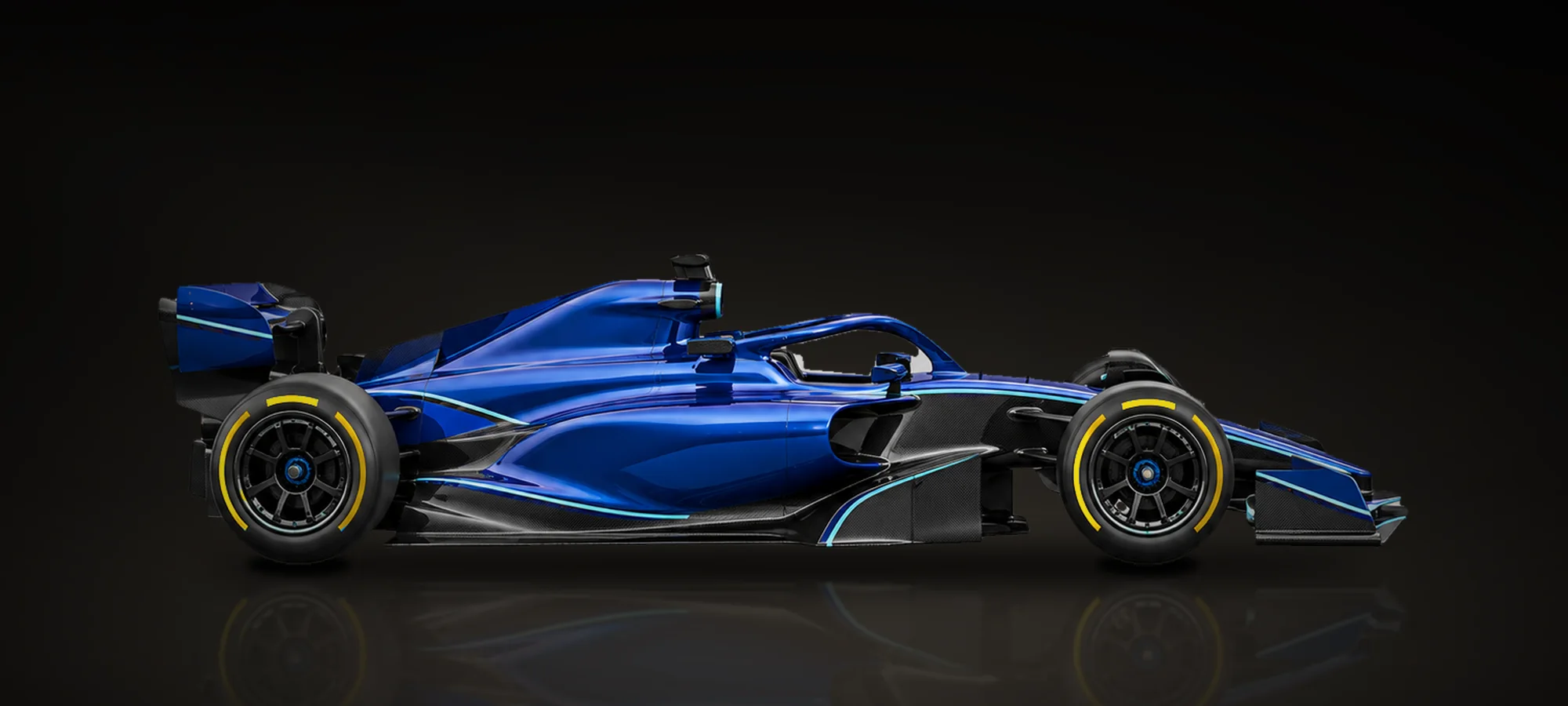
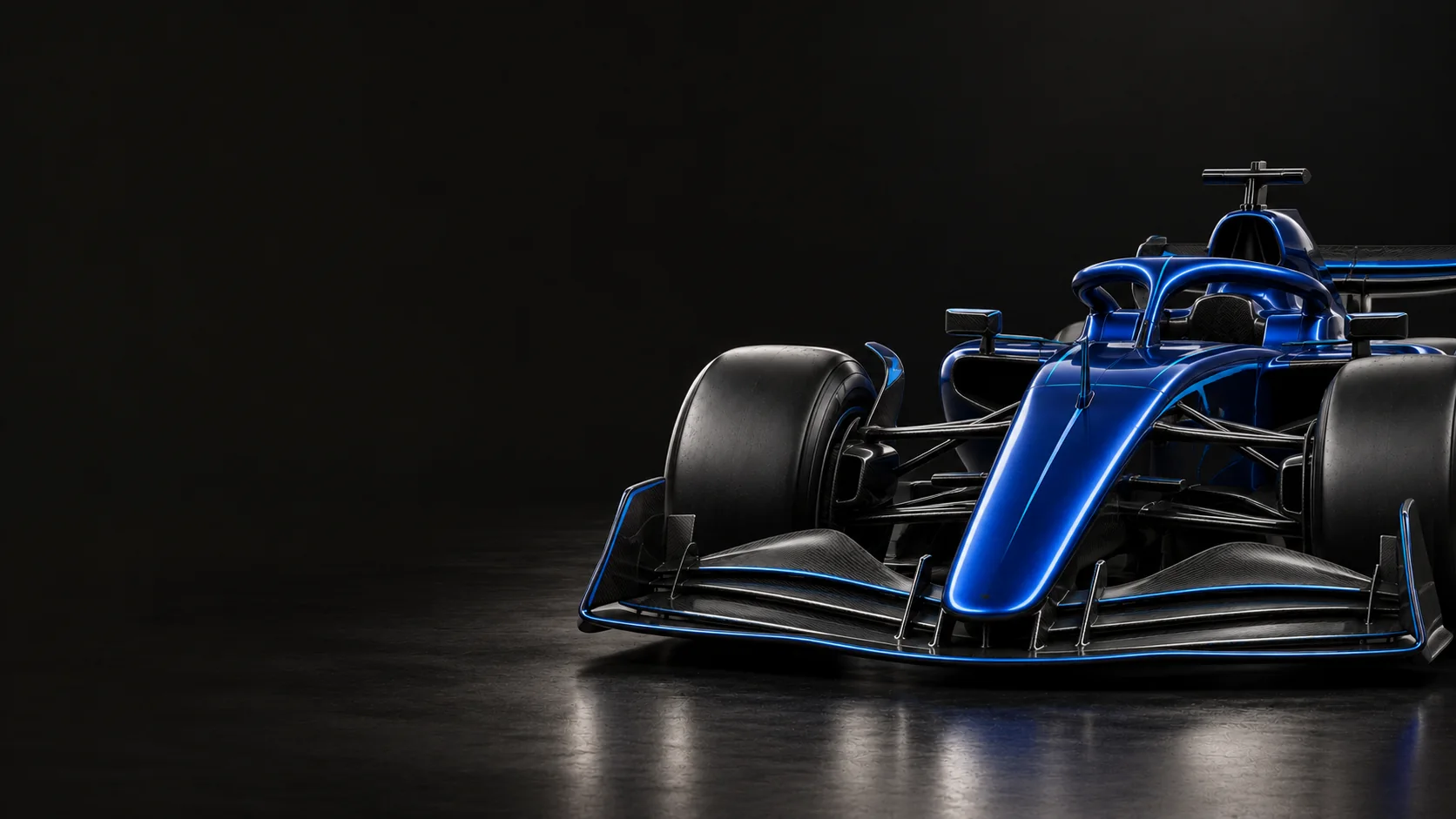
Illustration of a blue 2026-style Formula 1 car seen from the front three-quarter in a dark studio, with no team livery

Formula 1 car, 2026 regulations 0-60, quarter mile and top speed, from real telemetry

2.7 s to 60 from a typical 2026 race start, by our count. No team publishes one. Half of its roughly 1,000 hp is electric.

How fast is an F1 car?

No team, the FIA or Formula 1 publishes an official 0-60 mph or quarter-mile time for a current F1 car. Our own count from public 2026 timing telemetry (OpenF1) puts a typical race start at about 2.7 s to 60 mph derived, with pole-sitters at a median 2.82 s across 15 races. On the three tracks where the run to the first corner is longer than a quarter mile, 53 cars covered 402 m in a median 8.93 s at 178 mph derived; the quickest took 8.52 s.

Those are race starts on full fuel, and the rules allow no electric power below 50 km/h at the start (FIA technical regulations). The fastest official speed-trap reading of 2026 is 358.2 km/h (222.6 mph) verified, by Esteban Ocon at Barcelona (FIA timing). The fastest FIA speed-trap reading ever is still 372.5 km/h verified, Valtteri Bottas, Mexico 2016, though Williams calls its own 378 km/h reading of Bottas at Baku that year the F1 record (Williams).

Which F1 car is this?

Our race treats it as a generic modern F1 car, and this page describes the 2026 generation: a 1.6-liter V6 turbo of around 400 kW plus a 350 kW electric motor, for what the FIA calls an even split between combustion and electric power (Formula 1). The MGU-H that kept the old turbos spinning is gone, and the fuel is fully sustainable.

The cars are smaller too: 3,400 mm between the axles, 1,900 mm wide and a 768 kg minimum with the driver, down from 800 kg in 2025 verified. FIA technical director Nikolas Tombazis said the goal was cars that are "light, supremely fast and agile." Eleven teams run 22 of them this year.

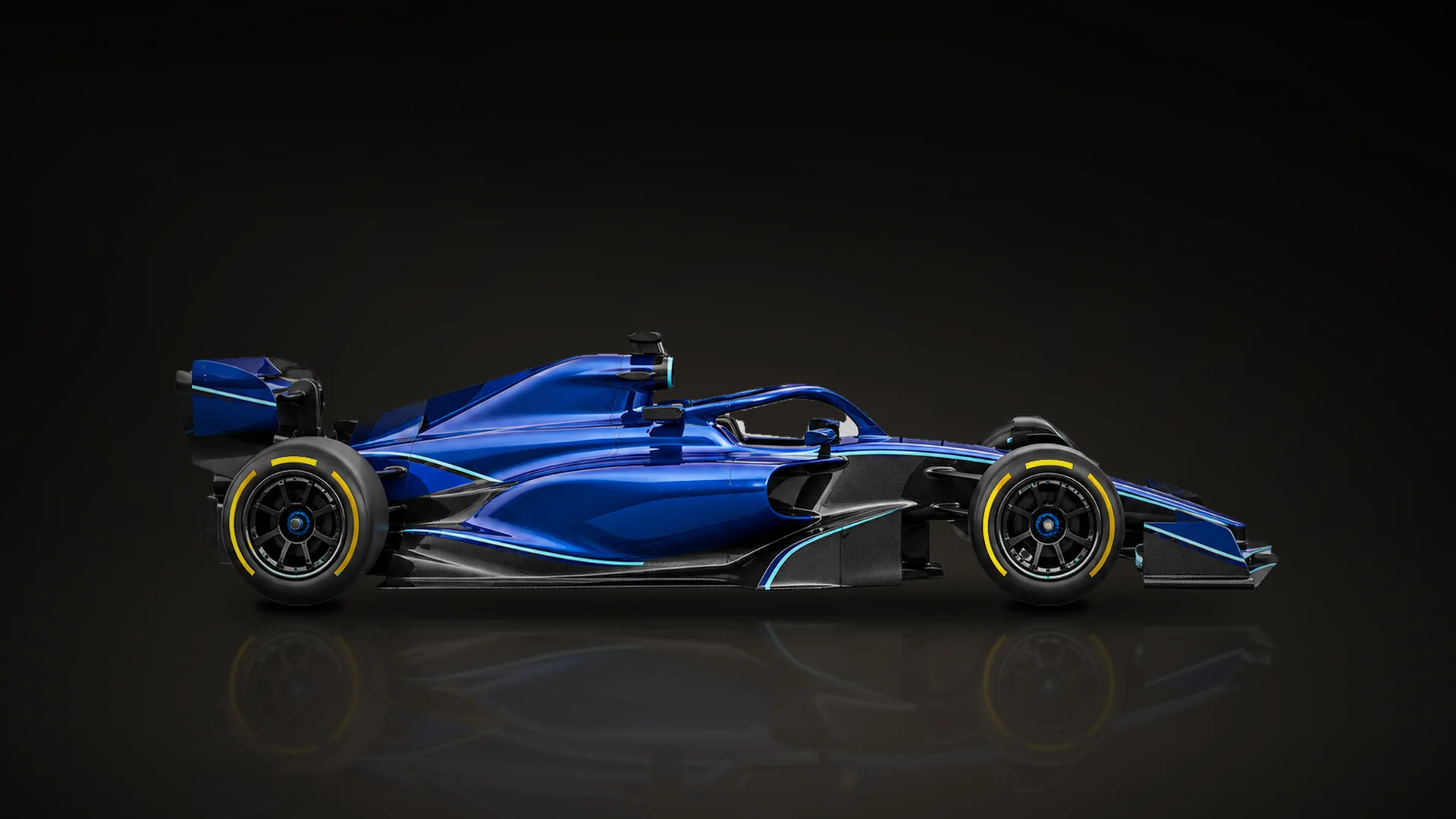
Side view illustration of a blue 2026-style F1 car in a dark studio, nose to the right, halo over the cockpit

Numbers that don't feel real

Every figure carries its label. claimed means a maker, team or the sport said it. recorded is timed on an actual run: an instrumented test, a certified or verified record run, or a maker's own pass on a drag strip's timing system. verified means an official body, here the FIA. reported is press we couldn't trace to a primary source. converted is a maker's 0-100 km/h claim converted to 0-60 mph. derived is our math, and estimate is modeled for our race because no published figure exists. Here's how we label numbers.

350kW
Electric motor limit, about 470 hp, up from 120 kW. The V6 adds around 400 kW
verified FIA
768kg
Minimum weight with the driver, 32 kg less than in 2025
verified Formula 1
2.82s
0-60 mph, median of 15 pole-sitters' race starts in 2026, full fuel
derived from OpenF1 telemetry
8.52s
Quickest quarter mile from a 2026 race start: Valtteri Bottas at Barcelona and George Russell at Monza, 6 ms apart, about 183 mph at 402 m
derived from OpenF1 telemetry
358.2km/h
Fastest speed-trap reading of 2026, Esteban Ocon in the Barcelona race
verified FIA
338.1km/h
Top of the Monza race speed trap in 2026, against 364.1 km/h in 2025
verified FIA
3.8g
Peak braking into Monza's first chicane in 2026, down from 4.7 g in 2025
claimed Brembo, simulation
231days
Since the 2026 cars first raced, at the Australian Grand Prix in Melbourne
counted live from March 8, 2026

Why can't an F1 car do 0‑60 in two seconds?

Because from a standstill it is short of grip, not power. It drives only the rear wheels, its downforce barely exists at walking pace, and there is no launch control: the driver feeds in the clutch by hand. In 2026 two rules make it harder. The electric motor may not push the car until it reaches 50 km/h at a standing start, and without the MGU-H the turbo has to be spun up by exhaust alone, so the FIA added a five-second blue-light warning before the start lights so drivers can build revs (Formula 1).

The chart is Pierre Gasly's start from pole at Monza on September 6, 2026. He held about 12,000 rpm for 10 seconds on the grid, and the throttle trace stayed under 60 percent for the first 1.6 seconds after he let go. He reached 60 mph in 2.63 s, 200 km/h in 5.45 s and the quarter mile in 8.80 s at 289 km/h derived. George Russell, starting second, did 2.32 s and 8.52 s.

Speed against time for an F1 car's race start, Monza 2026 Pierre Gasly's speed from 0 to 9.4 seconds after his pole-position start at Monza on September 6, 2026. The electric motor is allowed from 50 km/h. He reaches 60 mph at 2.63 seconds, 200 km/h at 5.45 seconds and the quarter-mile mark, 402 meters, at 8.80 seconds and 289 km/h, before braking for the first chicane. 2 s4 s6 s8 s 100 km/h200 km/h300 km/h 50 km/h: electric power allowed 60 mph, 2.63 s 200 km/h, 5.45 s 402 m, 8.80 s 0 s, first movement
Our analysis of public timing data from OpenF1; allow about 0.2 s either way. The 50 km/h rule is in the FIA's 2026 technical regulations.

Where the power comes from

Tap a marker. Figures are from the FIA's 2026 regulations unless noted. Studio views are our own generated illustrations.

Side view illustration of the 2026-style F1 car, nose to the right

01Flaps that flatten

The upper front-wing elements drop in Straight Mode zones. In low grip, race control can let only the front wing open.

02Narrower Pirelli fronts

25 mm narrower than in 2025 on the same 18-inch rims, and with no wheel covers you can see the spokes again.

03Boost and Overtake

Boost lets the driver call up stored energy anywhere. Within a second of the car ahead at the detection point, Overtake Mode adds 0.5 MJ for the next lap.

04A 1.6-liter V6 turbo

Around 400 kW, Formula 1 says, on fully sustainable fuel, with fuel energy flow capped at 3,000 MJ an hour. With no MGU-H, the turbo has to be spun up by exhaust alone.

05350 kW from one motor

The MGU-K drives the rear wheels and recovers energy under braking. Its power tapers on the straights and reaches zero at 355 km/h, and the battery may swing only 4 MJ of charge.

06The other half of active aero

The rear wing's top flap opens in Straight Mode, like DRS used to, but for every car in every marked zone, not only the one chasing.

Side view illustration of the 2026-style F1 car, nose to the right

How does it compare with drag cars and hypercars?

Over a quarter mile an F1 car is quick but not dominant. Four-wheel-drive electric hypercars hook up harder off the line, and a drag car is in another world: NHRA's Top Fuel record is 3.623 s over 1,000 feet, and Shawn Langdon ran 346.95 mph at that distance in September 2026 verified (NHRA). In carwow's 2023 drag race, Red Bull reserve driver Liam Lawson, launching an F1 car for the first time, ran a 2012 RB8 to 9.5 s while a Rimac Nevera and a McMurtry Spéirling both did 8.4 s (carwow).

Rimac Nevera R, Rimac, 20257.90
2026 F1, quickest race start8.52
F1 car in our race8.60
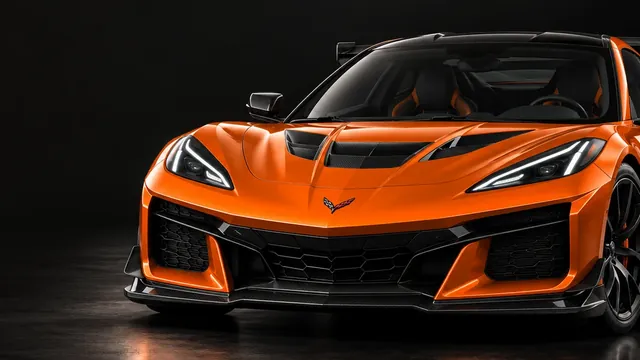
Corvette ZR1X, Chevrolet's own pass8.675
Demon 170, Dodge's own pass8.91
2026 F1, median of 53 starts8.93
Model S Plaid, Tesla9.23
2012 Red Bull RB8, carwow9.5

Bars show seconds over 7.5, so shorter is quicker. Nevera R recorded in Rimac's record runs, which Dewesoft timed independently (Rimac); Chevrolet's (Chevrolet) and Dodge's own passes recorded, timed by the makers; Tesla claimed; RB8 recorded by carwow; 2026 F1 runs derived from race telemetry at Monza, Barcelona and Budapest, with full fuel and, behind the front row, a tow; our race's 8.60 s at 176 mph is an estimate.

Why are 2026 cars slower at Monza?

Because the battery runs dry on the long straights. The electric motor's 350 kW starts to taper above 290 km/h and reaches zero at 355 km/h, and with only 4 MJ of usable charge, cars recharge at full throttle near the end of long straights, which drivers call super clipping (The Race). At Monza the fastest car through the race speed trap in 2026 did 338.1 km/h; in 2025 the slowest did 338.1 km/h (FIA).

PlanetF1 found the paradox runs the other way on twisty tracks: peak race speed at the Hungaroring jumped from 331 to 357 km/h, while Monza's fell from 365 to 351 km/h. "Monza is, regrettably, no longer the Temple of Speed," it concluded (PlanetF1).

Modified BAR 007, Bonneville, 2006397.36
Bottas, Baku qualifying, 2016378
Bottas, Mexico race, 2016372.5
Albon, Monza race trap, 2025364.1
Ocon, Barcelona race trap, 2026358.2
Lawson, Baku race trap, 2026349.4
Norris, Monza race trap, 2026338.1

Bars show km/h over 300. Speed traps verified by FIA timing (Baku 2026); Bonneville is a two-way average the FIA confirmed, with 400.454 km/h one way verified; Baku 2016 is the team's own reading claimed, which Williams calls the F1 record, while the FIA's official best is the Mexico trap's 372.5, both per Williams.

Stopping is gentler now, too

Brembo, whose engineers work with every team, simulates the hardest stop at each track. Into Monza's first chicane in 2026 it expects cars to go from 318 to 87 km/h in 3.22 s over 153 m at 3.8 g, with 111 kg on the pedal; in 2025 the same corner took 337 to 89 km/h in 2.75 s at 4.7 g and 162 kg claimed (Brembo 2026, Brembo 2025). At Silverstone's Turn 3, peak deceleration fell from 4.5 g to 2.9 g and pedal load nearly halved, from 152 kg to 78 kg (Brembo). Less downforce presses the tyres down less, and the electric motor does more of the slowing as it recharges the battery.

Peak deceleration 2025, g4.7
Peak deceleration 2026, g3.8
Braking distance 2025, m129
Braking distance 2026, m153

Deceleration bars use g out of 5; distance bars use meters out of 200. Brembo simulation figures claimed.

Two rule sets and one simulation

The last car of the old rules, the first of the new, and the figures our race uses.

2025 car

Ground effect, MGU-H

The final year of the 2014 hybrid engines and the 2022 tunnel floors.

Engine
550 to 560 kW
Electric
120 kW
Minimum weight
800 kg
Monza trap
364.1 km/h

Power figures are the FIA's, given when it set the 2026 rules (Formula 1). The trap is Alex Albon's in the 2025 race.

2026 car

Active aero, 50/50 power

Smaller, lighter and half electric, on fully sustainable fuel.

Engine
About 400 kW
Electric
350 kW
Minimum weight
768 kg
Monza trap
338.1 km/h

Electric power is barred below 50 km/h at the start and fades on long straights, so the two halves rarely add up at once.

Our race's F1 car

Race figures

A generic modern F1 car, because performance varies by team and year.

0-60 mph
2.6 s
Quarter mile
8.6 s
Trap speed
176 mph
Race position
6th of 21

All three are estimates.

From a rule book to a season of surprises

Two years from the FIA's announcement to the first race, then a season of tweaks. Scroll sideways.

231days since the 2026 cars first raced in Melbourne
Jun 6, 2024

The rules are unveiled

The FIA publishes the 2026 car: a 30 kg weight cut (later set at 32 kg), 350 kW electric, moving wings.

Feb 12, 2026

"Formula E on steroids"

At Bahrain testing Max Verstappen calls the new cars "a bit more like Formula E on steroids."

Feb 2026

Five seconds to spool

A blue-light pre-start warning is trialed at the second Bahrain test after messy practice starts.

Mar 8, 2026

The first race

Melbourne. Formation-lap energy limits leave some cars with nearly flat batteries at the start.

Mar 2026

A closing-speed crash

Oliver Bearman crashes in Japan after closing on full Boost on a car with no battery assist.

May 3, 2026

First rule tweaks

From Miami: a low-power start detector, a 150 kW cap on Boost and faster super clipping.

Jun 14, 2026

Fastest of the year

Esteban Ocon hits 358.2 km/h through the Barcelona speed trap verified.

Jul 5, 2026

Brakes take it easier

Brembo's Silverstone figures show peak braking down from 4.5 g to 2.9 g.

Sep 6, 2026

The Temple of Speed slows

Monza's race trap tops out at 338.1 km/h, 26 km/h down on 2025.

Sep 26, 2026

Baku's long straight

Liam Lawson leads the race speed trap at 349.4 km/h verified.

Oct 25, 2026

Austin

Round 18 of the first season under the new rules, with five races left.

What people are saying

The new cars split opinion four ways. These are opinions, quoted with links.

The designers

"[C]ars that are light, supremely fast and agile."Nikolas Tombazis, FIA, 2024, Formula 1

The FIA's pitch was a "nimble car": less weight, less drag and more of the power in the driver's hands.

The skeptic

"It feels a bit more like Formula E on steroids."Max Verstappen, February 2026, ESPN

He added that "the rules are the same for everyone" (ESPN), and Reuters reported that he found the car not much fun to drive (Reuters).

The starters

"The turbo speed spinning enough, the battery not too low but not too high, race starts, we've seen our challenge."George Russell, March 2026, Sky Sports

Charles Leclerc was calmer: "When everybody is in their optimal window for the start, there's not that much between the cars."

The speed purists

"Monza is, regrettably, no longer the Temple of Speed."PlanetF1, September 2026, analysis

Its data showed top speeds rising on twisty tracks and falling on the fastest ones.

The consensus: the 2026 cars accelerate hard once they're rolling, but they are slower around a lap, about 3 percent by Formula Dream's count, gentler on the brakes and capped on long straights by how much battery energy they can spend. From a standstill nothing about them is magic: no launch control, no electric help to 50 km/h and narrow rear tyres mean a typical race start reaches 60 mph in about 2.7 s.

Live: news and buzz

Loading the latest…

News

  • Loading news…

Our server pulls these every 15 minutes, and this page checks for new items every 5, from Formula 1, Motorsport.com, Autosport, The Race, Google News, Bing News, Bluesky and Brembo's YouTube channel. Only stories about the cars themselves make it through: engines, aero, speed, starts, tyres, brakes and rules. Posts are public and filtered automatically; links open the original.

See it for yourself

Super clipping and turbo lag

Chain Bear · Mar 16, 2026 · 10:51

Why the cars are so weird

THE RACE · Feb 16, 2026 · 9:19

Verstappen's verdict

THE RACE · Feb 12, 2026 · 9:02

The April rule tweaks

THE RACE · Apr 24, 2026 · 14:11

Brembo at Monza, in Italian

Brembo · Jul 21, 2026 · 0:51

RB8 against Rimac and McMurtry

carwow · Aug 5, 2023 · 14:42

Against a Bugatti Chiron

carwow · Jun 26, 2021 · 11:36

Things most people don't know

01

No electric help off the line

At a standing start the MGU-K may only push the car once it reaches 50 km/h, a rule meant to stop teams building in launch control.

ESPN

02

A safety net for bad starts

Since Miami, a car that barely moves after the clutch drops gets an automatic electric shove and flashing warning lights for the cars behind.

ESPN

03

Pole could cost you battery

At the first race, energy limits counted the formation lap from the timing line, so cars parked beyond it, like the pole-sitter's, used up charge on burnouts.

The Race

04

The fastest equals the slowest

Lando Norris topped the 2026 Monza race speed trap at 338.1 km/h, exactly what the slowest car managed through it in 2025.

FIA

05

Slow tracks got faster

Peak race speed at the Hungaroring rose 26 km/h, to 357 km/h, because its short straights leave battery to spare.

PlanetF1

06

Two top speeds, one driver

Williams says its own track team saw Valtteri Bottas reach 378 km/h at Baku in 2016 and calls it the F1 record. The FIA's fastest official reading is his 372.5 km/h at the speed trap in Mexico later that year.

Williams

07

An F1 car on the salt

A modified BAR 007 F1 car, with a fin for stability instead of a rear wing, averaged an FIA-confirmed 397.36 km/h at Bonneville in 2006, and hit 400.454 km/h one way.

Williams

08

Half the pedal effort

Brembo expects drivers to press 78 kg on the brake at Silverstone's Turn 3 in 2026, against 152 kg a year earlier.

Brembo

09

The wheel covers are gone

The full rim covers of 2022 to 2025 were dropped to save weight, so you can see the spokes again.

Formula 1

Its neighbors on the strip

In our quarter-mile model the F1 car finishes sixth of 21, on estimated figures. The car just quicker and the car just slower:

Questions people ask

How fast is an F1 car from 0 to 60 mph?

No team, the FIA or Formula 1 publishes an official 0-60 mph time. Our count from public 2026 race-start telemetry gives about 2.7 seconds for a typical launch and a median of 2.82 seconds for pole-sitters across 15 races, with the quickest launches under 2.4 seconds. Race starts carry full fuel, and the rules allow no electric power until 50 km/h.

What is an F1 car's quarter-mile time?

No official figure exists. At Monza, Barcelona and Budapest in 2026, where the run to the first corner is longer than a quarter mile, 53 cars covered 402 meters from the grid in a median 8.93 seconds at 287 km/h (178 mph), by our count from timing telemetry. The quickest was 8.52 seconds. In a 2023 carwow drag race, a 2012 Red Bull RB8 ran 9.5 seconds.

What is the top speed of an F1 car in 2026?

The fastest official speed-trap reading of 2026 so far is 358.2 km/h (222.6 mph), by Esteban Ocon in the Barcelona race. Monza's race speed trap topped out at 338.1 km/h, down from 364.1 km/h in 2025, because the cars run short of battery energy on long straights. The fastest FIA speed-trap reading ever is 372.5 km/h, by Valtteri Bottas in Mexico in 2016, though Williams calls its own 378 km/h reading of Bottas at Baku that year the F1 record.

How much horsepower does a 2026 F1 car have?

Formula 1 says the 1.6-liter V6 turbo makes around 400 kW, and the rules allow the electric motor 350 kW, about 470 hp. Together that is roughly 750 kW, or about 1,000 hp, but only while the battery has charge: electric power is banned below 50 km/h at the start and tapers off above 290 km/h.

Is an F1 car quicker than a hypercar in a drag race?

Usually not over a quarter mile. An F1 car drives only its rear wheels and makes little downforce at low speed, so it can't put its power down from a standstill. Rimac reports a Dewesoft-timed 7.90 seconds for the Nevera R and Chevrolet timed 8.675 seconds on its own Corvette ZR1X pass, against 8.5 to 9 seconds from 2026 F1 race starts. The F1 car pulls away at higher speeds and in corners.

What changed in the 2026 F1 rules?

The minimum weight fell from 800 kg to 768 kg, the cars are 100 mm narrower and 200 mm shorter between the axles, and the Pirelli tyres are narrower. The MGU-H is gone, the electric motor rose from 120 kW to 350 kW for a roughly 50/50 split with the engine, the fuel is fully sustainable, and both wings now switch between Corner Mode and Straight Mode.

Race the F1 car

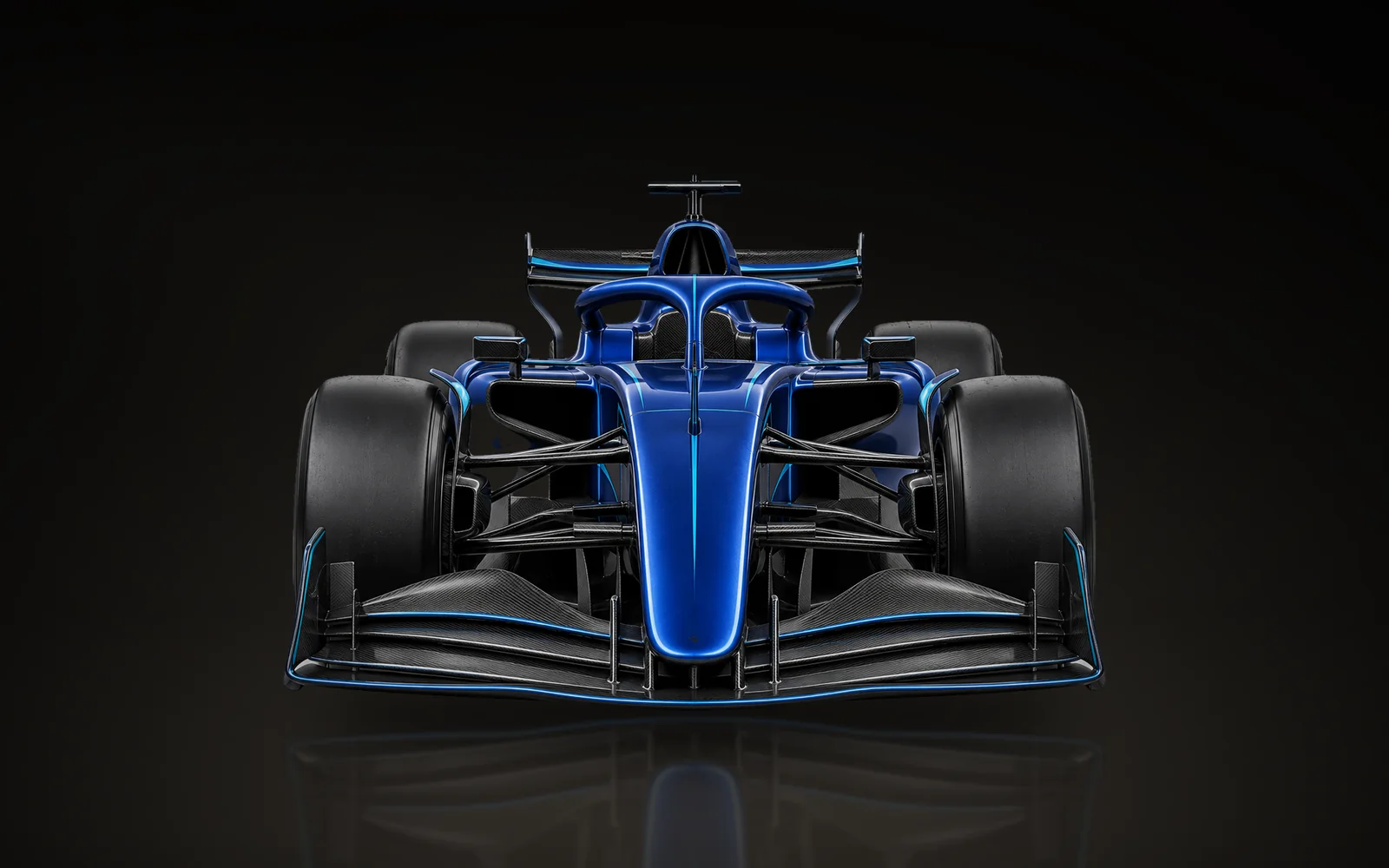
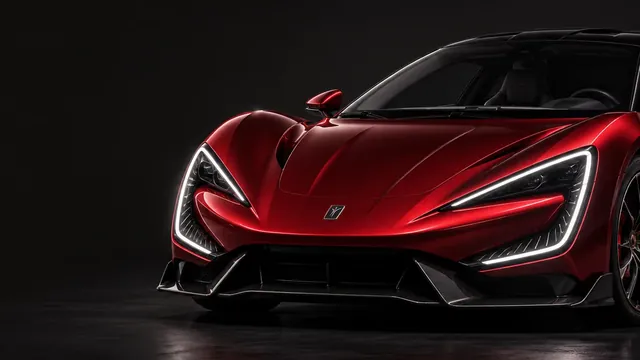
Front view illustration of the 2026-style F1 car in a dark studio

Labels, sources and credits

Labels. Claimed: a maker, team, supplier or the sport said it. Recorded: timed on an actual run: an instrumented test, a certified or verified record run, or a maker's own pass on a drag strip's timing system. Converted: a maker's 0-100 km/h (62.1 mph) claim converted to 0-60 mph. Verified: an official body, here the FIA or the NHRA. Reported: press we couldn't trace to a primary source. Derived: our math. Estimate: modeled for our race because no published figure exists, explained in the methodology guide. Race figures come from the lineup in our quarter-mile simulator; see every car on the all-cars page.

About the telemetry numbers. Derived figures on this page are our analysis of public 2026 Formula 1 timing data from OpenF1, which republishes Formula 1's live timing, measured from each race start through the Singapore Grand Prix. They carry roughly 0.2 s of uncertainty either way and aren't official FIA times. The quarter-mile figures come from the three tracks where the run to the first corner is longer than a quarter mile: Monza, Barcelona and Budapest. The Bahrain Grand Prix in Malaysia, run at Sepang near Kuala Lumpur on October 4 after the Bahrain and Saudi Arabian races were cancelled, isn't counted: heavy rain sent it off behind the safety car, with a standing start only on lap 3 (Wikipedia). Spa-Francorchamps counts toward the all-launch figures but not the pole-sitter median, because OpenF1 lists no grid positions for that start, so the pole median covers the other 15 races. Formula Dream, measuring a different way, found a median 3.0 s to 100 km/h for pole-sitters (Formula Dream); our median for the same measure is 2.88 s.

  1. FIA 2026 Formula 1 technical regulations, issue 8
  2. Formula 1, FIA unveils the 2026 regulations, June 6, 2024, and 12 rule changes for 2026, March 3, 2026
  3. Formula 1, why race starts are different in 2026
  4. FIA race maximum speeds: Barcelona 2026, Monza 2026, Baku 2026, Monza 2025
  5. OpenF1 timing data, source of the derived figures on this page
  6. Williams, how fast can an F1 car go, January 2026
  7. Brembo, Monza 2026 and Silverstone 2026
  8. ESPN on the April 2026 rule tweaks, and The Race on the formation-lap energy rule
  9. PlanetF1 on 2026 top speeds, September 7, 2026
  10. Pirelli on the 2026 tyres

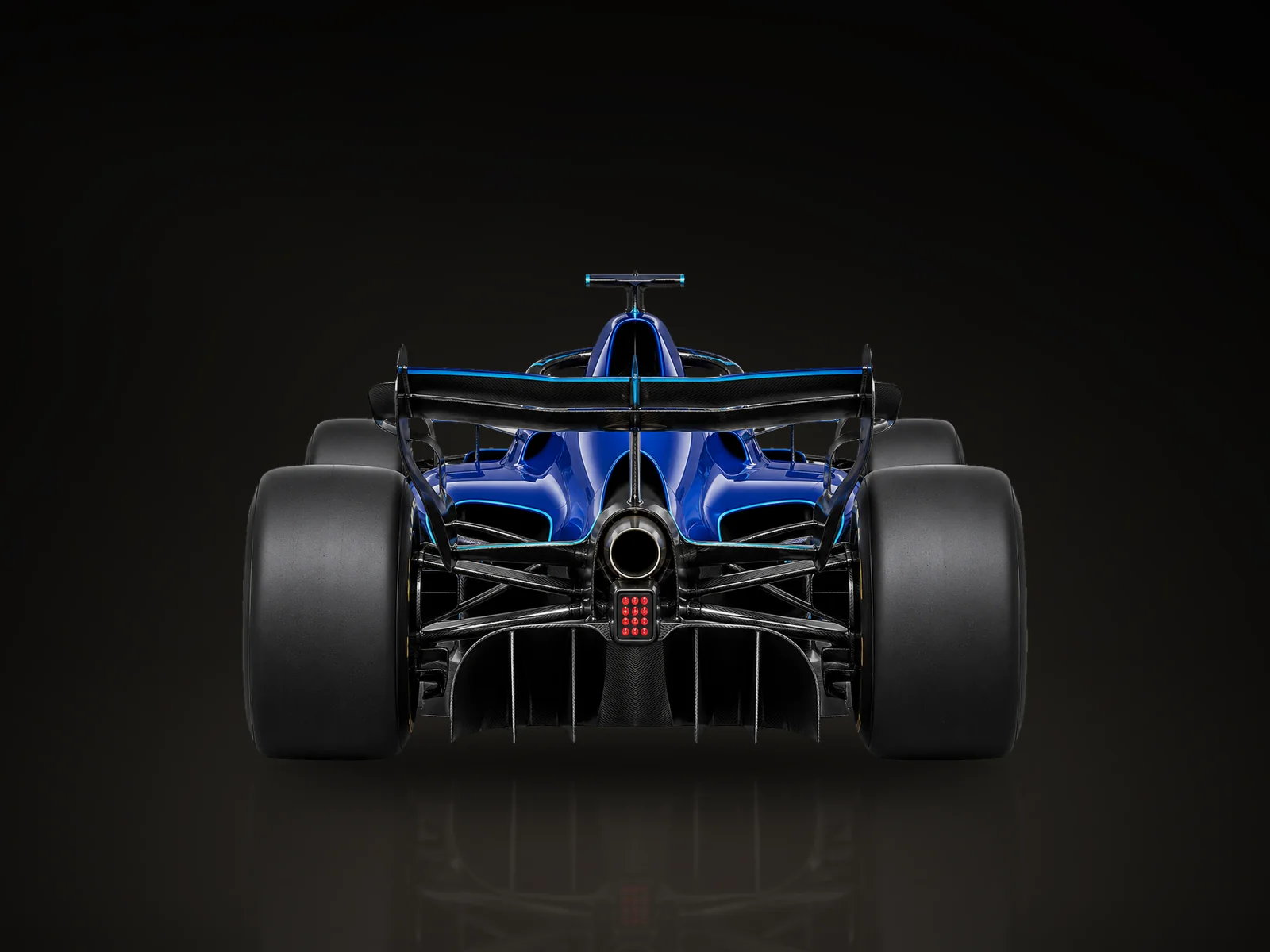
Images. The hero and the studio views are our own generated illustrations of a generic 2026-style car, not Formula 1, FIA or team photography or design data. The finish is invented and carries no team livery or sponsor logos. We repainted the tyre sidewall bands, which the generator drew in a blue that Pirelli uses for wet tyres, in the medium compound's yellow. Only the side views show those bands; the hero, front and rear views draw plain black sidewalls with no compound marking. We checked the shapes against photos of real 2026 cars: no wheel covers, a halo, an airbox with a camera on top and small bargeboards behind the front wheels.