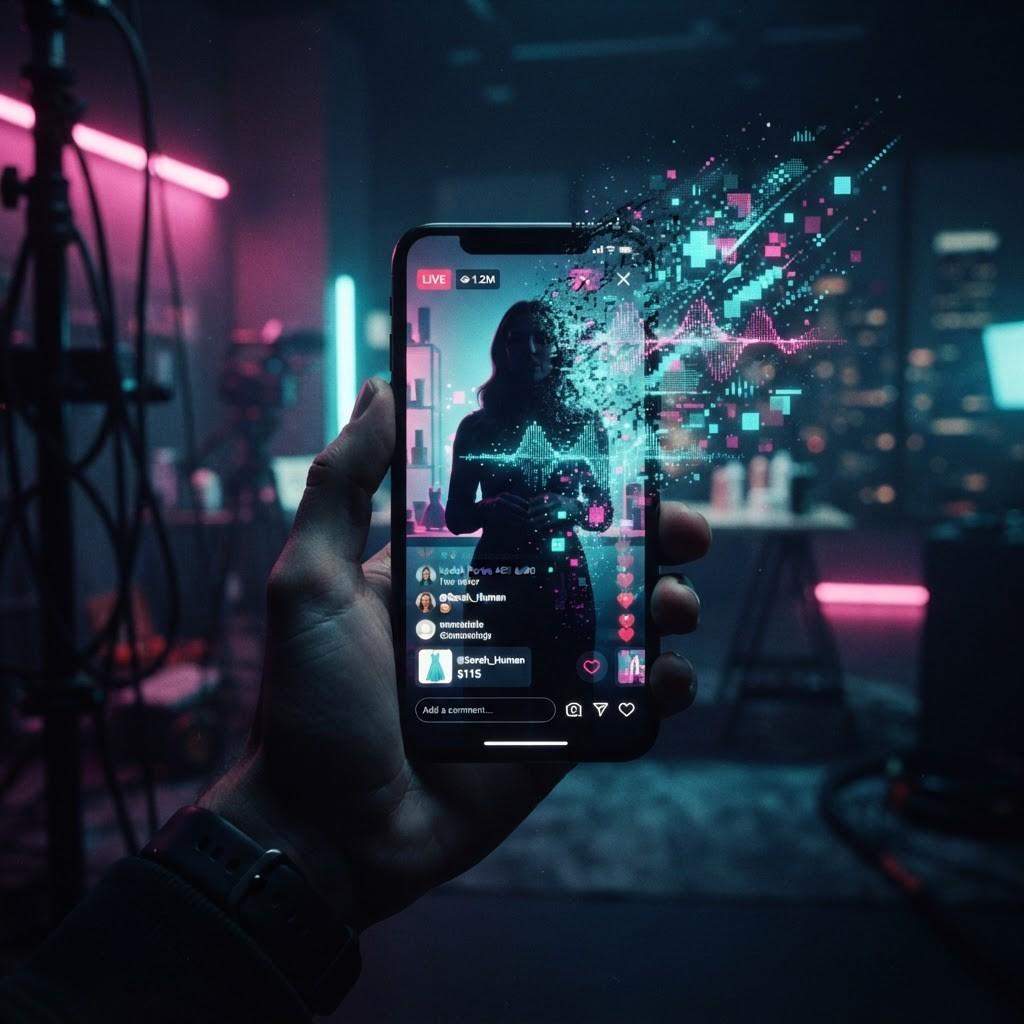
TikTok Shop is projected to do $23.4 billion in US eCommerce sales this year. That puts it ahead of Target, Costco, and Best Buy by online volume. And the platform just told every seller on it: if you use an AI voice instead of a real human in your shopping livestreams, we will penalize your account.
Not a soft suggestion. An enforceable production standard backed by a scoring system that can end your ability to sell on the platform.
What Happened
TikTok Shop published its "Requirements for High-Quality Videos and LIVEs" document on May 23, 2026. The rules are specific and broad at the same time. Shopping livestreams must feature real-time verbal or sign language communication from a human host. No AI-generated voices. No pre-recorded audio tracks. No radio-style scripted narration. No slideshows, no looping footage, no screen recordings of product pages.
If you built a 24-hour livestream staffed by a text-to-speech engine cycling over product footage, that model is done. TikTok specifically targeted what insiders call the "unmanned AI storefront." The policy doesn't pretend otherwise.
For shoppable video (as distinct from live sessions), TikTok now requires a minimum of three seconds of dynamic content with no still images or looping visuals. The content must be shot in a real-world environment, feature camera movement, and show the creator's face alongside the physical product. These are production standards, not brand suggestions.
The Enforcement Architecture
What changed in July 2026 isn't the rule itself. It's the teeth.
TikTok replaced its old Violation Points system with the Account Health Rating (AHR), a 0-to-1,000 score that runs on a 180-day rolling window. All accounts start at 200 points. You earn points by completing orders and passing policy quizzes. You lose them for violations, with deductions scaled to severity and frequency.
The old system had a 90-day reset. A seller could absorb a violation and wait it out. The AHR doesn't reset. It compounds. A seller sitting at 165 points can tip into enforcement territory from a cluster of moderate violations without any single catastrophic incident.
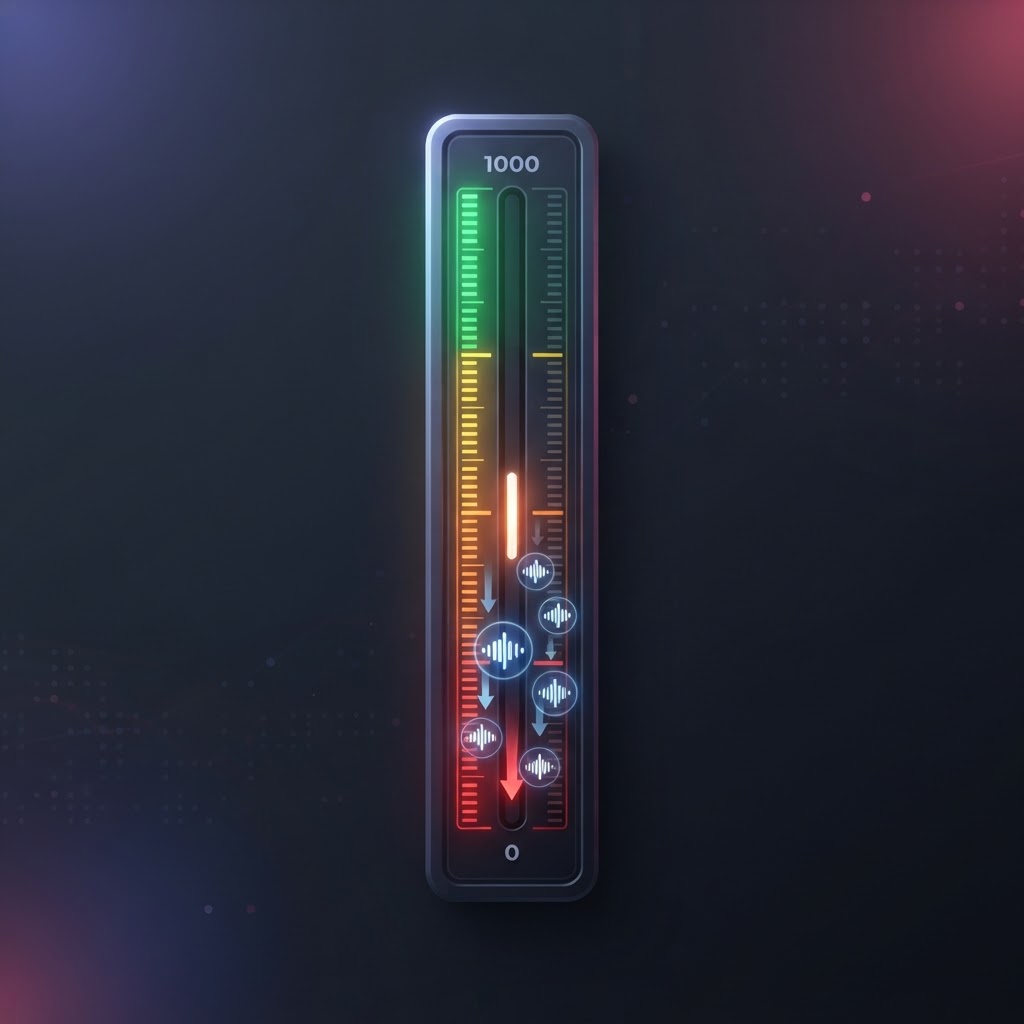
Four thresholds define the slide. At 150 points, sellers lose access to mega campaigns and can't create new listings for seven days. At 100 points, restrictions extend to 14 days with reduced livestream traffic and removal from Shop Tab recommendations. At 50 points, further restrictions apply for 28 days. At zero, the account faces potential permanent deactivation.
Both sides of the affiliate relationship face independent consequences. The Creator Health Rating governs creators, and the AHR governs merchants. A non-compliant stream can trigger penalties for both the brand and the creator promoting it.
Why TikTok Did This
The commercial math is straightforward. When consumers detect AI-generated content in brand marketing, they are four times more likely to trust the brand less, according to eMarketer data. 31% reported lower trust. 7% reported higher trust. That ratio is brutal.
A June 2026 Kapwing study found that roughly 60% of TikTok videos are classifiable as AI-generated content. When the majority of your feed is synthetic, the platform has a trust problem that directly threatens ad revenue and commerce GMV.

TikTok didn't ban AI voices because it cares about authenticity in the abstract. It banned them because AI slop is eating brand visibility and the platform's commercial engine depends on users believing what they see. When trust drops, GMV drops. When GMV drops, TikTok Shop stops being the growth story investors are pricing in.
The Enforcement Gap Nobody Mentioned
There's a gap between the rule and the enforcement. As of July 2026, TikTok has not publicly documented an automated real-time AI voice detection system for shopping livestreams. The enforcement pathway is review-based. Violations are identified and escalated through the CHR/AHR framework, but the trigger mechanism isn't algorithmic detection of synthetic audio in real time.
This means enforcement is reactive, not preemptive. A stream using AI narration can run before a violation is logged. But under AHR, accumulated violations compound even if each individual one only produces a modest point deduction. A seller who assumes the absence of an enforcement notice means compliance is sitting on a slow-building problem.
TikTok's separate AI content labeling initiative, which reached 3 billion labeled videos as of July 10, uses C2PA Content Credentials and invisible watermarking. That system doesn't function as live-session voice detection. They are different technical systems serving different purposes.
What AI Can Still Do
The ban draws a precise line. It prohibits AI from replacing a live human host during a shopping session. It does not prohibit AI from assisting production before the camera goes on.
TikTok's Symphony suite, including Dreamina Seedance 2.0 (ByteDance's next-gen AI video model), was announced at TikTok World 2026 and integrated into the advertiser toolkit. Through a partnership with Adobe, Symphony is now available in Adobe Express for pre-production work. Scripting, editing, translation into multiple languages, visual quality improvement, and background generation are all explicitly permitted under the updated AI-Generated Content policy.
The distinction is structural. Symphony sits on the production side of the stack. What the Shop rules prohibit is AI standing in for a human seller during a live commerce session.
This is the line voice AI adoption failures have been pointing toward. AI works best when it makes humans better, not when it replaces humans entirely. TikTok just made that a policy with real financial consequences.
The Bigger Signal
TikTok Shop isn't an outlier. It's the largest commerce platform to explicitly penalize AI-generated content in live sessions, but it won't be the last. When AI-generated UGC becomes a trust liability, platforms that depend on user trust have to choose sides. TikTok chose.
The signal to marketers is specific: authenticity is becoming a platform requirement, not a brand preference. The authenticity paradox in AI marketing has always been that consumers say they want authenticity but engage with AI-generated content anyway. Platforms are now making that choice for them, and the choice is human.

For sellers who built their TikTok Shop operations on automated workflows, this is a structural change, not a policy tweak. You need a human on camera. You need real-time speech. You need dynamic footage in a real environment. And you need to understand that violations don't reset anymore. They compound.
What Comes Next
TikTok's $23.4 billion projected US sales figure is a 48% year-over-year jump. Livestreams drove 84% YoY sales growth for brands during Black Friday and Cyber Monday 2025. The platform is growing too fast to let AI slop drag down the experience.
The question for marketers isn't whether other platforms will follow. It's which platform is next. Instagram Shop is the obvious candidate. YouTube Shopping has its own live commerce ambitions. Amazon Live has been quietly building in this direction. Each one has the same commercial incentive: protect the trust that drives the GMV.
The bot majority reshaping internet marketing has been a slow-motion story. This is the first time a major platform has drawn a hard line with real enforcement. When a platform that size says "use a human or lose your account," it's not a guideline. It's a market signal.
The brands that adapt now, building real human-led livestream operations, will have a head start when the next platform makes the same call. The ones still running text-to-speech over looping footage are on borrowed time.