
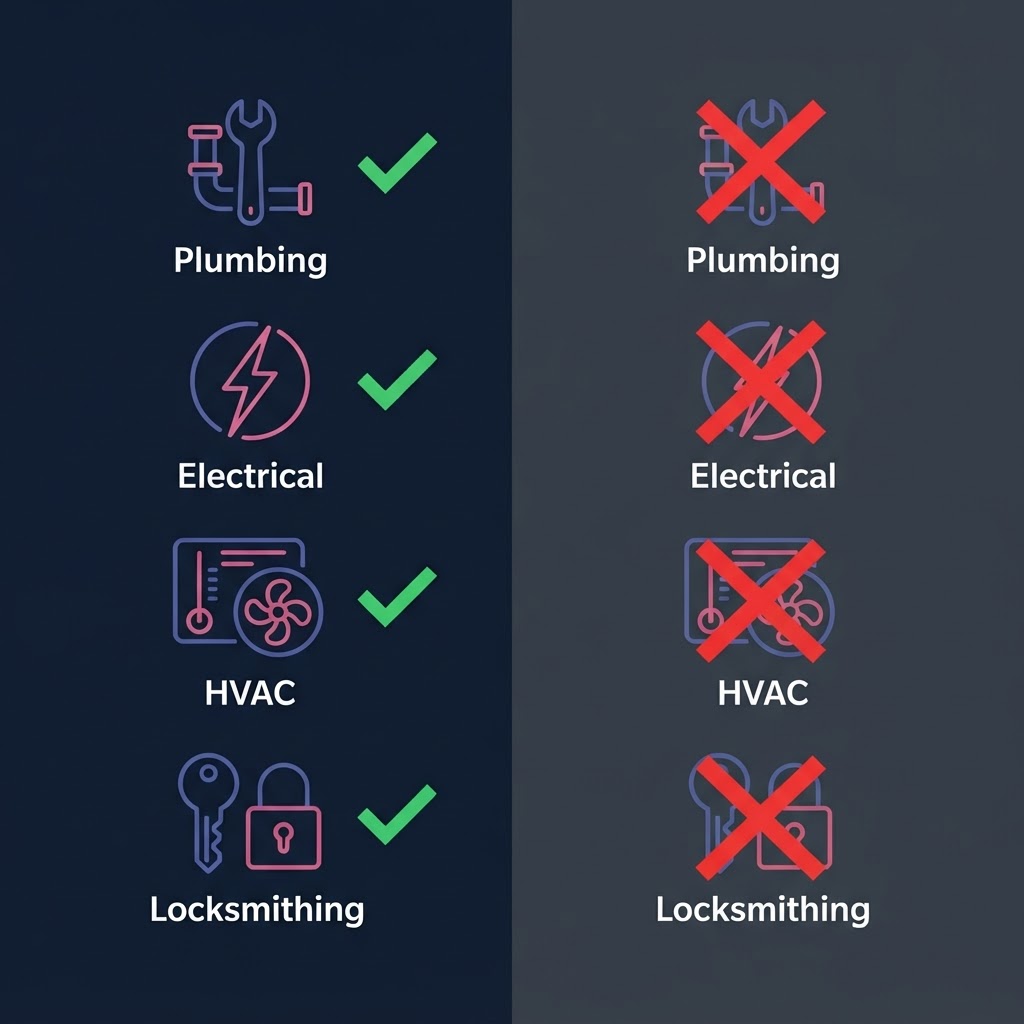
On July 14, Apple published its ad rulebook for Maps. Seven trades are banned outright: plumbing, electrical, locksmith, HVAC, pest control, roofing, and general contracting. Bail bonds and cryptocurrency ATMs too. Medical services get case-by-case review.
This isn't a mistake or an oversight. It's the strategy. As TechCrunch reported, Apple's Maps ad platform takes a fundamentally different approach than Google. One ad per search. On-device data. Physical storefronts only. And the biggest local ad category on the planet, home services, is simply not invited.
What Apple Banned
The list is specific and deliberate. Plumbing. Electrical. Locksmith. HVAC. Pest control. Roofing. General contracting. Seven trades that represent the backbone of Google's Local Services Ads business.
Apple didn't ban these categories by accident. Home services businesses require verification, background checks, license validation, and ongoing compliance monitoring. Google handles this with a dedicated LSA verification system. Apple looked at that infrastructure cost and said: no thanks.
The ban also covers bail bonds and cryptocurrency ATMs. Medical services get evaluated case by case. The pattern is clear. Apple wants businesses with a physical location customers visit. A restaurant. A store. A salon. If your customers come to you, you're in. If you go to your customers, you're out.
That's the storefront test. And it cuts the home services market out of Apple Maps entirely.
The Storefront Test
Apple's ad policy reveals something bigger than a ban. It reveals a philosophy.
Google's ad model is built on scale. More advertisers, more categories, more auctions, more revenue. It works because Google has the infrastructure to verify, monitor, and police millions of advertisers across every category. That's why Google's ad revenue hit $294 billion in 2025, with home and home improvement accounting for 7.33% of all Google Ads spend.
Apple's model is built on curation. Fewer advertisers, fewer categories, less clutter. One ad per search result. A blue halo around the pin. An "Ad" label in Suggested Places. Data that stays on the device. Apple is betting that a cleaner ad experience in a curated environment is worth more than a maximized ad experience in an open one.
This is the same philosophy that built the App Store. Apple reviews every app, rejects what it doesn't like, and takes a cut of what remains. Now they're applying it to local advertising. The App Store approach worked because consumers trusted the curation. Apple is betting the same will hold for Maps ads.
The problem: home services is where the local ad money actually is.
One Ad Per Search
Here's what makes Apple Maps ads different from every other ad platform launching in 2026.
Google shows up to four ads at the top of search results. Meta optimizes for scroll-stopping creative. TikTok rewards volume. Apple shows one ad. Per search. That's it.
The ad gets a blue halo around the pin on the map and an "Ad" label in the Suggested Places list. Apple says data about which ads users interact with stays on the device. It's not collected by the company or shared with third parties.
For advertisers, this means two things. First, winning the single ad slot in a Maps search is everything. There's no second place. No "also shown" consolation. You either win the auction or you're invisible. Second, the privacy-first targeting means you can't buy your way to relevance with audience data. Your ad shows based on context (what the user is searching for and where they are), not behavioral profiles built from tracking them across the web.
This is a fundamentally different game than Google Smart Bidding's August 17 changes, where Google is tightening its bidding algorithms. Apple isn't tightening. Apple is restricting. And for home services brands, the restriction is total.

Google's Biggest Local Category
Here's the number that matters. Home and home improvement accounts for 7.33% of all Google Ads spend. That's billions of dollars flowing through Google's Local Services Ads for plumbers, electricians, HVAC companies, and locksmiths.
Google built an entire ad product around these businesses. LSA requires Google Screened or Google Guaranteed verification, background checks, license validation, and a pay-per-lead model. It's one of Google's most successful local ad products because the intent is so high. When someone searches "plumber near me" at 2am with water on their kitchen floor, they're not browsing. They're buying.
Apple looked at that market and passed. The verification overhead, the compliance risk, the customer service burden of policing thousands of contractors. It's not worth it for a platform that's just getting off the ground. Apple would rather launch with restaurants, retail, and services where the risk is lower and the experience is cleaner.
The result: home services brands have one fewer platform to advertise on. Not because the platform doesn't exist, but because the platform explicitly rejected them.
Where the Money Goes
If you run marketing for a home services business, Apple Maps ads were never going to be your channel. Now it's official. So where does the budget go?
Google LSA gets the lion's share. It's already the dominant channel for home services lead generation, and Apple's exit means less future competition. But that also means Google can raise rates. Less platform competition means Google's LSA pricing power increases. Expect cost-per-lead to climb through the rest of 2026.
Local SEO and Google Business Profile optimization become more important, not less. If you can't buy your way into Apple Maps, organic visibility is your only path. And with Google's AI Overviews reshaping search results, your GBP listing is one of the few things you control in the local search experience.
Industry analysts project Apple's ad revenue will reach $8.5 billion in 2026, up from $4 billion. That growth comes from categories Apple is allowing, not the ones it's banning. Home services budgets stay on Google, Meta, and local SEO.
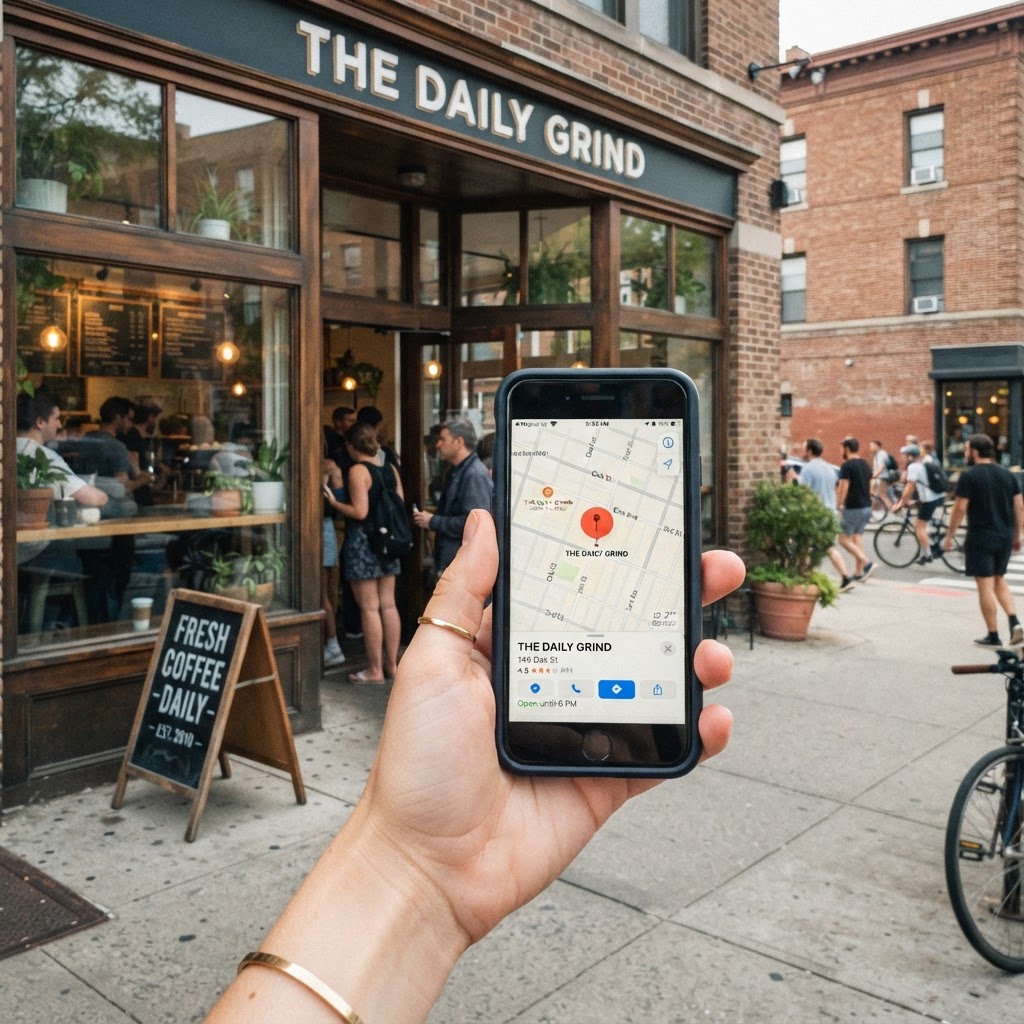
For brands with physical storefronts, this is actually good news. Less clutter. Fewer competitors. A premium environment where your ad is the only ad. If you run a restaurant, retail store, or service business customers visit, Apple Maps ads could deliver higher-quality impressions than Google's four-ad stack. The trade-off is reach. Apple Maps has fewer users than Google Maps, and the single-ad model means you have to win every auction.
The Two-Platform Problem
The local ad market is splitting into two platforms with opposite philosophies.
Google wants everyone. Every category, every advertiser, every auction. It invests in verification, compliance, and fraud detection to make that scale work. The trade-off: clutter, ad fatigue, and rising costs as more advertisers compete for the same slots.
Apple wants a few. Curated categories, physical storefronts, one ad per search. The trade-off: limited reach, restricted categories, and a walled garden that excludes entire industries.
For marketers, this isn't a choice between platforms. It's a portfolio question. If you're in home services, your portfolio is Google LSA, local SEO, and Meta. Apple Maps isn't in your mix. If you're in retail or hospitality, you need to start testing Apple Maps ads before the platform fills up. The single-ad model rewards early adopters who can win auctions at lower costs before competition arrives.
This is the same strategic split we've seen in Apple's approach to AI and platform strategy. Apple picks a lane, curates hard, and bets that quality beats quantity. Sometimes that works. Sometimes it doesn't. For local advertising, the bet is that a cleaner, more trustworthy ad experience will attract both advertisers and users who are tired of Google's ad-cluttered search results.
The question for home services brands isn't what to do about Apple Maps. It's what to do about a local ad market that's becoming more fragmented, not less. Google's platform is getting more expensive. Meta's platform is getting more restricted. Apple's platform doesn't want you. And trust is becoming the scarcest resource in marketing.
The brands that win local in 2027 won't be the ones with the biggest ad budgets. They'll be the ones with the best organic presence, the strongest reviews, and the deepest local SEO. Because paid channels are narrowing, not expanding. And the platforms that used to be open to everyone are picking sides.