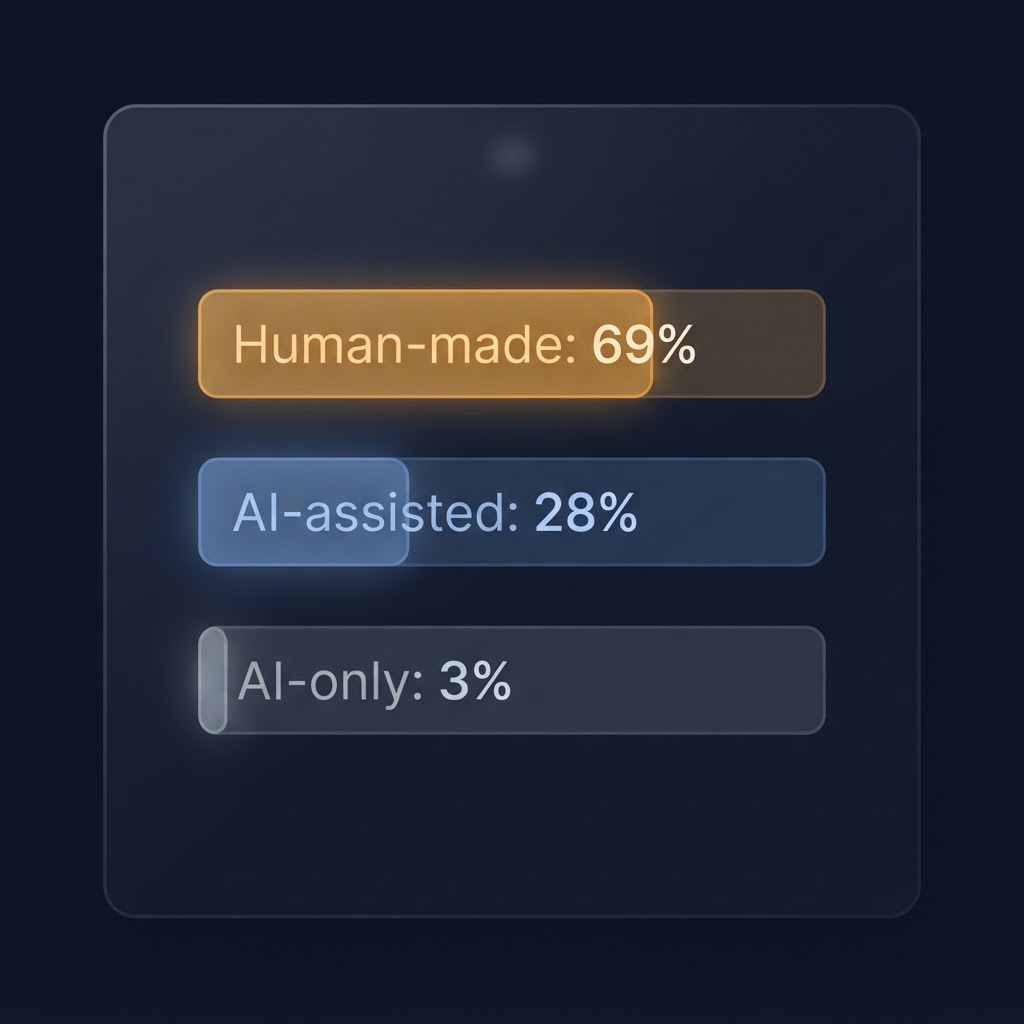
Gallup just asked 1,572 Gen Z Americans a simple question: do you trust work done by AI?
Three percent said yes.
Sixty-nine percent said they trust human-made work more. Twenty-eight percent trust AI-assisted work. The audience that grew up with AI doesn't trust it. They trust the person who made the thing.
That's not a marketing survey. It's Gallup, conducted with the Walton Family Foundation, published in 2026. And it's the strongest signal yet that "made by humans" is becoming a brand trust signal, not just a creative choice.
The Brands Already Cash In
Heineken launched a campaign called "Real Friends Aren't Artificial" that trolled AI companion startups with a bottle opener necklace. The message: real friendship happens over a beer, not through a chatbot. The campaign didn't say "we don't use AI." It said something more powerful. It said: we believe in the thing AI can't replace.
Polaroid ran a New York City campaign that threw shade at Apple and Google with a "Made by Humans" label on their photography. LEGO dropped #HonestlyNotAi on their World Cup content. Aerie, Cadbury, and a growing list of brands are running variations on the same theme.
This isn't a coincidence. Eight different "AI-free" label formats are racing for global recognition. The brands getting there first are the ones who will own the trust signal before it becomes a commodity. Right now, "made by humans" is a differentiator. In two years, it will be table stakes. The window to establish it as part of your brand identity is open but narrowing.
Why It Works
Clutch surveyed consumers and found that 77% believe AI-generated marketing reduces authenticity. Forty-eight percent say heavy reliance on AI makes a brand feel inauthentic. Almost a quarter say they actively avoid brands that lean too hard on AI for their marketing.
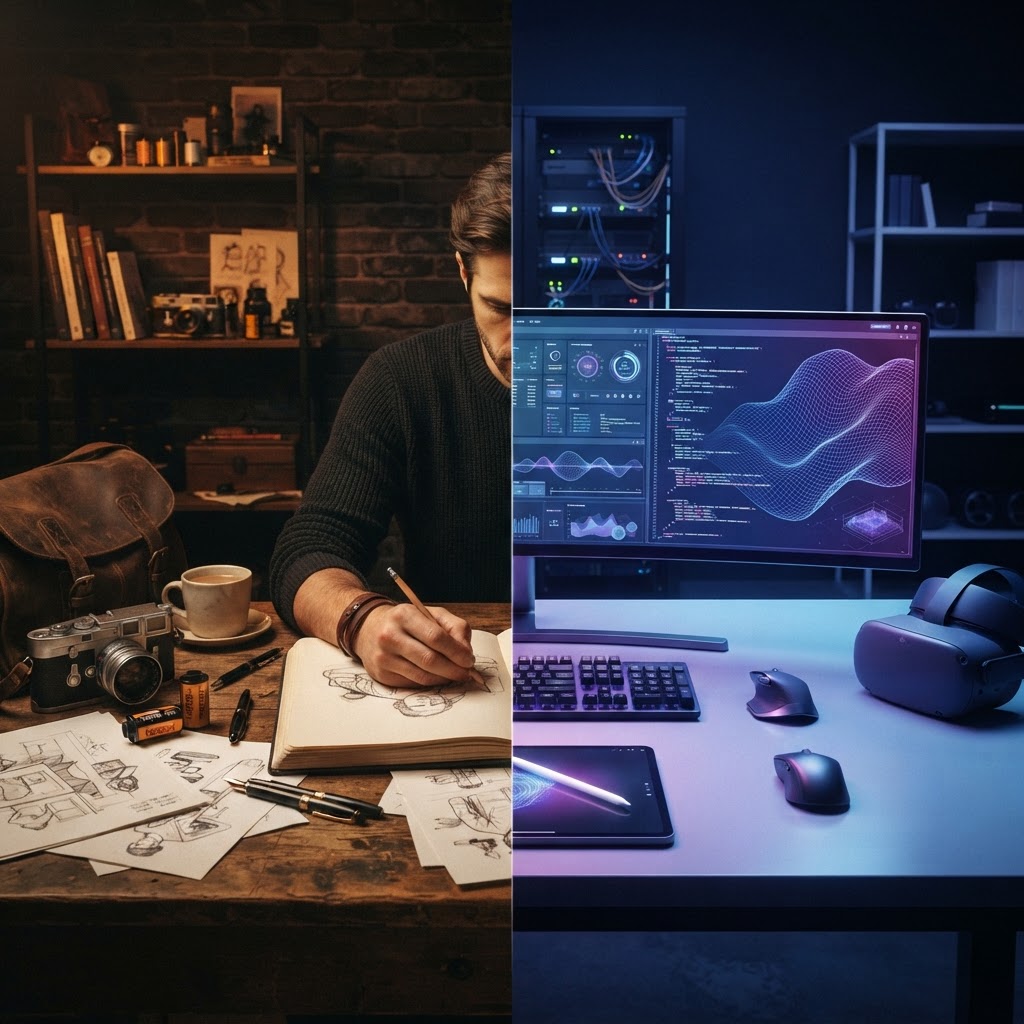
The psychology is straightforward. When everything looks the same (polished, perfect, generated), the thing that looks different earns attention. A grainy photo shot on a phone. A hand-drawn logo. A typo that survived because a human wrote it. These are trust signals now. They say: a person made this, and they cared enough to put their name on it.
Hootsuite's 2026 Social Trends report put it cleanly: "Human-made authenticity wins, but AI tools are table stakes." The winning formula isn't rejecting AI. It's using AI where it doesn't need a human touch and foregrounding the human where it does.
We've already seen how AI slop is killing brand visibility across search. The brands drowning in that flood are the ones that went all-in on AI content without thinking about the trust cost. Anti-AI marketing isn't the opposite strategy. It's the correction.
The Gimmick Trap
Here's where most brands will get this wrong.
Slapping a "Made by Humans" label on AI-generated content is worse than not labeling at all. Consumers aren't stupid. The Clutch data shows 77% can tell when marketing feels AI-generated. If you claim human-made and it doesn't feel human-made, you lose twice. You look inauthentic and dishonest.
The brands doing this well aren't labeling their output. They're changing their process. Heineken didn't tag their ads "human-made." They built a campaign around a physical object (a bottle opener necklace) and a human experience (meeting friends for a beer). The anti-AI message is baked into the creative, not bolted on as a badge. Polaroid's campaign worked because their product (instant film photography) is inherently analog. The "Made by Humans" label wasn't a marketing claim. It was a product truth.
This is the same trap we've seen with CMOs who buy AI tools they can't run. The purchase isn't the strategy. The execution is. Buying a "human-made" certification or adding a badge to your packaging doesn't make you authentic. It makes you perform authenticity, and audiences can tell the difference.

Where AI Fits
The nuance nobody is talking about: anti-AI marketing doesn't mean no AI. It means AI in the back, humans in the front.
Use AI for data analysis, media optimization, logistics, and personalization. Use humans for creative direction, brand voice, customer-facing content, and the moments where trust matters. The brands winning the "human-made" space are the ones who use AI to make their humans more productive, not to replace them.
Think of it like farm-to-table. The restaurant doesn't hide that they use refrigeration, delivery trucks, and inventory software. They foreground the farmer, the ingredient, and the human preparation. AI is the refrigeration. The human is the chef. Nobody goes to a restaurant because the fridge works well. They go because the food tastes like someone cared.
We've covered how AI cost efficiency is an illusion when teams treat tools as replacements. The same applies here. AI that replaces your creative team doesn't make you efficient. It makes you indistinguishable from every other brand that did the same thing. And with Google now drawing synthetic brand images in search results, the gap between what AI generates and what humans create is about to get wider. The visual layer is where authenticity will matter most.
What to Do This Week
Three moves.
Audit your customer-facing content. How much of it could a customer identify as AI-generated in five seconds? That's your vulnerability. Fix it before a competitor does. This doesn't mean rewriting everything. It means finding the three or four pieces that matter most (homepage, about page, flagship campaign) and making sure they feel unmistakably human.
Pick one channel where you commit to human-made content. Not a label, a commitment. Make the work visibly imperfect. Show the process. Let people see the hands. The channel matters less than the consistency. If you commit to Instagram, commit for six months. If you commit to your blog, commit for twenty posts. Trust signals compound. One human-made post is a curiosity. Twenty is a brand position.
Stop optimizing for volume. The AI visibility trap rewards brands that publish more. The trust trap rewards brands that publish better. These are different strategies and you can't do both at full intensity. Pick one. If you pick trust, you'll publish less, spend more per piece, and build something a competitor can't copy with a prompt.
The Provocation
The Gallup number that should keep you up at night isn't the 3%. It's the 69%.
Three percent trusting AI-only work is noise. Sixty-nine percent actively preferring human-made work is a market signal. That's two-thirds of the generation that will define brand loyalty for the next twenty years saying: we'd rather trust something a person made.
The brands that hear that signal and change how they work will own the next decade of trust. The brands that don't will be indistinguishable from the AI that generated their marketing. And in a world where 69% of Americans are exhausted from guessing if something is AI or not, being unmistakably human isn't a creative choice anymore. It's a competitive advantage.