
Researchers took 1,100 Google users and forced their searches into AI Mode for a week. External clicks fell 18.8 percentage points. Users ran almost one fewer search session per day. Trust in Google dropped. And 11.2 percentage points more of them started using Bing, DuckDuckGo, or Yahoo instead.
The industry read this as a traffic story. It is a trust story. And it breaks the central bet of the GEO gold rush.
Google AI Mode is the conversational search experience Google has spent 2026 pushing deeper into Search: a chat-style answer panel that replaces the classic list of blue links with a synthesized answer, a few citations, and follow-up prompts. The draft paper behind these numbers is AI in Search Reduces Publisher Referrals Without Improving User Experience: Experimental Evidence, from researchers at the University of Pennsylvania and Northeastern University, published as a draft in August 2026 and covered by Search Engine Land on September 23. What follows is what the experiment found, what almost nobody is saying about it, and what to do with your budget this quarter.
What Google AI Mode did to clicks
The experiment ran three arms: no AI (Overviews hidden, AI Mode redirected away), current search, and forced AI Mode. Here is the forced AI Mode group against normal Google search, measured over seven treatment days:
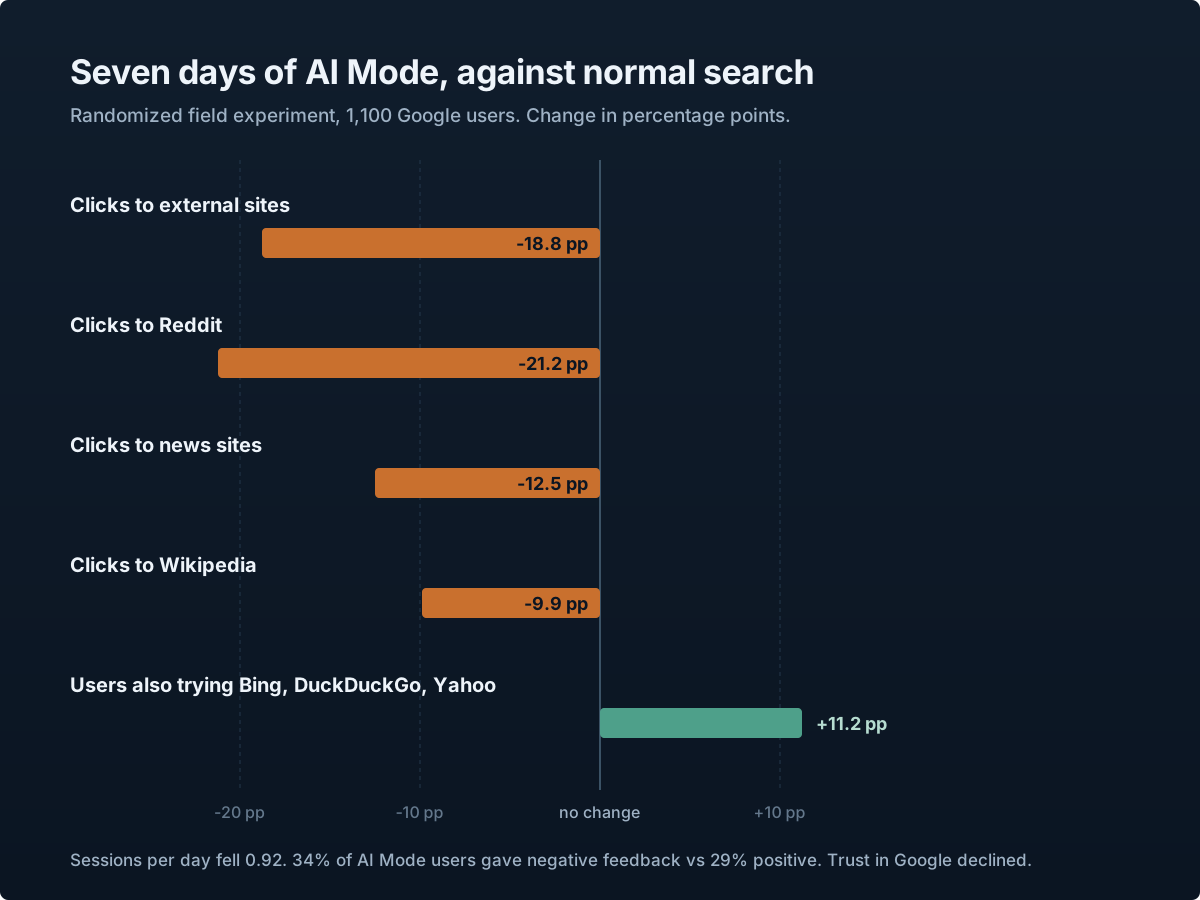
The no-AI arm is the quieter finding. When researchers stripped AI Overviews out of results, external click-through rose 8.8 percentage points, with no measurable change in how users rated the experience. Users did not miss the AI layer. They clicked more without it and felt the same.
Three caveats keep this honest. The sample skewed younger, more educated, and US-based. Forced AI Mode is harsher than the opt-in product Google ships, and voluntary AI Mode use was about 0.6% of searches when the study began, so this is a full-adoption stress test, not a forecast. And Google changed its page markup mid-experiment, so the researchers' Overview-hiding only worked about half the time, which means the no-AI click lift is probably understated. None of that erases the direction. It only limits how precisely you can paste the numbers onto a board slide. (Intelligency Group has the cleanest summary of the limits.)
The standard marketer response to this paper has been: win more citations. If AI answers are where the attention goes, fight for placement inside them. That response treats the citation as the prize. It misses what the satisfaction numbers say about the prize itself.
The citation nobody trusts
Here is the question the GEO industry is not asking: what is a citation worth inside a surface users are quitting?
A citation is a trust transfer. It works because the reader trusts the surface enough to follow the link somewhere. Strip the trust out and the mechanism fails. Thirty-four percent of AI Mode users gave the tool negative feedback, against 29% positive. Users reported less control, difficulty getting to websites, and limited links or source diversity. Trust in the information on Google fell on a 7-point scale. People spent longer inside the AI surface, clicked out less, ran fewer sessions, and liked it less.
Put your brand in that picture. Your team spends the quarter earning a prominent citation in an AI Mode answer. The user reads the answer, distrusts the experience, and closes the tab. That citation is not distribution. It is furniture.
The citation trust paradox states it plainly: a citation inside an AI answer only drives behavior when users trust the surface showing it. When trust in the surface falls, the citation's value falls with it, no matter how prominent the placement. This is the part of the GEO conversation that assumed the surface would hold. It is not holding.
None of this means AI citations are worthless. It means they are conditional, and the condition is the one nobody is measuring. Your citation report counts placements. It does not weight them by whether the surface is gaining or losing the user's confidence. A citation inside a trusted answer is an introduction. A citation inside a distrusted one is a mention in a room people are leaving.

The agencies selling AI-visibility dashboards have a product built for the old assumption: more citations, more visibility, more value. Ask them for the trust-adjusted version. Which of your citations sit in surfaces users are abandoning? Nobody's dashboard answers that yet.
The answer box points at itself
A day before the Search Engine Land writeup, Search Engine Roundtable spotted Google testing links inside AI Overviews that open AI Mode instead of a website. The answer box now routes to a bigger answer box. (Kaan Bozoglu's writeup connects the two events.)
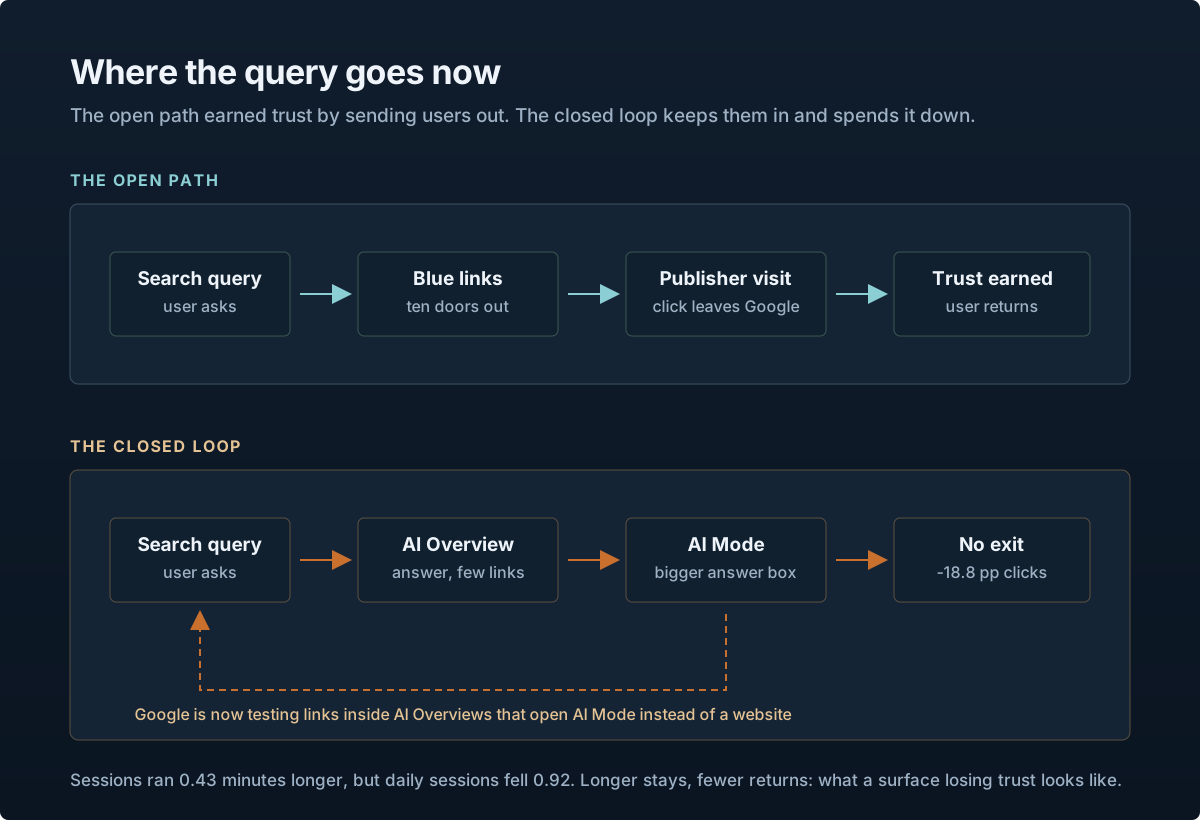
Look at the mechanics. The open path was a trade: Google earned trust by being the fastest route to somewhere else. The closed loop reverses the trade. The query enters, the answer expands, the links point inward, and the session ends inside Google. Sessions got 0.43 minutes longer while daily session counts fell. Users spent more time per visit and came back less often. That is what a surface losing trust looks like from the inside: longer stays, fewer returns.
This is also why the "Google is the verification layer" argument needs an update. I have written before that ChatGPT sends users back to Google to verify. The verification still happens. But the study shows the verifier itself is leaking: +11.2 percentage points of users reaching for rival engines. The destination of the second click is moving. If your strategy assumes the verifier is always Google, you are optimizing for a landlord whose tenants are shopping for a new building.
Spend where the trust is
So what do you actually do with the Q4 budget? Four moves, in order.
-
Run a citation trust audit. List every surface where AI answers cite your brand. For each one, write down the trust trajectory, not just the placement count. AI Mode's is documented above: falling. Bing's Copilot Search reached 17.3% of US desktop searches in June 2026, per Comscore via Ignite Visibility, while overall desktop search volume grew 8% year over year. A citation in a surface gaining users is worth more than five in one losing them. Your current report treats them as equal. Fix the weighting before you spend another dollar chasing placements.
-
Own the flee destinations. The steepest click drops in the study were Reddit (21.2 points), news (12.5), and Wikipedia (9.9). Those are the places users were trying to reach before the AI layer absorbed the journey. They are also where fleeing users land when they leave. If your brand's Reddit presence is a graveyard of unanswered threads and your review pages are thin, the exodus does not help you. The Reddit playbook matters more now, not less, because Reddit is both a citation source and a destination.
-
Stop counting citations like rankings. A placement count is a vanity metric when the surfaces are diverging. Replace it with a simple weighted score: citations multiplied by a trust factor for the surface. You will not get the trust factor exactly right. An honest estimate beats a precise count of the wrong thing.
-
Keep the direct channel warm. Users ran 0.92 fewer sessions per day. Fewer sessions means fewer discovery chances of any kind, cited or not. Email lists, communities, and direct traffic do not depend on an answer box pointing anywhere. The brands least exposed to this study's findings are the ones whose customers type the URL from memory.
One more thing the data whispers. Removing the AI layer raised clicks 8.8 points with no satisfaction cost. Users never asked for the answer box to get bigger. Google is building it anyway, because the closed loop is better for Google even when it is worse for the user. Your strategy should follow the user, not the landlord.

The GEO gold rush assumed the AI answer was the new front page and the citation was the new rank one. The experiment says the front page is a room people are leaving. Follow the trust, not the announcement. Google's response to all of this, so far, has been to build more doors into AI Mode. Watch whether users walk through them. Your budget should arrive after they do, not before.