TL;DR
- Oracle released five Fusion Agentic Applications for CX that autonomously execute sales, service, and marketing tasks.
- These agents coordinate with each other across pipelines without waiting for human handoffs at each step.
- The real disruption is not task automation. It is the removal of the human approval layer between tasks.
- Marketing ops roles that exist to coordinate handoffs are the first to be restructured, not creatives.
- This is a race. Salesforce, HubSpot, and Microsoft are all building equivalent agent layers right now.
Two weeks ago, Oracle quietly launched something that got buried under the usual enterprise software announcements. Five AI agents, built directly into Oracle Fusion Cloud for CX, that do not assist with sales and marketing tasks. They run them.
The distinction matters more than the press release suggests. Most enterprise AI integrations are assistants. They surface recommendations, draft content, flag anomalies. A human still approves each output before anything moves. Oracle's Fusion Agentic Applications are structured differently: the agents coordinate across functions and execute through the pipeline without waiting for human sign-off at each handoff.
The bottleneck in most enterprise marketing is not execution. It is the twelve approval touchpoints between strategy and live campaign.
Oracle just automated the handoffs. That is a different kind of disruption than automating the tasks themselves.

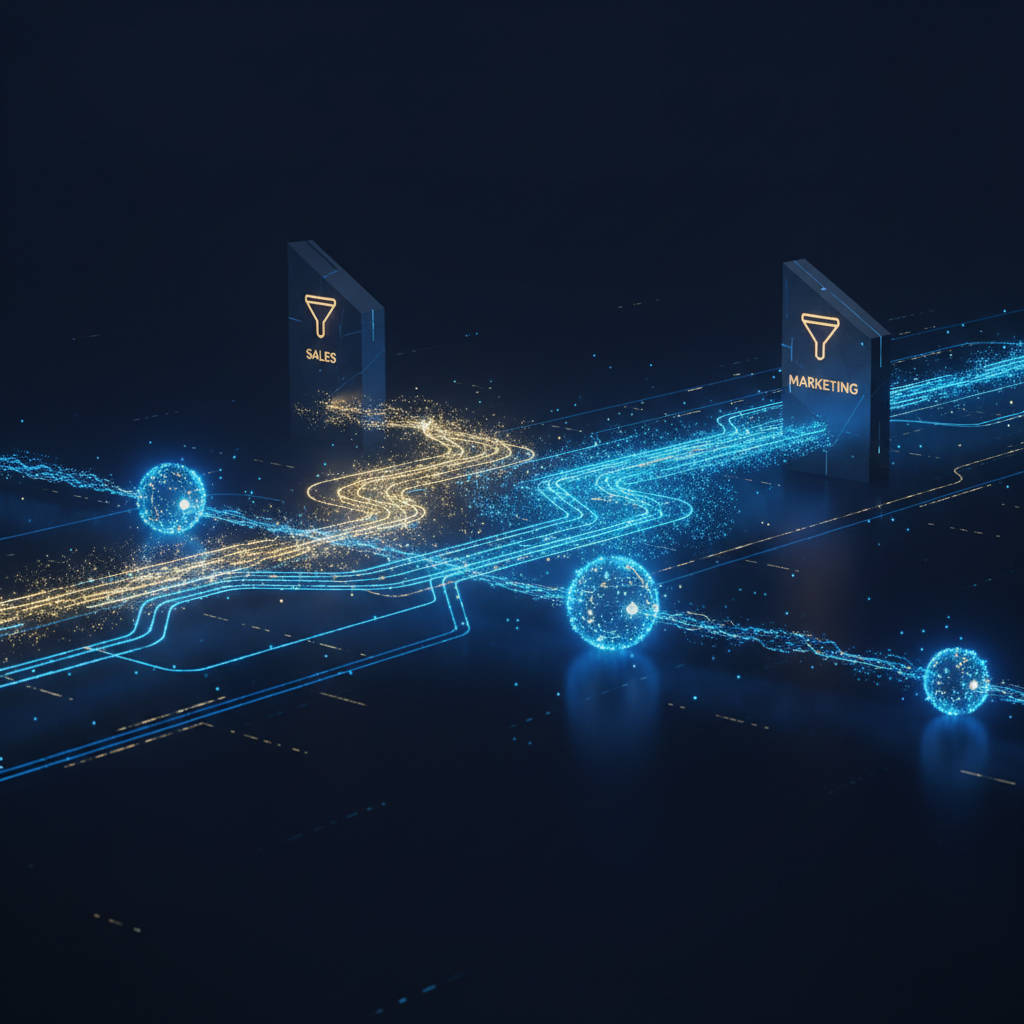
Oracle's five agents handle distinct pipeline stages but share context, removing the human handoff layer between them. Oracle 26A Fusion roadmap.
What the Five Agents Actually Do
Breaking down the suite
Oracle has not published a granular breakdown of all five agents yet, but the Fusion Agentic Applications page describes them as covering the full CX stack: lead qualification and scoring, personalized outreach sequencing, customer service resolution, renewal and upsell detection, and campaign performance optimization.
The agent architecture is multi-agent by design. Each handles its domain but passes context to adjacent agents rather than requiring a human to re-brief each step. Lead qualifies in agent one, gets handed to outreach sequencing in agent two, without a marketing coordinator facilitating the transfer.
Lead qualification and intent scoring
Agent reads CRM data, behavior signals, and firmographic context to score and route leads without human triage. Removes the BDR-as-filter model from the top of the funnel.
Personalized outreach sequencing
Generates and schedules multi-touch sequences based on lead behavior. Adapts timing and messaging angle without waiting for a human to approve each variant.
Campaign performance optimization
Monitors live campaign metrics and reallocates budget or adjusts creative rotation based on performance signals. Real-time, not weekly review cadence.
Renewal and upsell detection
Identifies expansion signals from product usage data and triggers outreach sequences autonomously. Reduces the dependency on CSMs catching every expansion opportunity manually.
The roles being restructured first are not copywriters or designers. They are the coordinators, the hand-off managers, the people whose job is to move approved work from one team to the next. Agent pipelines eliminate the coordination layer, not the creative layer.
The Competitive Race This Triggered
Who else is building this
Oracle's launch did not happen in a vacuum. Salesforce Agentforce has been in market since late 2025. HubSpot Breeze AI agents went into beta in Q1 2026. Microsoft Copilot Studio is shipping agent templates for Dynamics 365 marketing workflows as part of its 2026 Wave 1 release.
The race is to own the enterprise marketing agent layer before the stack consolidates. Whoever wins this owns the workflow data, and workflow data is the training set that makes the next-generation agents better. This is a data flywheel play dressed up as a product launch.

The adaptation challenge: marketing teams shifting from directing work to reviewing agent output requires a different management muscle entirely.
What Marketing Leaders Should Do Right Now
The practical response
Audit your coordination overhead
Map how many people on your team exist primarily to move approved work from one stage to the next. That is the headcount that agent pipelines replace first. Know where it is before your CFO asks.
Run a pilot on one full funnel stage
Pick lead qualification or campaign optimization, not copywriting. These are the functions where agent autonomy creates the clearest ROI and the lowest creative risk in the first phase.
Build your quality control framework now
Agent output needs review infrastructure. What does good look like? What are the guardrails? If you cannot answer those questions, you are not ready to let agents run autonomously and you will get burned when they make a bad call.
For the broader context on how AI agents are restructuring job roles across marketing, the AI strategist inversion post covers the organizational shift in detail. And the beyond the chatbot breakdown explains the workflow architecture that makes multi-agent coordination possible.
The Bottom Line
Enterprise marketing automation just crossed a threshold. The question is no longer whether to adopt AI agents. It is whether to build the oversight infrastructure before the agents are running, or scramble to build it after they already are. The second option is more expensive.
Back to all posts