
Why Your Marketing AI Is Obsolete
Marketing is spending more on AI while transformation falls. The next advantage is not a smarter chatbot. It is a permissioned system that can see the work and earn the right to change it.
More AI spend. Same operating system.
The advantage now moves to the system that owns the permission, context, and evidence behind the work.
+60%
planned H2 AI media-spend growth
19%
reporting major workflow change
Marketing just posted the biggest AI spending increase of any function in the company, and it barely moved anything.
Mediaocean's mid-2026 market survey, based on 312 marketing professionals surveyed in May, found marketers planning a 60% increase in AI media spend for the second half of the year. That is the highest figure the survey has recorded since it began tracking the category in 2021.
In the same survey, only 19% said AI was causing a major transformation in how they actually work. Six months earlier, that number was 28%. The gap between money going out the door and value coming back is the uncomfortable part: most teams built a faster version of the same workflow, not a different one.
The reason vertical AI keeps winning in legal, healthcare, and support is not that those industries found a magical model. They built software that already understood a narrow job, the data inside it, and the permissions required to act. Marketing is now trying to build that layer while the channels themselves are changing underneath it.
The spend does not match the result
Mediaocean's blockers are revealing: data gaps, weak integration with the existing stack, talent shortages, and unclear ROI. None of those are model problems. The frontier model your team is using is not the bottleneck. The bottleneck is that a general-purpose assistant was never granted access to campaign history, audience segments, or actual performance data.
That is the failure mode every horizontal AI deployment hits eventually. Novelty hides shallowness for a month. Then the model drifts, hallucinates an audience insight, or recommends a media mix with no idea what twelve months of spend returned because it was never shown the ledger.
The implication is more precise than “AI is overhyped.” Marketing is rebuilding its spend allocation around AI-adjacent channels while running the operational workflow through tools that cannot see the new allocation. That is how a budget grows faster than the system supposed to make it useful.

What vertical AI actually did
The clearest evidence is not a benchmark. It is what happens when software owns a narrow workflow long enough to build trust around the data inside it. Harvey took about three years to cross $100 million in ARR and reached $300 million by May 2026. Legora reached $100 million from a $1 million base in 18 months. That record-setting timeline belongs to Legora, not Harvey.
Sierra crossed $100 million ARR seven quarters after launch. Abridge raised a $316 million Series E extension on top of a $5.3 billion valuation. None of these companies won by out-modeling OpenAI. They owned the workflow before AI arrived: case law archives, redlines, clinical notes, customer conversations, and the rules that make those records useful.
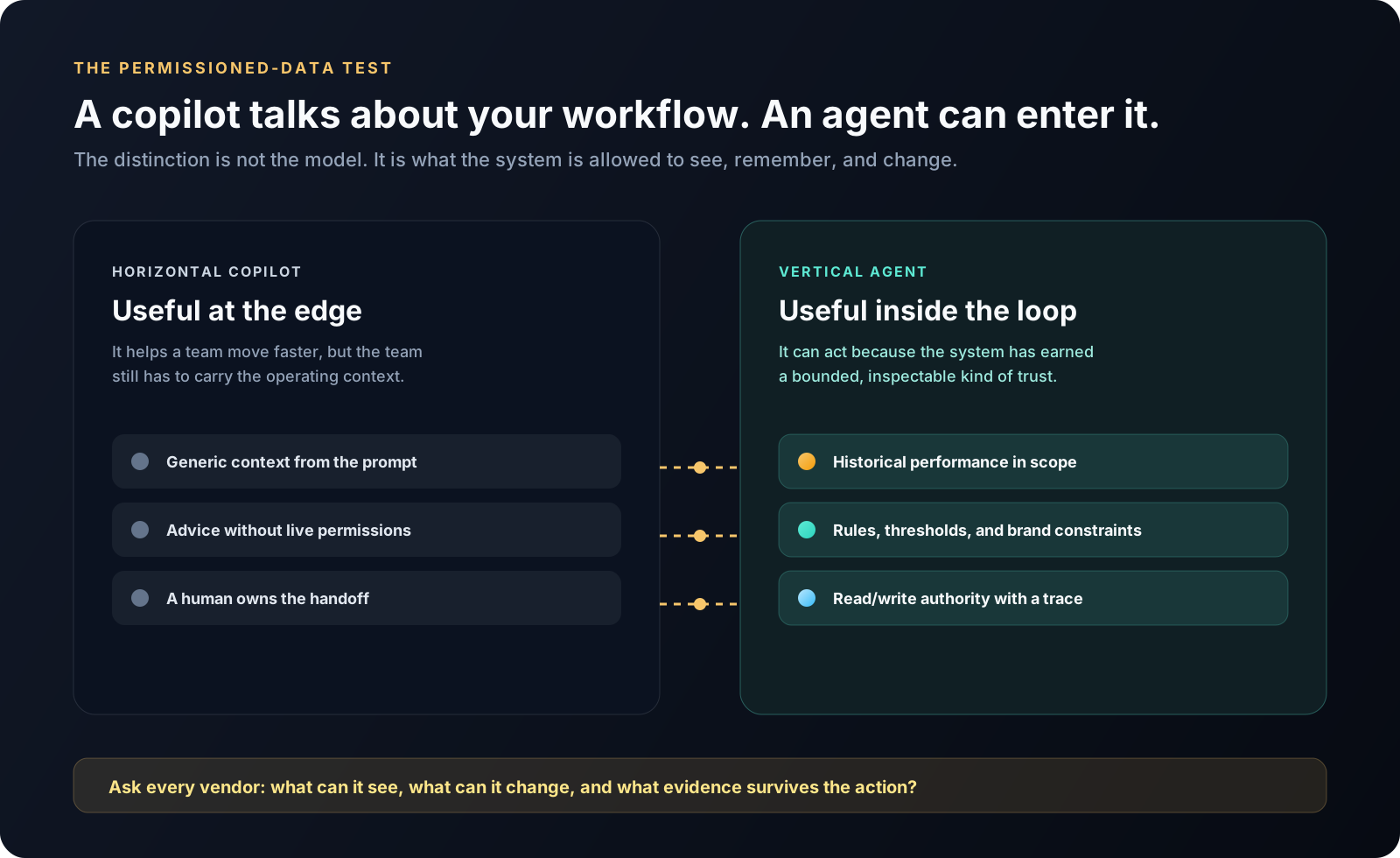
That is the difference marketing keeps trying to shortcut. A horizontal copilot can suggest ad copy. A vertical agent can manage a decision because it has earned access to the context behind the decision.
Harvey
Legal
$300M ARR
Crossed $100M in roughly three years, then reached $300M by May 2026.
Legora
Legal
$1M → $100M
Bessemer confirmed the climb took 18 months, the fastest enterprise milestone on record.
Sierra
Support
$100M in 7 quarters
A customer-support workflow, not a general-purpose assistant, became the product.
Abridge
Healthcare
$316M extension
Clinical documentation depth helped support a $5.3B valuation before the latest raise.

The difference is permissioned data
Vertical AI is not ChatGPT plugged into your CRM. It is a system that learns from your historical performance, applies your category rules, improves per customer, and runs with less supervision because its accuracy has earned that trust.
A foundation model does not have your campaign history, audience segments, or business rules sitting in its training data. That information lives inside your stack, behind permissions a general-purpose assistant was never granted.
The question to ask is not “which model powers it?” Ask “what can it see, what can it change, and what record survives the action?”
Marketing's missing piece was not missing for long
Legal, healthcare, and customer support had vendors that already held the customer relationship and permissioned data. Marketing was split across walled gardens. Google, Meta, TikTok, and every retail media network sat on its own performance data, and none handed that context to a general-purpose assistant.
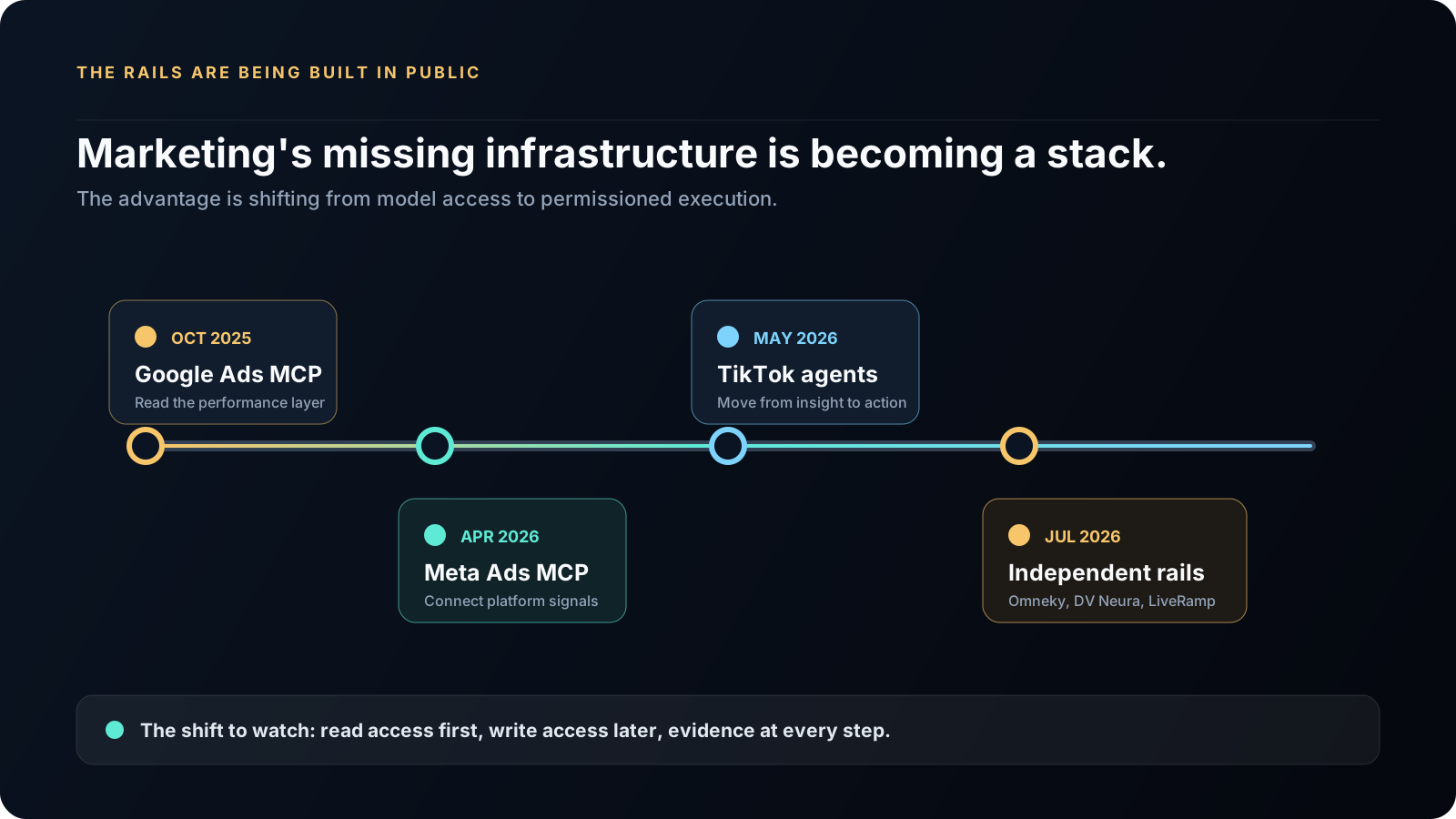
That was true when the earlier version of this piece ran in June. It is much less true now. Google's Ads MCP server, Meta's first-party MCP, TikTok's agent-native campaign interfaces, and Amazon's own work are turning platform data into an agent-access layer.
Independent vendors are moving too. Omneky opened a public API and MCP server on July 10, 2026. DoubleVerify and LiveRamp are building verification and data layers around approved agents. The infrastructure gap is closing in real time, which means the strategic question is shifting from whether marketing gets vertical AI to who gets to define its boundaries.
The catch nobody is pricing in
The rails being built are owned by many of the same platforms selling the inventory. Google, Meta, and TikTok are not neutral infrastructure providers. The agent optimizing your spend and the platform collecting that spend increasingly answer to the same company.
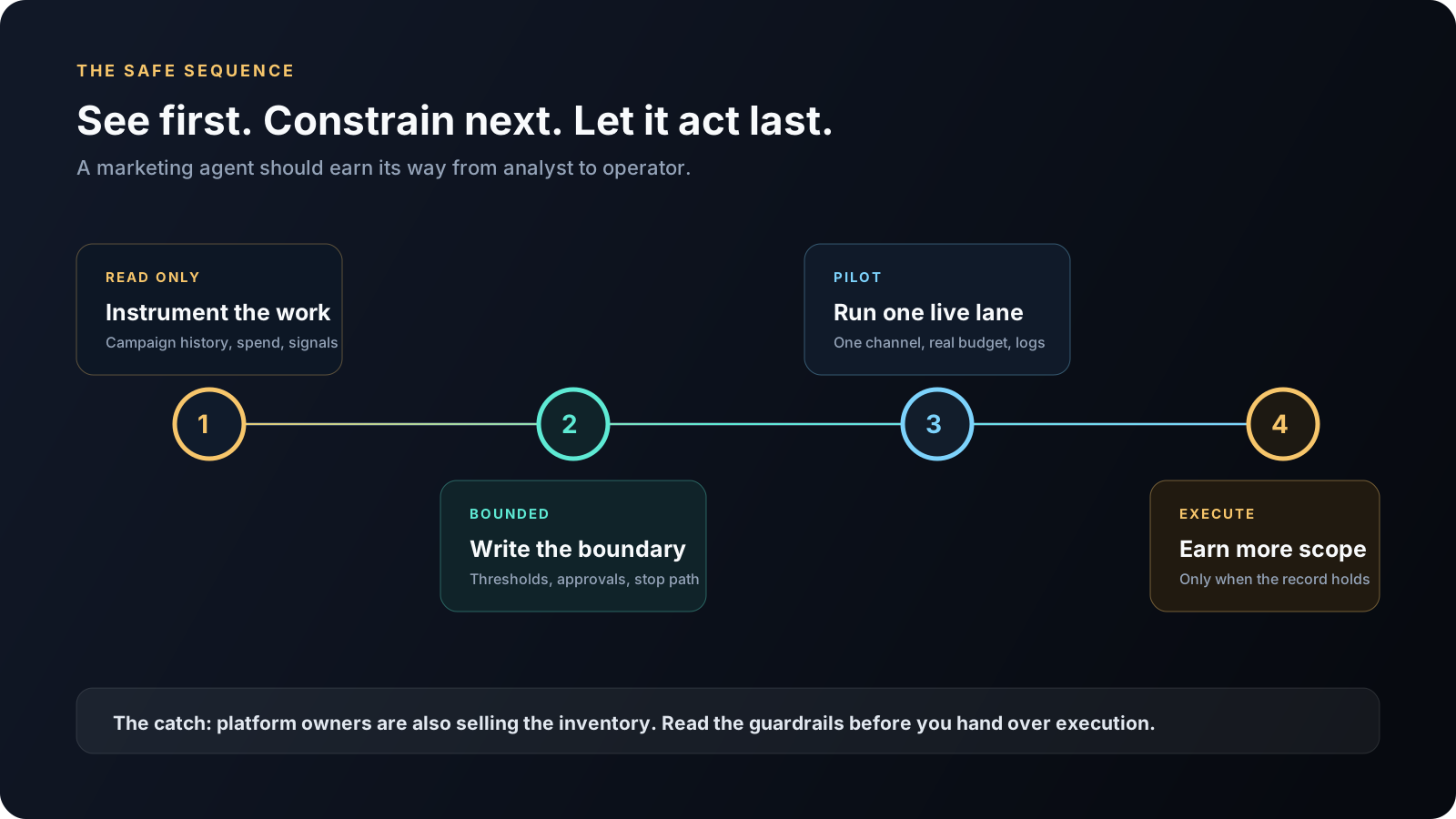
That is not a reason to opt out. It is a reason to read the guardrails before handing over execution authority. DoubleVerify's rollout makes the sequence explicit: its Insight Agent reads data first, while the Activation Agent that can make live changes arrives later.
Read access and write access are different permission levels. Treat them as different products. If your category is regulated, the liability language around AI-generated creative belongs on legal's desk before the first autonomous campaign launches.
What this means if you are deciding right now
If your team is still using a general AI assistant for ad copy, audience notes, and campaign briefs, you are not behind because the model is weak. You are behind when nothing in the setup has permission to see the performance data the decision depends on.
The move is not to rip out the stack next quarter. It is to give one narrow system enough real context to prove it can carry a real responsibility.
Turn on read-only access first
Start with the official platform interfaces. Let the agent observe performance before it can spend money or change targeting.
Ask what the vendor can actually see
If the honest answer is “whatever you paste into chat,” it is a copilot with better branding, not a vertical agent.
Route write access through legal
A vendor that can act on live budget needs a decision boundary, an escalation path, and records that survive a dispute.
Pilot one channel with real budget
Choose the platform with the cleanest first-party data, wire the agent to the live numbers, and expand only after the record holds.
Can it see your real numbers, and does it get smarter every time you use it?
YES
permission
TRACE
evidence
Source notes
Evidence behind the refresh
The June version leaned on two unattributable statistics. This version drops them, corrects the timelines, and links the claims that move the argument.
Mediaocean reporting via PPC Land
AI media leads H2 ad investment plans as implementation gap widens
312 marketing professionals; 60% planned H2 AI media-spend growth, while major workflow transformation fell to 19%.
Sacra
Harvey revenue and valuation profile
Tracks Harvey crossing $100M ARR in August 2025 and reaching $300M ARR by May 2026.
Bessemer Venture Partners
Legora: the fastest enterprise business to reach $100M ARR
The 18-month $1M-to-$100M record belongs to Legora, not Harvey.
Google Developers
Google Ads API MCP server
The official documentation for agent access to Google Ads campaign and performance data.
PPC Land
Agentic ad tech tries to take over the buying layer
Covers DV Neura, LiveRamp LAB, and the independent infrastructure forming around ad agents.
PR Newswire
Omneky launches public API and MCP server
A July 10, 2026 example of independent ad-creative infrastructure opening to outside agents.
FAQs
What is the difference between vertical AI and horizontal AI in marketing?+
Horizontal AI can draft copy or brainstorm ideas, but it usually has no access to your campaign history, audience data, or brand rules. Vertical AI is built for one workflow, gets permissioned access to real performance data, and improves specifically for that account.
Is it a mistake to use a general AI assistant for marketing work?+
Not for drafting or brainstorming. The mistake is asking a general assistant to manage media mix, bid optimization, or targeting decisions when it cannot see the performance data those decisions depend on. Use general AI for ideation and permissioned tools for live operations.
Which ad platforms already support AI agents directly?+
Google, Meta, TikTok, and Amazon have all shipped agent interfaces or MCP-based access for their advertising platforms. Read access is arriving faster than write access, which is the safer sequence for teams adopting the infrastructure.
How should I evaluate a vendor pitching a marketing AI agent?+
Ask what data it can see, whether the access is read-only or can execute changes, how the decisions are logged, and how the vendor is paid. If it only works with whatever someone pastes into a chat window, it is probably a copilot with better branding, not a vertical agent.
Is it safe to let an AI agent control ad spend directly?+
Treat read access and write access as separate decisions. Pilot on one channel with real data, define thresholds and approvals, preserve an evidence trail, and route write-access decisions through legal when the category or customer impact is regulated.

The future of marketing AI is not the best model.
It belongs to whoever owns the permission.