
The Martech ROI Lie
The problem is not that CMOs bought the wrong tools. The problem is that the stack can generate more signals than the organization can trust, decide on, and act on.
The lie is not the 78% number
The lie is the story a CMO tells after the number appears: one more platform will close the gap.
eClerx's 2026 marketing report says 78% of marketing leaders say martech investments fail to deliver ROI. That sounds like a vendor-selection problem. It is not. The same report frames the deeper issue as an activation gap: companies can generate insights, but they cannot reliably move those insights into campaigns, budgets, customer journeys, or operating decisions.
That distinction matters. A bad tool is easy to blame. A broken activation system is harder because it implicates data quality, campaign governance, approval speed, measurement trust, team incentives, and the CMO's own renewal decisions. It means the stack is not failing alone. The operating model around the stack is failing.
Martech ROI does not disappear in one dramatic board meeting. It leaks. A personalization engine launches without a clean customer identity layer. A CDP becomes a warehouse of unresolved duplicates. Attribution creates numbers nobody trusts. AI produces recommendations that sit in Slack because no one owns the next move. The stack keeps looking sophisticated while the business keeps making decisions by memory.

What the 78% number actually means
The easy read is: marketers bought too much software. The better read is: marketers bought software faster than they built the organizational muscle to use it.
eClerx reports that 75% of leaders still make investment decisions from partial data, while only 25% describe fully data-driven environments. Another finding is even more revealing: 47% are only moderately confident in their ability to measure true ROI across channels. That is not a small analytics inconvenience. It is a trust problem at the center of the budget process.
78%
marketing leaders who say martech stacks do not support business goals
eClerx Marketing Report 2026
75%
leaders still making investment decisions from partial data
eClerx
49%
active martech utilization in Gartner 2025 research
Gartner Marketing Technology Survey
15,384
solutions in the 2025 marketing technology landscape
Chiefmartec / Martech Tribe
Gartner adds the budget backdrop. Its 2026 CMO Spend Survey says marketing budgets are effectively flat at 7.8% of company revenue, while AI now takes 15.3% of marketing budgets and only 30% of organizations report mature AI readiness. In the same research stream, Gartner warns CMOs to prioritize data foundations, process maturity, and governance over fragmented tools and pilots.
That is the real trap. When growth expectations rise and budgets stay tight, the CMO cannot afford symbolic technology. Every tool has to earn its place in the operating system of the business.
The stack can look active while the decision layer remains weak. That is why usage metrics alone cannot defend the budget.
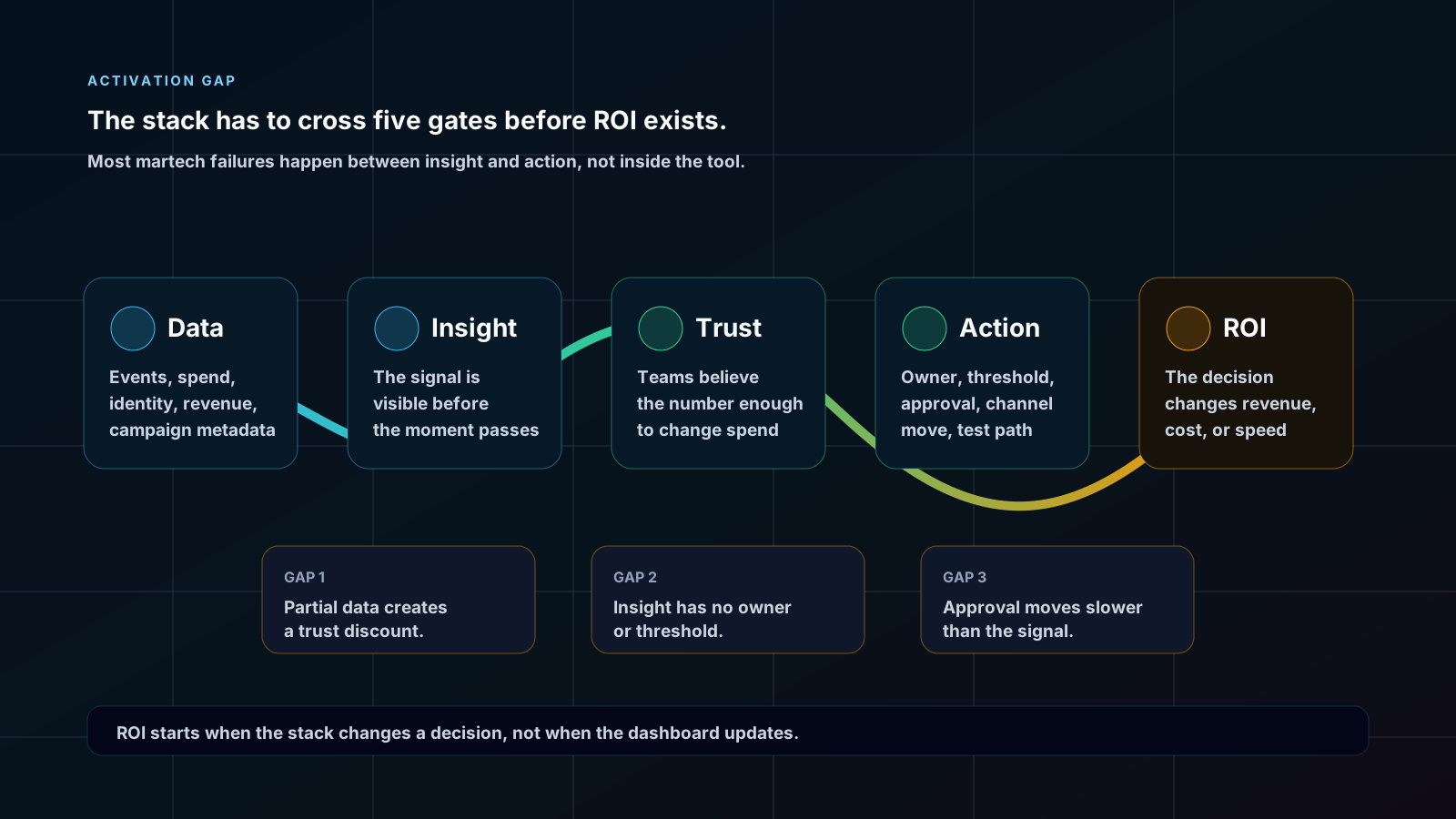
The activation gap is where ROI goes to die
The martech stack was sold as a nervous system. In many companies, it became a museum. Each platform preserves a version of the customer, the campaign, the channel, or the result. Very few platforms force the next decision to happen.
Gartner's marketing technology research says martech utilization dropped to 49% in 2025 and that only 15% of organizations qualify as high performers that meet strategic goals and show positive ROI. Chiefmartec and Martech Tribe counted 15,384 martech solutions in the 2025 landscape. Those two facts belong together. The market keeps creating options while most teams struggle to use the options they already own.
AI makes this more urgent. A model can summarize the dashboard, identify a segment, write campaign variants, and suggest budget moves. But if the source data is disputed, the approval path is slow, and the channel owner is not empowered to act, AI has simply made the waiting room more impressive.
Data exists
It lives in sales, support, product, ecommerce, media, and analytics systems with different definitions.
Create one decision-grade customer, campaign, and revenue vocabulary.
Insight appears
The dashboard shows what happened, but nobody owns the next action.
Attach every recurring signal to an owner, threshold, and response path.
AI recommends
The model can generate recommendations faster than the organization can approve or test them.
Put AI inside governed workflows, not on top of disconnected reporting.
Budget moves
Spend shifts toward another platform because the old one never had a kill rule.
Fund use cases, not tools. Renew only the capabilities that changed a decision.

Why spending continues after the stack disappoints
Martech survives because the failure is distributed. The CMO does not wake up to one invoice called "waste." Waste hides across unused features, duplicated audiences, half-trusted reports, one-off AI pilots, implementation debt, and tools that still have one powerful internal sponsor.
Consumption-based pricing makes the story feel more disciplined. Pay for what you use. Scale up only when value appears. But usage is not value. If the organization lacks real-time controls, owner accountability, and renewal discipline, usage-based pricing can turn a vague license problem into a volatile spend problem.
The sunk-cost story
A platform that took nine months to implement earns another year because nobody wants to admit the launch did not change decisions.
The AI wrapper story
A weak workflow gets renamed as an AI initiative, and suddenly the same old data problem looks like innovation.
The attribution story
The dashboard is too disputed to guide spend, but too familiar to retire, so teams keep reporting numbers they do not trust.
The vendor roadmap story
Teams renew because the next release promises the capability they needed from the last renewal.
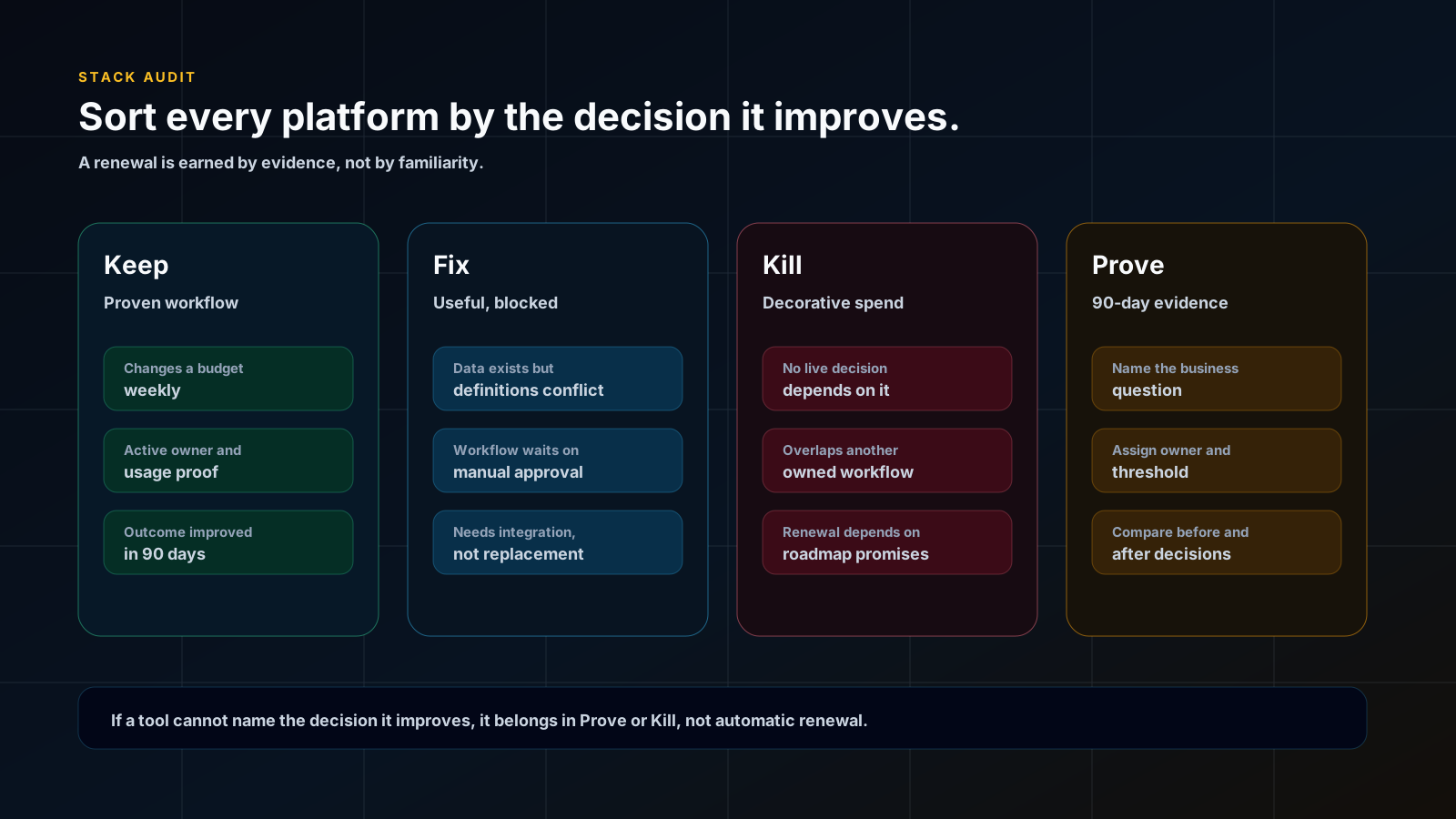
The audit starts with decisions, not software
Do not ask whether the platform is powerful. Ask whether anyone uses it to change the business.
Most stack audits begin as vendor spreadsheets. Contract date, owner, category, cost, renewal. That is useful procurement hygiene, but it does not answer the ROI question. A tool can be cheap and useless. It can be expensive and essential. It can be widely used and still not move one meaningful outcome.
The better audit begins with the decisions marketing makes every week: which audience to target, which message to ship, which channel to fund, which campaign to pause, which customer moment to personalize, which segment to exclude, which experiment to scale. Then each tool has to prove it improves one of those decisions.
Name the business question
What decision should this tool make faster, cheaper, or more accurately?
Find the live user
Who logs in weekly, what do they do, and what would break if access disappeared tomorrow?
Trace the last decision
Which budget, audience, offer, channel, or customer experience changed because of this tool?
Price the workflow
Include licenses, usage spikes, data work, admin time, training, and vendor management.
Set the 90-day test
If the tool cannot prove a decision improved within one quarter, downgrade, consolidate, or kill it.
What CMOs should buy next
The answer is not "nothing." Martech abstinence is not a strategy. The answer is to buy fewer vague platforms and more operating capacity. The stack needs connective tissue, not another impressive organ.
Start with the work that makes ROI provable: data definitions, identity resolution, campaign taxonomy, clean event capture, budget movement rules, test design, admin ownership, usage controls, and the training required for teams to use the tools they already own. These investments are less photogenic than a new AI console. They are also the investments that make AI useful.
Buy data plumbing before more intelligence
If teams cannot reconcile customer identity, channel cost, campaign metadata, and revenue definitions, another AI layer will only accelerate confusion.
Buy workflow speed before more dashboards
A dashboard is useful only when it changes the next action. Put routing, approvals, test plans, and budget movement closer to the signal.
Buy governance before scale
Consumption-based pricing can be flexible, but it needs guardrails. Usage caps, owners, thresholds, and monthly review keep flexibility from becoming surprise spend.
eClerx on the activation gap
Useful for the 78% signal, partial-data finding, and the distinction between stack maturity and activation maturity.
Gartner on 2026 CMO spend
Useful for the flat-budget backdrop, AI investment pressure, and Gartner's advice to prioritize data foundations and governance.
Chiefmartec landscape
Useful for the market sprawl signal: 15,384 martech solutions in the 2025 landscape.
FAQs
What is the martech ROI lie?+
The martech ROI lie is the habit of calling a stack strategic while nobody can prove which tools improve decisions, reduce waste, or increase revenue. It is not usually deliberate deception. It is a budget story that survives because teams measure platform activity instead of business outcomes.
Why do martech investments fail to deliver ROI?+
They usually fail because data, analytics, approval workflows, channel execution, and budget decisions are not connected. The stack can produce insights, but the organization cannot act on them quickly or confidently enough to change performance.
Should CMOs stop buying martech?+
No. CMOs should stop buying unclear capability. The next purchase should be tied to a named decision, a known user, a measurable workflow, and a kill rule. Sometimes the best martech investment is integration, training, taxonomy cleanup, or governance rather than another platform.
How should a CMO audit a martech stack?+
Start with business decisions, not vendor categories. For each tool, identify the decision it supports, the active users, the data it needs, the workflow it changes, the cost of ownership, and the evidence that performance improved. Tools that cannot clear that bar need a fix, consolidation plan, or retirement date.
Can AI fix martech ROI?+
AI can improve martech ROI only when the data, workflow, and governance layer is ready. If the stack is fragmented, the model will produce faster insights that still cannot move into execution. AI turns the activation gap into a speed problem.
What should procurement ask before renewing a martech tool?+
Ask which business decision the tool improved, who used it, what data it depended on, which workflow changed, what the full cost of ownership was, and what would break if the contract ended. If the answer is vague, the renewal should move into a 90-day proof period rather than auto-renew.

The next tool is not the strategy.
The strategy is the operating path that turns a signal into a decision, a decision into action, and action into proof. Buy that before you buy the next miracle.