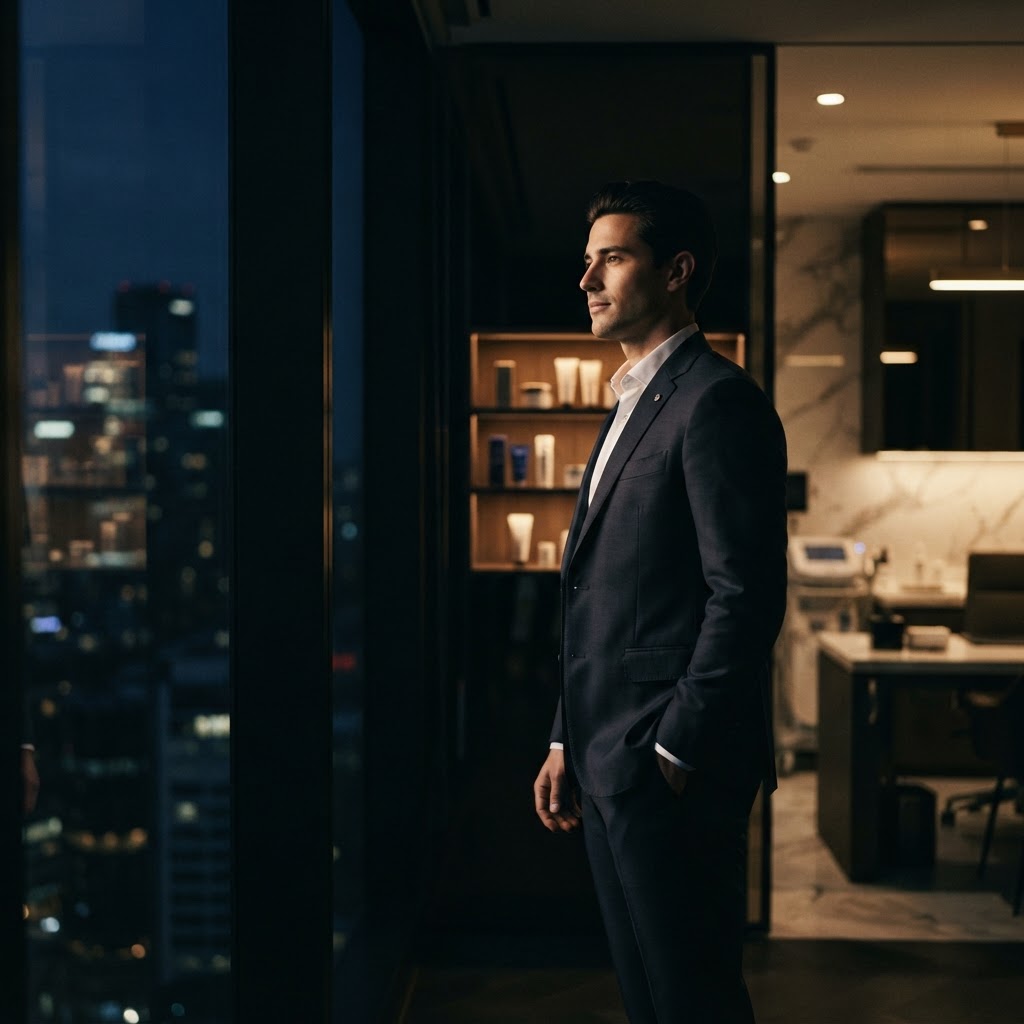
Most personal branding advice online is theater. Post every day. Show vulnerability. Go viral. The people actually winning at it tend to do almost none of that, and Dr. Kevin Maharis is a useful case study in why.
Kevin Maharis is an aesthetic physician and the Medical Director of Maharis Group, a Jakarta-based clinic empire he started in 2012 from a single treatment room. A decade later he runs two luxury clinics in Setiabudi and Kebayoran Baru, built a sister brand called Votre Peau with seven branches across Indonesia, and turned himself into one of the most recognizable medical personal brands in Southeast Asia. He has a TikTok following in the tens of thousands, a Prestige 40 Under 40 selection, and magazine covers with his brother and co-founder Dr. Ricky Maharis.
The interesting part is not the scale. It is how deliberately he avoided the content treadmill everyone else is running on.
[INSIGHT] The founders winning the trust economy are not the loudest ones. They are the ones whose content makes you feel like you already know them before you ever walk in.
The Room He Started In
Maharis Clinic did not launch with a launch. It started as a private practice, one room, one doctor, building patients the slow way. Kevin trained at the University of Melbourne for his Bachelor of Medical Sciences and picked up a UK Masters in Health Administration before returning to Jakarta. He became a national trainer in hyaluronic acid filler injection and built specialties in focused ultrasound and regenerative treatments.
That grounding matters because it is the foundation everything else sits on. A lot of personal brands today are built on vibes and borrowed credibility. Kevin's was built on credentials first, then content. The content amplified something real rather than inventing it. When someone scrolls past a treatment video on his feed, there is a licensed physician with a decade of hands behind it, not an influencer who took a weekend course.
This is the part most brand builders skip. They want the audience before they have the substance. Kevin spent years becoming undeniable at the craft, then let the brand ride on top of that. The order is the whole point.
If you want the deeper take on why substance beats noise in the current market, I wrote about the authenticity advantage and how it became the rare durable moat in a feed full of synthetic content.
Why He Stopped Chasing Virality
Kevin put it bluntly in one of his own posts. His brand building mantra, as he calls it, is a direct critique of a feed fixated on "shock value, virality, and s3 marketing posts masked as education." Read that again. A doctor with a real audience is telling you the virality game is a trap, and he is backing it up by simply not playing it.
The default playbook in aesthetics and wellness content is before-and-after shock posts, trend-chasing soundtracks, and controversy bait. Kevin went the other direction. His feed leans educational and editorial. Treatment explanations, conference appearances, the occasional lifestyle post that signals taste without begging for engagement. It reads like a person, not a content machine.

The trade-off is real. Viral content gets you fast reach. Educational content gets you slow trust. In a category where the purchase is literally injected into someone's face, trust converts at a rate virality never will. Kevin understood that the person clicking through from a shocking reel is not the person booking a consultation. They are two completely different funnels, and only one of them pays.
This connects to a problem I keep seeing across categories. The brands chasing reach metrics are measuring the wrong thing entirely, and I broke down the measurement delusion in the thought leadership credibility crisis. Reach without trust is a vanity number.
Education as a Moat
Here is where the play gets sharp. Kevin did not just avoid bad content. He built a content structure that does the selling without ever sounding like selling.
The Maharis Group runs a YouTube channel with procedure walkthroughs. Kevin speaks at IMCAS, AMUSE, and AMWC, the major aesthetic medicine congresses. He trains other doctors. Each of those activities does three things at once. It establishes authority, it creates content he can repurpose, and it puts him in rooms with the exact people who amplify his credibility.
That is a moat, not a feed. A competitor can copy a clinic's interior design and pricing structure in a month. They cannot copy a decade of training relationships, conference stages, and the implicit endorsement that comes with being the doctor other doctors learn from. The content is just the visible layer on top of a network most people never see.

[INSIGHT] Education content does not sell. It makes the sale feel inevitable by the time someone finally books.
The same principle applies whether you sell injectables, software, or strategy consulting. The brands that teach before they pitch end up with customers who arrive already convinced. You spend less on conversion and more on retention, which is the better trade in almost every category.
The Luxury Tax on Attention
Kevin and his brother Ricky positioned Maharis Clinic at the top of the market. The clinics are in prime Jakarta addresses. The press features are in Prestige and Tatler, not discount directories. The pricing and the brand signals match each other. Nothing about the presentation says accessible. Everything says considered, premium, and selective.
That positioning is a decision most personal brands are too scared to make. The instinct is to cast a wide net and be everything to everyone. Kevin narrowed on purpose. By positioning at the top, every piece of content reinforces a price anchor. A treatment video does not just demonstrate skill. It implies a certain client can afford to be in that room.
The risk with luxury positioning is that it can feel cold or inaccessible. Kevin offsets it with the brother dynamic, the family travel posts, the occasional candid moment. The warmth is there, but it is rationed. You get enough personality to feel a connection, not so much that the premium frame cracks. For more on why the authenticity premium is now the thing separating brands that hold price from brands that race to the bottom, the authenticity premium is worth a read.
What Happens When People Steal Your Face
Here is the part nobody puts in the personal branding highlight reel. Kevin has spent years dealing with impersonators. Fake profiles using his name and photos to run fraudulent schemes, targeting strangers and even people close to him. He has posted multiple warnings about it. The accounts multiply faster than platforms will remove them.
This is the tax on visibility, and it is getting worse. The more recognizable your face and name become, the more raw material you hand to scammers. For founders in regulated industries, this is not a hypothetical. It is an operational risk that touches reputation, legal exposure, and customer trust.
If you are building a personal brand in 2026, you need a plan for impersonation before it happens, not after. Verified profiles everywhere you can get them. Clear communication channels that your real audience can cross-check against. A documented record of your actual presence so that when the fakes show up, your community already knows where the real you lives. This sits inside a broader problem I covered in the digital persona crisis, where the gap between a real person and their synthetic copies is collapsing fast.
The dark side of personal brand is that you are building an asset someone else can steal. The light side is that a stolen asset still points back to you, which is why authenticity stays the one thing that compounds.
What Brand Builders Should Steal
You do not need to run an aesthetics clinic in Jakarta to copy what works here. The principles transfer to almost any trust-driven category.
Build the substance before the audience. Credentials, craft, and real results are the foundation. Content on top of nothing is just noise with a shelf life.
Pick a positioning and commit to the trade-off it requires. Luxury means saying no to the masses. Accessibility means saying no to premium pricing. The middle is where brands die because they stand for nothing distinctive.
Teach more than you pitch. The brands that educate before they sell spend less time selling because the customer arrives pre-sold. It is slower and it is worth it.
Plan for the tax on your visibility. The day your brand gets recognizable is the day someone starts impersonating it. Have the verification, the channels, and the community trust already in place.
The thing Kevin Maharis gets right is not any single tactic. It is the sequence. Substance first, positioning second, education third, protection always. Most personal brands invert that and wonder why the audience never converts. The order is not optional. It is the strategy.