The Digital Persona Crisis: Why Influencer Spending Is Up and Trust Is Collapsing
Brands spent 46% more on influencer marketing in 2026. Meanwhile, 37.2% of influencer followers are fake, and AI-generated avatars are pitching products. The paradox destroying creator economics.
The Money Flows Harder While Trust Disintegrates
Influencer marketing budgets are surging. Brands are spending 46% more on creator partnerships in 2026 than they did in 2025. Agencies are hiring. Platforms are launching new creator programs. The industry looks hot.
But the industry is building on quicksand. Here\'s why.
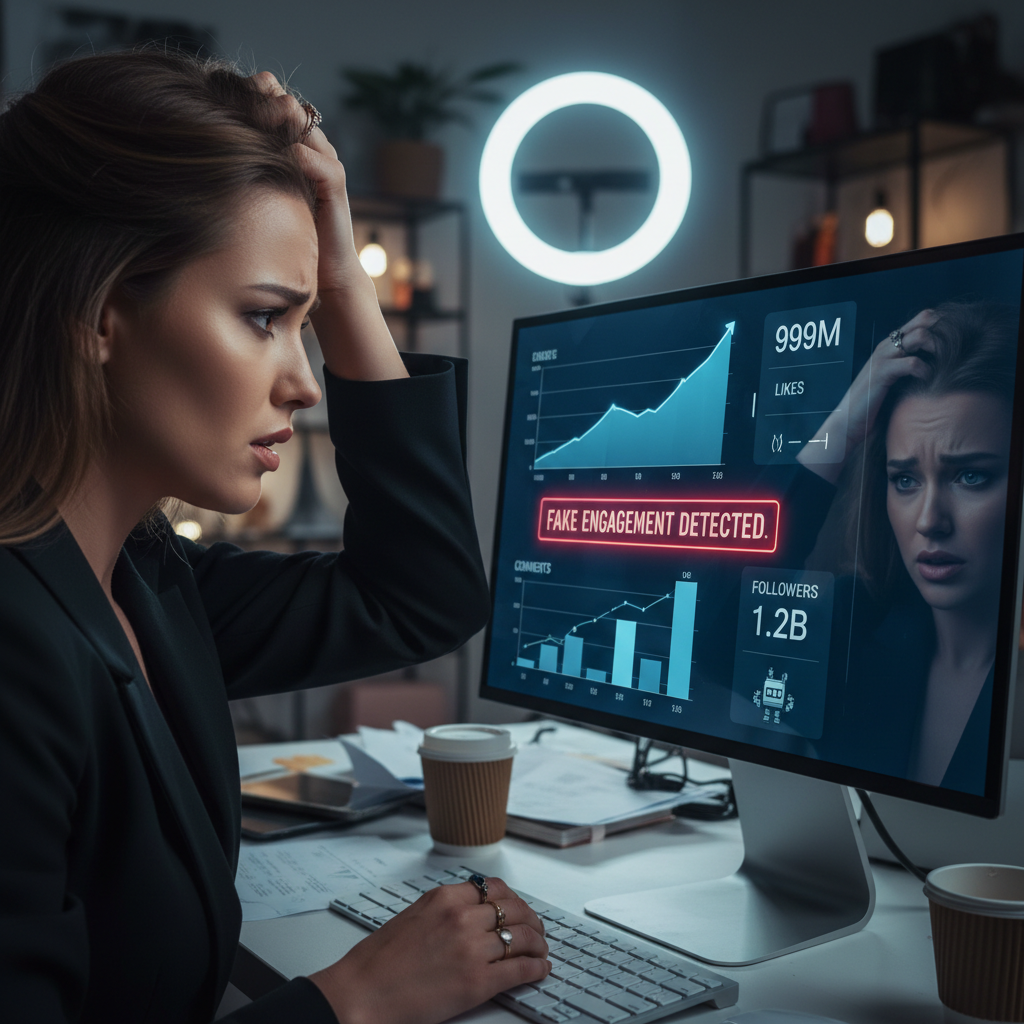
37.2% of influencer followers are fake. Not just low-quality, spam-bot followers. Synthetic accounts created at scale. And now, AI-generated avatars with no human behind them are pitching supplements, skincare, and financial services across TikTok, Instagram, and YouTube.
Brands are increasing spend to reach audiences. Those audiences are increasingly not real. The math breaks down. The paradox is the whole story.
How We Got Here
For a decade, influencer marketing worked because of a simple fact: creators were real people. Messy, unreliable sometimes, but human. A follower meant a human who chose to follow. Engagement meant a human who clicked, liked, or commented.
That was never fully true. Bot networks have inflated follower counts for years. But the fiction held together because the core product, the creator, was real.
In 2025 and 2026, that fiction is gone. AI image generators and video synthesis tools got good enough to create entirely synthetic influencers that no human could distinguish from the real thing. Some platforms tried to ban them. Most just let them run.
The result: brands cannot tell if they are paying a real person to influence their audience or paying an AI wrapper that traffics in engagement arbitrage. Their followers cannot tell either.
The Numbers Nobody Wants to Talk About
Content Grid\'s 2026 influencer vetting report found that 37.2% of influencer followers show signs of synthetic activity. That is not a typo. That is more than one in three followers. For top-tier creators with millions of followers, the raw count of fake accounts is staggering.
The FTC has issued new regulations cracking down on fake expert influencers. China banned unverified experts from posting health and financial advice. But in the US, there is no enforcement mechanism for most creators. The gap between the rule and the reality remains enormous.
Meanwhile, brands report that attribution from influencer campaigns has become nearly impossible to track. When a creator\'s audience is 37% synthetic, and your tracking pixels are firing to bot networks, the conversion data you are collecting is noise, not signal. You cannot tell if anyone real saw your product.
Platforms benefit from the confusion. A synthetically inflated follower count means higher implied reach, which means higher rates creators can charge, which means higher platform commission fees. There is no incentive to clean it up.
The Authenticity Backlash
One interesting counter-trend: actual human creators are becoming a premium asset. Real creators with real messiness, real opinions, real engagement from real people, are commanding premiums over polished synthetic personas.
The April 2026 digiday report on oversaturation of AI content noted that after years of AI slop and synthetic influencers, brands are actively seeking creators who are verifiably human and willing to post imperfect content. MrBeast and similar high-engagement creators are more valuable than they have ever been, precisely because they are undeniably human.
But most brands cannot reach MrBeast. They are stuck in the mid-tier influencer market where the synthetic-to-real ratio is inverted. They are trying to reach authentic audiences but paying into networks where authenticity is the exception.
The Platform Gatekeeping Problem
Forbes noted in February that AI is now marketing\'s gatekeeper. Algorithms decide which creators get surfaced, which ones reach audiences, and which ones disappear into obscurity. But here is the wrinkle: if the algorithm is optimizing for engagement, it makes no distinction between a real human clicking and a bot account clicking.
So the algorithm amplifies whatever content gets the most engagement, which is often content from synthetic creators because they can game engagement metrics faster than human creators can build real audiences. The algorithmic incentive structure selects for inauthenticity.
Brands, trying to reach real people, end up paying for access to audiences curated and shaped by algorithms that have no concept of, and no incentive to ensure, authenticity.
It is a system designed to extract money from uncertainty.

What Breaks First
The influencer marketing industry will either consolidate around authenticity verification (adding friction and cost) or it will fragment as brands lose faith in the metrics and stop spending.
The smart move for brands right now is to treat every influencer partnership as high-risk until proven otherwise. That means:
1. Verify follower authenticity independently before signing deals.
2. Use conversion tracking at the product level, not the platform level.