
On November 19, Google started rolling out a collapsible sidebar on the Search homepage. Desktop only, and global. The sidebar lists your recent AI searches so you can jump back into one and keep going. Robby Stein, a vice president on the Search team, put the reasoning plainly: people are coming to Search with questions that are not one and done, and in testing the sidebar made a big difference for making progress and continuing to explore. Search Engine Roundtable has the rollout details and Stein's demo video.
It reads like a minor interface update. It is not. It is Google admitting, in product form, what the unit of search now is.
The query is not the unit anymore
For thirty years, the unit of search was the query. One question, one results page, one click to win. The ads, the rankings, and the analytics are all priced per query. A sidebar holding your recent AI searches breaks that unit. The session is the thing now.
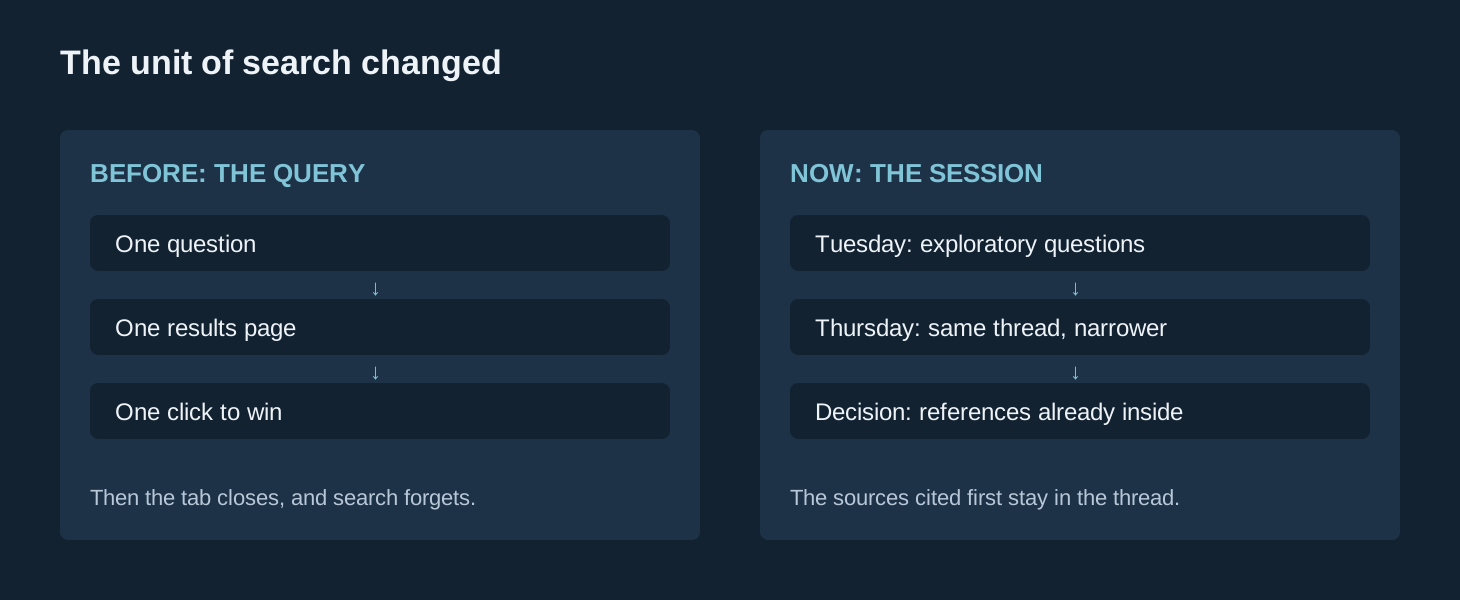
Picture one of your buyers. On Tuesday they ask AI Mode a few exploratory questions about your category. On Thursday they reopen the same thread and keep going, narrower now, closer to a decision. The sources cited on Tuesday are still sitting inside that thread, warmed up and trusted. If your company was not part of the Tuesday conversation, Thursday is not a fresh auction you can win with a better bid. You are asking to be let into a discussion that already has its references.

That changes what good marketing looks like. The reference set forms early, in the exploratory questions, and then it persists. Showing up late and loud matters less than it did in the ten blue links era.
Desktop first is the tell
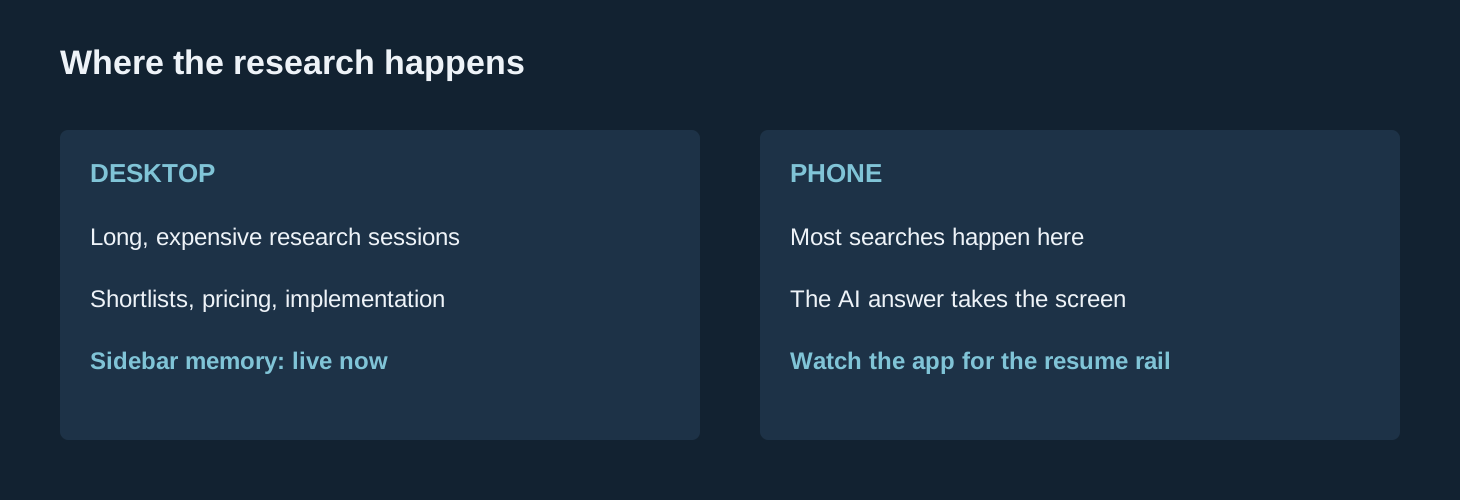
Google shipped the memory on desktop, and that choice says more than the feature does. Phones are where people ask quick questions. Desks are where the long and expensive research happens: vendor shortlists, implementation questions, pricing comparisons, the work your team does before it commits real money.
That is the research Google chose to give a memory first. AI Mode is being turned into a workspace, the tab a buyer keeps open all week, not a box they visit once. If your company sells anything considered, anything with a committee and a budget cycle, the thread your buyers keep returning to is now the most valuable real estate in search. It is not a results page. It is a running conversation, and it remembers who was helpful at the start.
Now check your own phone
Most searches still happen on mobile, and a phone screen has no room for a sidebar. So do not watch the desktop page for what comes next. Watch the Google app. The same idea there is a resume rail: your recent AI threads, one tap from the search box. When that lands, session logic covers the majority of search traffic, not just the desktop minority.
And be honest about the phone you already have. The AI answer takes most of the screen before you scroll. Your recent threads pinned above it would leave the classic results with almost nowhere to live. If your traffic reports still describe mobile search as a list of links, they are describing a page your customers stopped seeing a while ago.
What this asks of you
Get into the first session. The exploratory questions at the start of a research thread are where the reference set forms, and the thread carries those references forward for days. Most brands spend their energy on the transactional queries at the end of the journey. The sidebar rewards whoever was useful at the beginning.
Expect your measurement to get stranger, too. A deal that started as a Tuesday AI thread and closed on Thursday will not credit search the way a click used to. I wrote recently about who gets credit when AI buys, and the sidebar makes that problem bigger: the journey now has a memory, and your dashboard does not.
The search box used to forget your buyers the moment they closed the tab. Now it keeps the thread warm and invites them back in. The companies that win this version of search will be the ones buyers met early in the thread, not the ones still bidding on the last query.