The Number OpenAI Put in Front of Investors
In April, OpenAI told advertisers something bold. ChatGPT would generate $2.5 billion in ad revenue this year and $100 billion annually by 2030. Axios reported it. Investors nodded. The pitch deck did its job.
Two months later, Emarketer ran the actual numbers. The entire U.S. market for standalone chatbot advertising, which includes ChatGPT, Microsoft Copilot, Google AI Mode, and Amazon Alexa combined, will generate less than $1 billion this year. By 2030, it reaches $5.41 billion.
OpenAI's $100 billion target assumes it captures the entire chatbot ad market, dominates every competitor, and outperforms every ad format in history simultaneously. Adweek called it a 90% miss. That is generous. The gap between the projection and the total addressable market is eighteen times.
If you are a CMO building a 2027 media plan around ChatGPT ads, this is the part where you should stop reading and take notes.
The Math Nobody Checked
OpenAI launched its ad pilot in February 2026. Two months in, it was already telling investors it would build a $100 billion ad business. Let us put that in context.
Google's entire search ad business generated roughly $240 billion globally in 2025. Meta's total ad revenue was $160 billion. OpenAI, a company that has never run an ad business before, projected it would build something close to half the size of Google's search empire in four years. Inside a chat window.
The company has $25 billion in annualized revenue and $27 billion in cash burn. To reach profitability by 2030, it needs to increase revenue 100x in three and a half years. It has committed $600 billion to infrastructure. The ad revenue projection is not a forecast. It is a survival requirement dressed up as market analysis. Without it, the math does not close.
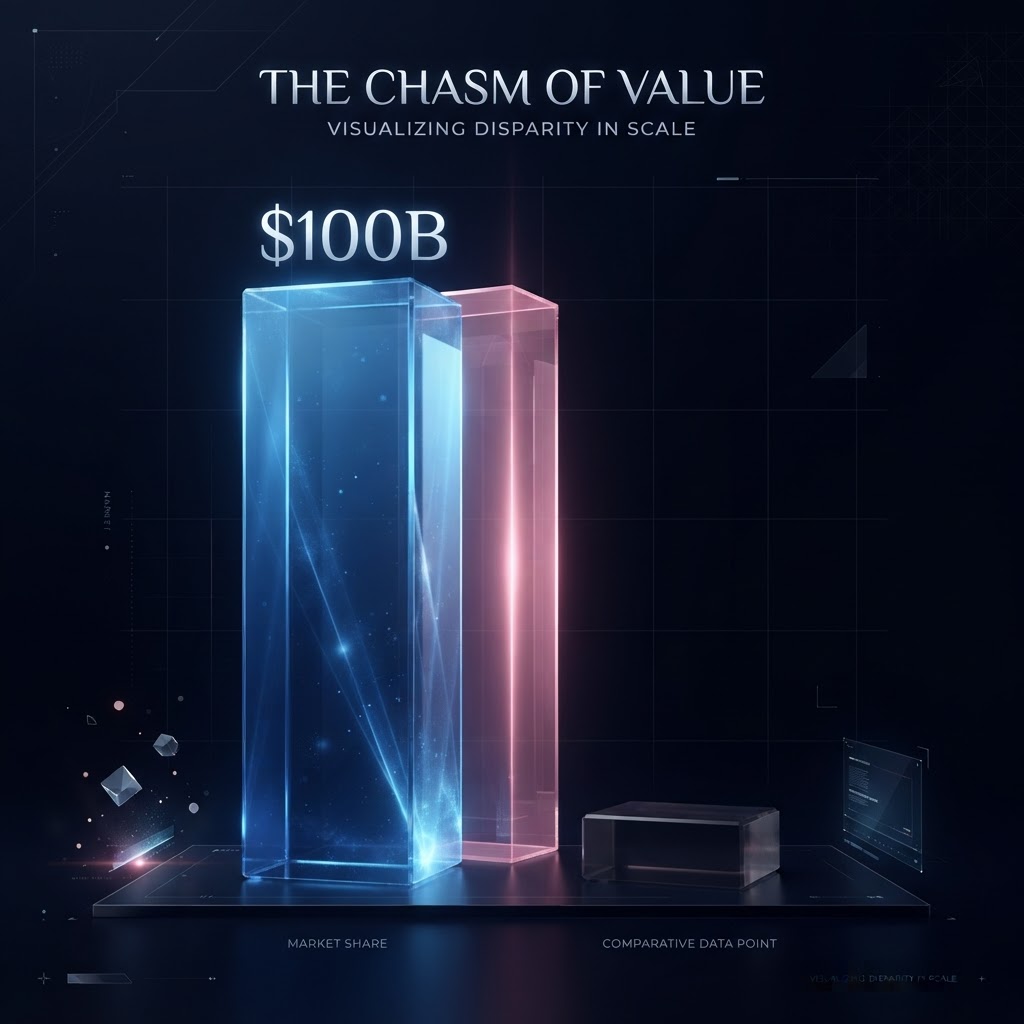
Nate Elliott, Emarketer's principal analyst for AI in marketing, put it bluntly on LinkedIn: "OpenAI thinks ChatGPT will collect about $50 billion in U.S. ad revenues in 2030. We think their entire addressable market will be one-tenth that."
Where the Money Actually Goes
Here is the structural problem most marketers miss. Emarketer's forecast breaks AI advertising into three buckets.
The largest is AI search-adjacent advertising. These are traditional keyword ads that appear next to AI-generated content, like Google AI Overviews. This is where the money lives. More than 80% of AI ad spending in 2026 flows here, and that ratio does not flip by 2030.
The second bucket is AI conversational search, ads inside search-engine chatbot experiences like Google AI Mode.
The third and smallest bucket is standalone chatbot advertising. ChatGPT, Copilot, Gemini. This is where OpenAI lives. It is the thinnest slice of the pie, and it stays that way through the entire forecast window.

Total U.S. AI ad spending will grow from $32 billion this year to $68 billion by 2030. That is real growth. But ChatGPT's share of it is the crust, not the pie. If you want exposure to the AI ad wave, the smart money is in search-adjacent placements, not in chatting with a bot.
The CPM Problem
When ChatGPT launched its ad pilot in February, it priced ads at $60 CPM. By April, reports showed CPMs had already dropped to $25. Emarketer projects they will fall to about $15 by 2030.
That is a 75% compression in four years. The math is brutal. Even if ChatGPT triples its ad volume, revenue shrinks because the price per impression collapses faster than volume grows.
The ad load problem makes it worse. Search engines can show ten ads on a results page. A chatbot can show one, maybe two, before users revolt. To hit even Emarketer's modest projections, platforms would need to insert paid placements into nearly every commercial response. Users who came for answers will get pitched instead. The brand safety questions that already plague ChatGPT ads do not get easier when the ad density triples.
Chat Is Dead, But They Are Selling Chat Ads
This is the part that should make marketers laugh. OpenAI's own executives reportedly declared "chat is dead" as ChatGPT's primary interface. The company is pivoting toward a "super app" built around AI agents and productivity tools. It launched ChatGPT Work, which was praised for its AI capabilities but described by early reviewers as cluttered, with chat taking a back seat.
So OpenAI is telling marketers to buy ads inside a chat interface that it is simultaneously declaring obsolete. The ad revenue pitch and the product strategy are pointing in opposite directions.
If chat moves to the background and agents become the primary surface, where do the ads go? OpenAI has not answered that question. The $100 billion projection assumes the chat interface stays central, but the product roadmap says it will not. Fidji Simo, the exec behind OpenAI's ad push, recently stepped back to a part-time advisory role. The person who built the pitch is no longer driving it.
We already flagged the revenue gap earlier this year. The numbers have only gotten worse since.
What to Do With This
First, do not build a ChatGPT ad strategy. Not yet. The platform is in pilot, CPMs are collapsing, the interface is pivoting, and the total addressable market is a fraction of what OpenAI claims. Wait until the format stabilizes and measurement tools catch up.

Second, invest in the layer that is actually growing. AI search-adjacent advertising, the ads that appear next to Google AI Overviews and similar surfaces, is where the budget is moving. Emarketer's full forecast makes clear that this is where 80% of AI ad dollars will sit through 2030. That is not a prediction. That is current spending.
Third, watch the CPM floor. If you do experiment with ChatGPT ads, treat the current $25 CPM as a ceiling, not a floor. Price it as if it is heading to $15, because it is. Structure your campaigns to break even at that level or lower.
Fourth, track what is happening to your Google budget. The August Smart Bidding changes and AI Mode ad expansion are reshaping paid search from the other end. The money leaving traditional search has to go somewhere. Most of it will follow the AI content layer, not the chatbot layer.
The uncomfortable truth for anyone who sat through OpenAI's ad pitch is simple. The $100 billion number was never a market forecast. It was a funding round justification wearing an analyst's clothes. The real market is eighteen times smaller than the projection. Build your plan around the real number.