This is where the creator economy breaks.
You spent six months building an audience. Your last video hit 100K views. YouTube's algorithm is finally rewarding your consistency. Then Gemini remixes your video into five variations, distributes them as "new content," and viewers never click your original. The platform profits. You get squeezed.
This isn't theoretical. It's happening right now at scale. YouTube's AI Remix tools let creators (and competitors) generate new videos from existing content in seconds. No licensing framework. No revenue share. No consistent disclosure that the video is AI-generated.
The winners adopted AI early to scale production. The losers are about to discover that platforms scale AI faster than creators ever could.
The Scale of the Problem
- 90% of creators now use AI tools in their workflow
- 40% cite IP theft and licensing concerns as their biggest worry
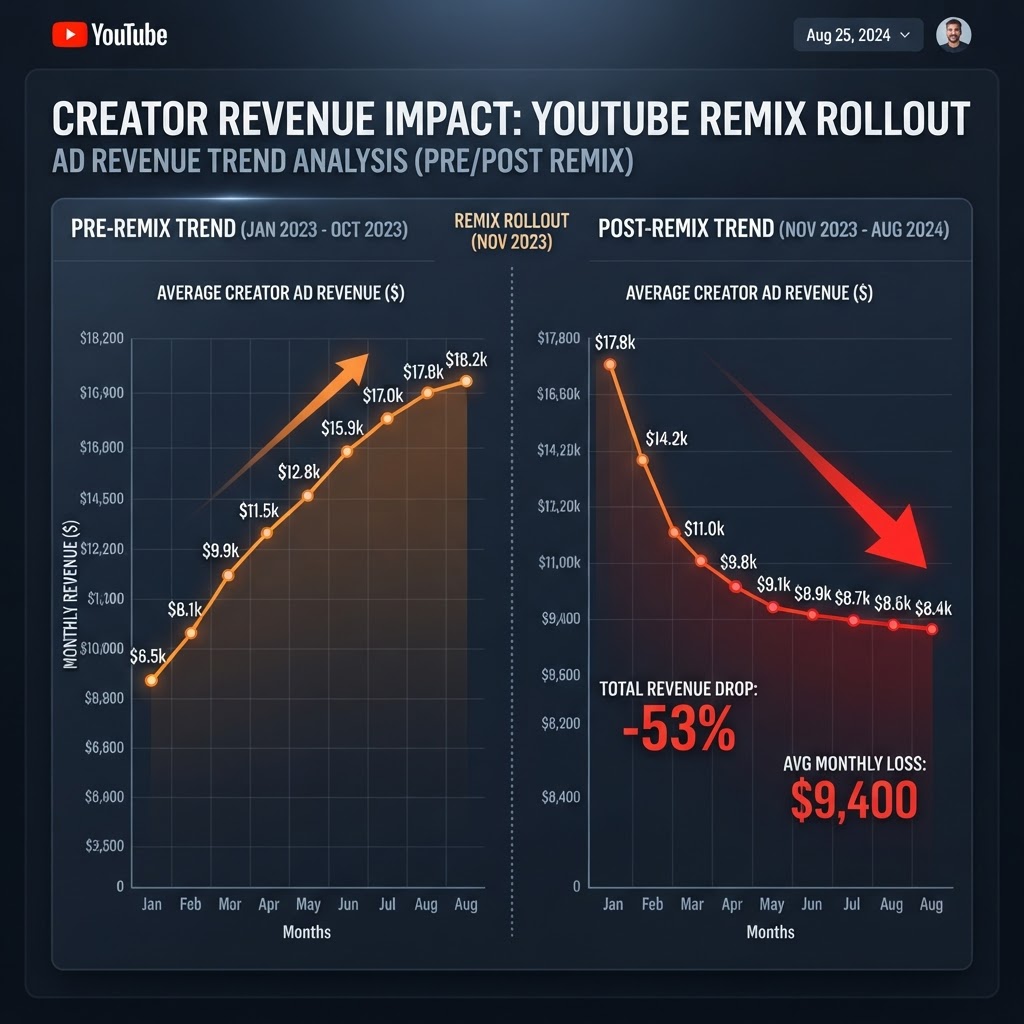
- Small creators reporting 30-50% revenue declines after Remix rollout
- Zero licensing frameworks between YouTube and creators for AI-generated derivatives
- UK/EU AI disclosure laws in effect, but YouTube's remixing already deployed and grandfathered
How YouTube Remix Actually Works
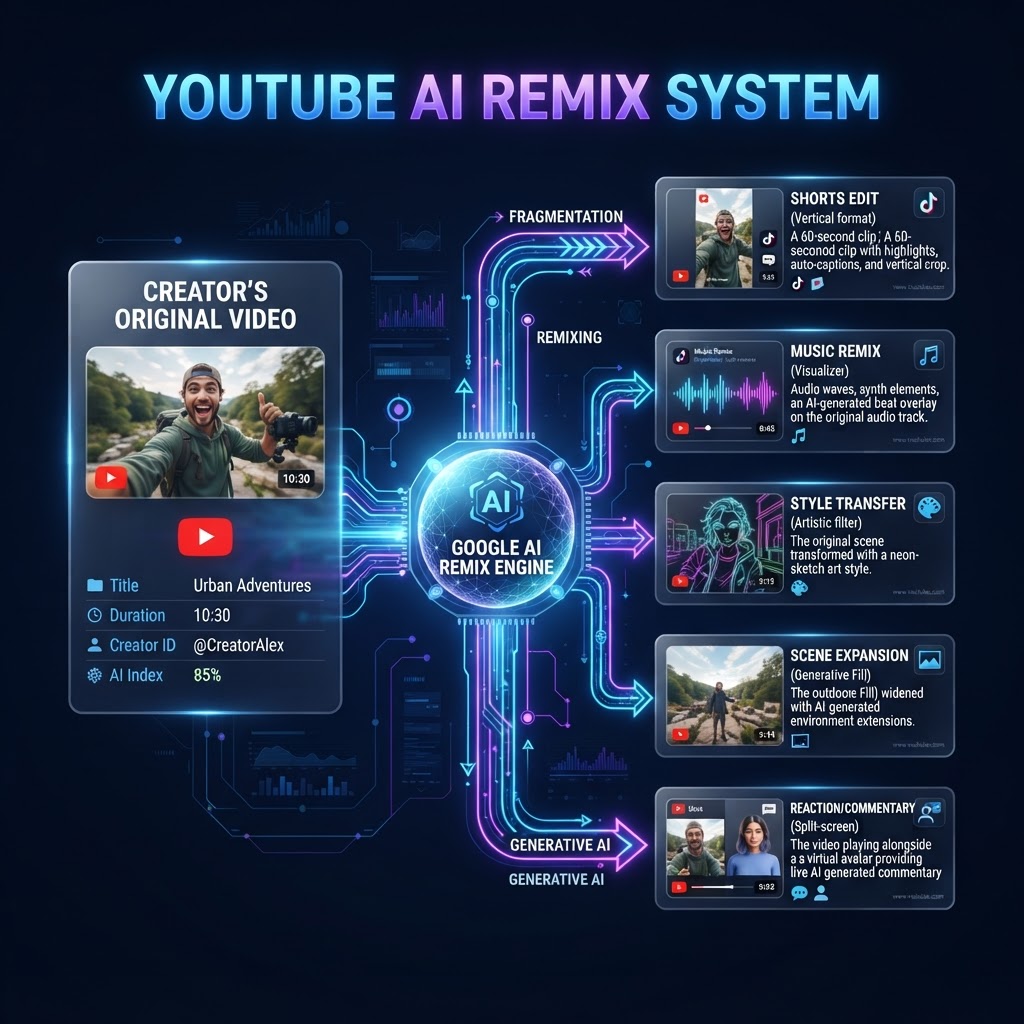
YouTube Remix (powered by Gemini) turns any video into five variations instantly. A 60-second TikTok cut. A music-only remix. A style variant (lo-fi, cinematic, anime). A language translation. A shorts-compatible edit.
Each remix appears in search, recommendations, and "similar to" feeds. They all count as separate pieces of content in YouTube's ranking algorithm. Viewers click the one they see first. Your original gets buried in the algorithmic noise.
The creator might see $300 total across all variations if the videos get views at all. YouTube captures the incremental advertising revenue from four remixes they never negotiated, never credited, and never shared.
One creator with 500K subscribers shared numbers publicly: before Remix rollout, her 10 videos per month generated $8,000. After rollout (same upload frequency, same audience), she's at $4,200. The platform is generating remixes of her work that rank alongside her originals. Her share of the pie shrank because the pie got divided without her consent.
The Licensing Void Is Intentional
The UK and EU rolled out AI disclosure laws in early 2026. They require platforms to label AI-generated content. But YouTube Remix creates a legal grey zone: is a remixed version of human-created content "AI-generated"? Is it a derivative work? Is it a new creative work?
Licensing frameworks don't exist between creators and the platform. YouTube's T&Cs claim the right to remix user uploads. They don't share revenue. They don't require creator consent. They label some remixes but not all.
Smaller creators can't afford lawyers to challenge the T&Cs. Larger creators are already negotiating direct deals outside the platform (premium versions on Patreon, Discord exclusive content). Mid-tier creators are getting squeezed in the middle, generating most of the platform's premium content without the leverage to negotiate.
This is similar to what happened with the likeness economy's collapse, platforms took creator likenesses, remixed them into AI variations, and cut creators out of the economics entirely. This time it's happening at the platform's native layer.
The Adoption Paradox
Here's the part that breaks the system: 90% of creators adopted AI tools specifically to stay competitive. They use AI for editing, upscaling, audio cleanup, thumbnail generation, script assistance. YouTube's algorithm rewards volume and consistency. AI lets them produce more content faster.
But YouTube's AI is better funded, faster, and integrated directly into the platform's infrastructure. When YouTube's Remix generates five variations of a creator's upload in real time, those variations rank alongside the creator's carefully edited original. The creator's AI-assisted work gets undercut by the platform's AI-generated content.
The incentive structure breaks: adopt AI to scale. Get undercut by bigger AI.
This is also why creator consolidation is accelerating, only the top 1% have enough leverage to demand better terms. The long tail of creators gets parity offerings with no revenue share.
What This Means for Brands
If you're betting on creator partnerships in 2026, this matters more than you think.
Smaller creators (10K-100K followers) have less income, so they have less negotiating leverage. Their CPM is already thin. If their revenue declines 30-50%, many exit the platform entirely.
Larger creators (1M+) can hire lawyers and negotiate direct deals. They're moving significant traffic to owned channels (email lists, Discord, TikTok Shop, Patreon). They're less dependent on YouTube's algorithm.
Mid-tier creators (100K-1M) are squeezed. They have enough audience to be valuable but not enough leverage to fight back. Some will sell sponsorships at lower rates. Some will quit. Some will join creator collectives that pool negotiating power.
Your influencer budget might need to shift accordingly. If your top collaborators are jumping to owned channels, you follow them or lose access to their audience.
The Platform Playbook
This isn't YouTube being careless. This is the platform playbook in action: take creator tools, use them better than creators can, integrate them into the platform, monetize the output, and rely on T&C terms to avoid licensing obligations.
TikTok did this with short-form video. Meta did this with Reels. Instagram is doing it with Remix right now. YouTube is just being more aggressive with AI.
The pattern repeats: creators build an audience on the platform. Platforms take the playbook, scale it with their own infrastructure, and compete directly with creators using their own content. Creators adapt, build new workflows, and the cycle repeats.
The Bottom Line
Creator economics didn't break because creators adopted AI. They're breaking because platforms scale their AI faster than they build governance. The licensing void isn't a gap in the terms. It's a feature.
If you depend on creator revenue in 2026, assume it's declining 15-30% year over year as platforms automate creator workflows at the platform level. Plan accordingly. And watch for the migration out of platform-dependent revenue toward owned channels. That's where this is heading.