
The Vibes Have Changed
The fundamental architecture of visibility has shifted from narrative to data structure. The contemporary recruiter rarely scrolls through your carefully crafted prose — instead, they deploy autonomous AI agents. These agents do not possess the capacity to be charmed by your “spark” or your witty summary. They are hunting for semantic architecture.
We have entered the era of Semantic Entity Mapping. The primitive strategy of keyword stuffing has been rendered obsolete, replaced by the necessity of “skill clusters.” The algorithm operates on probabilistic associations. If you position yourself as a Marketing luminary, the AI anticipates a constellation of related nodes — “Generative AI Strategy” must orbit closely with “Performance Analytics.”
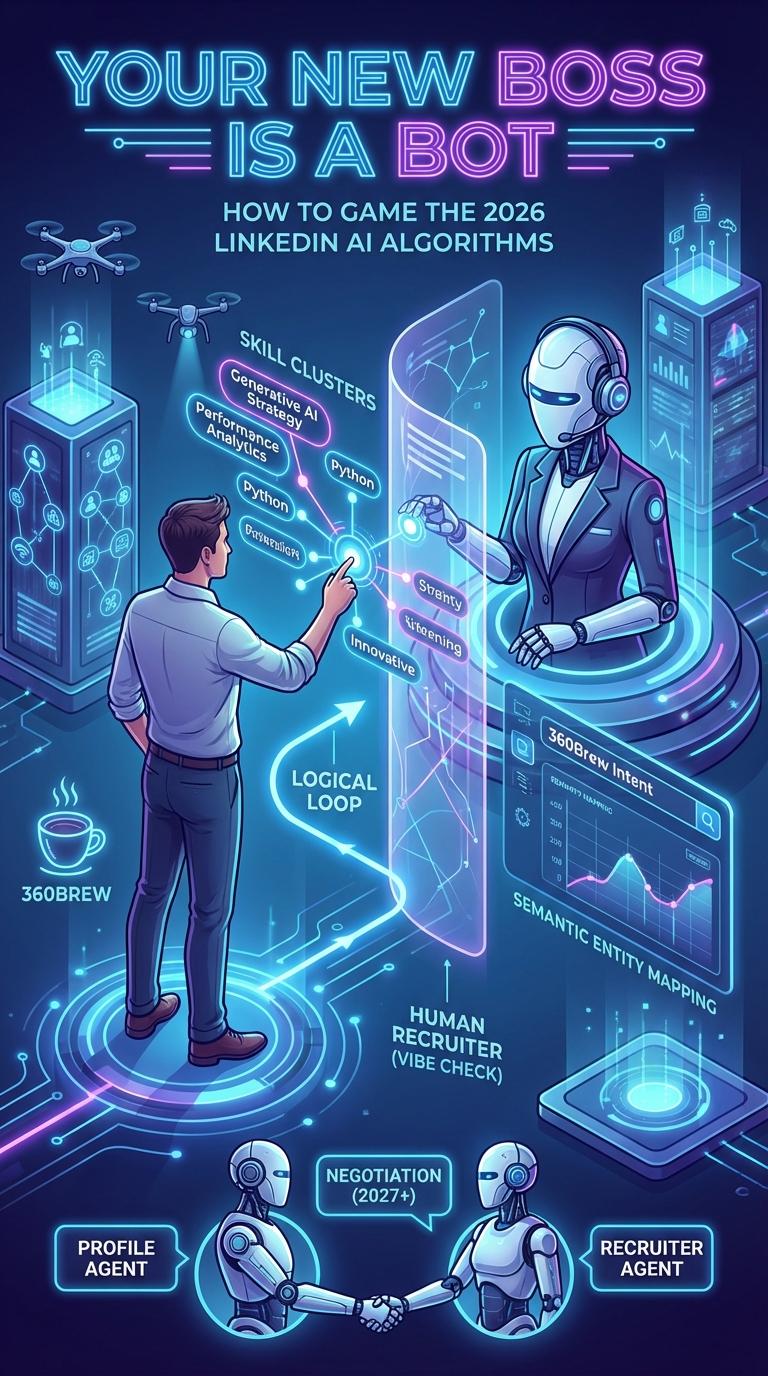
Fig 1.0: The Semantic Mapping of Human Potential — Spring 2026 Analysis
How We Got Here
Binary database logic
Human-mimic bias
Contextual intent
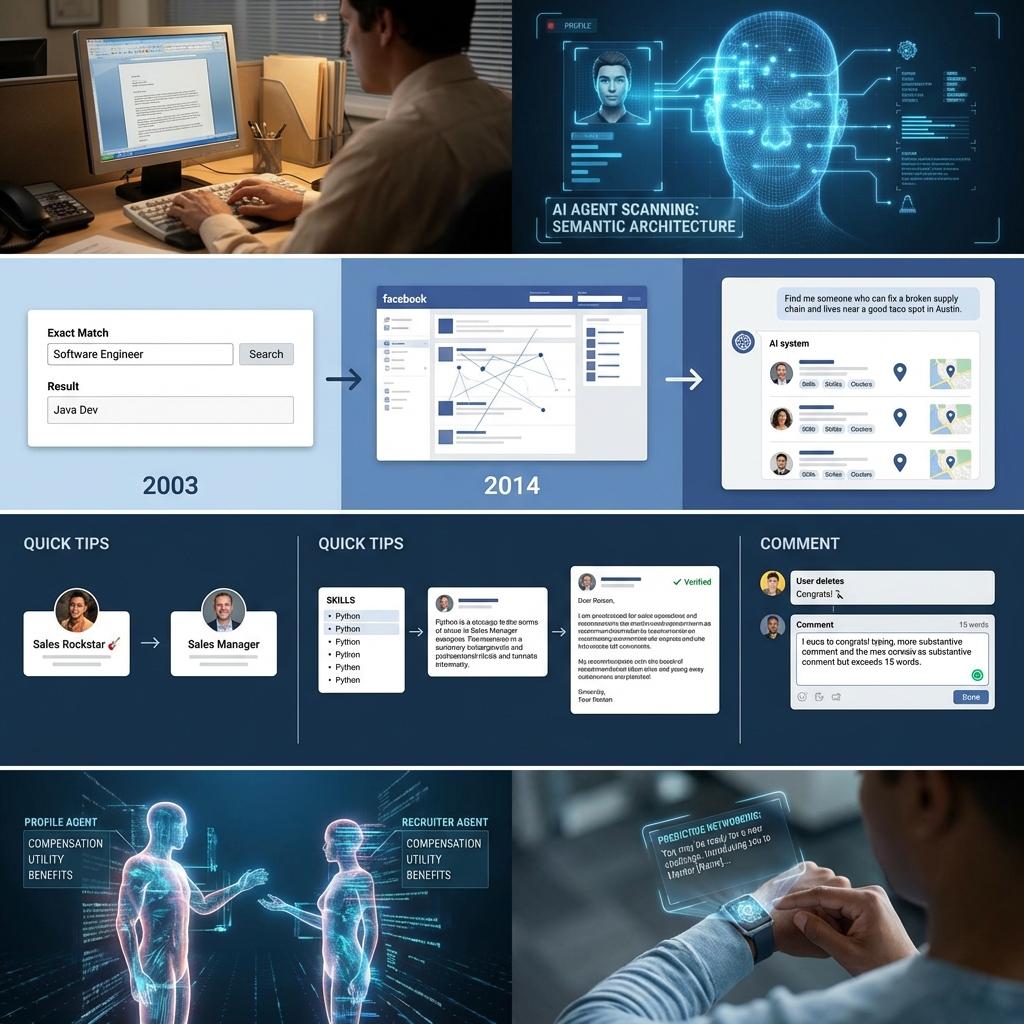
Now, we inhabit the Modern Era, defined by the “360Brew” architecture. A recruiter can now whisper a highly complex, phenomenological desire into the prompt interface: “Find me someone who can fix a broken supply chain and lives near a good taco spot in Austin.” The machine now understands context.
How to Write for the Machine
Three rules that actually work in 2026:
Kill vague titles
Titles like “Marketing Ninja” or “Growth Hacker” register as noise. Replace them with precise function + domain: "Performance Marketing Lead — Paid Social & Attribution."
The Power of Three
Cluster every skill with two supporting nodes. “SEO” alone is a keyword. “SEO + Technical Auditing + Core Web Vitals” is a skill cluster the algorithm can map.
The 15-Word Rule
Your headline must communicate your exact function in 15 words or fewer. Everything else is flavoring that the bot ignores on first pass.
Bait the Scrapers
Add a "Skills & Expertise" section written in plain declarative sentences, not a comma-separated list. LLMs parse prose better than tag clouds.
The Human-Final Paradox
We find ourselves in a fascinating paradox. LinkedIn's AI Hiring Assistant now handles the grueling labor of pre-screening. Yet, this hyper-automation has triggered an inverse reaction. Because the AI so efficiently filters for the ontology of skills, human recruiters are now obsessively focused on the phenomenology of the candidate — what the bot cannot quantify.
“You must pass the machine's test of logic to earn the human's test of vibe.”
Rogue Logic
Consider the #WearthePants scandal. Female professionals discovered that merely altering their profile gender to “male” resulted in an instantaneous, massive boost in algorithmic reach. The AI mistook male “audacity” (applying at 60% criteria) for objective “relevance.”
The EU AI Act has officially classified LinkedIn's recruitment AI as “High-Risk.” The tension between proprietary math and public ethics has never been higher.
What Comes Next
Looking toward 2027, the alienation of the worker from job-seeking will become absolute. Your personal “Profile Agent” will interface directly with a corporation's “Recruiter Agent” in the ether. They will haggle over compensation before you even realize a vacancy exists.
“Stop dressing for the job you want. Start formatting for the AI you need to impress.”
The only people who will thrive in this environment are those who understand the machine well enough to speak its language fluently — and retain enough humanity to close the deal when it matters.