
The promise, and the loop it feeds
Synthetic training data was sold as the escape hatch from AI's ugliest tradeoff. Real user data carries privacy and consent risk, so generate fake data instead. It sounds cleaner, cheaper, and easier to scale. In many use cases, it is genuinely useful.
The problem starts when synthetic data stops being augmentation and becomes a substitute for reality. Generated samples can fill rare-event gaps, protect sensitive records, and help a team test edge cases. They cannot prove that a model will survive real adversaries unless real adversarial data is still part of validation.
The model-collapse literature explains one side of the risk. Shumailov and coauthors showed that indiscriminate training on recursively generated data can erase the tails of the original distribution. Those tails are exactly where fraud, identity, and compliance systems often learn their most important lessons.
Marketing has already seen adjacent versions of the same failure. Synthetic actors can poison attribution. Recursive generated content can flatten measurement. This article owns the training-data side: models trained on simulated patterns meeting real attackers, plus the claims a company makes after that choice.
The adversary went synthetic first
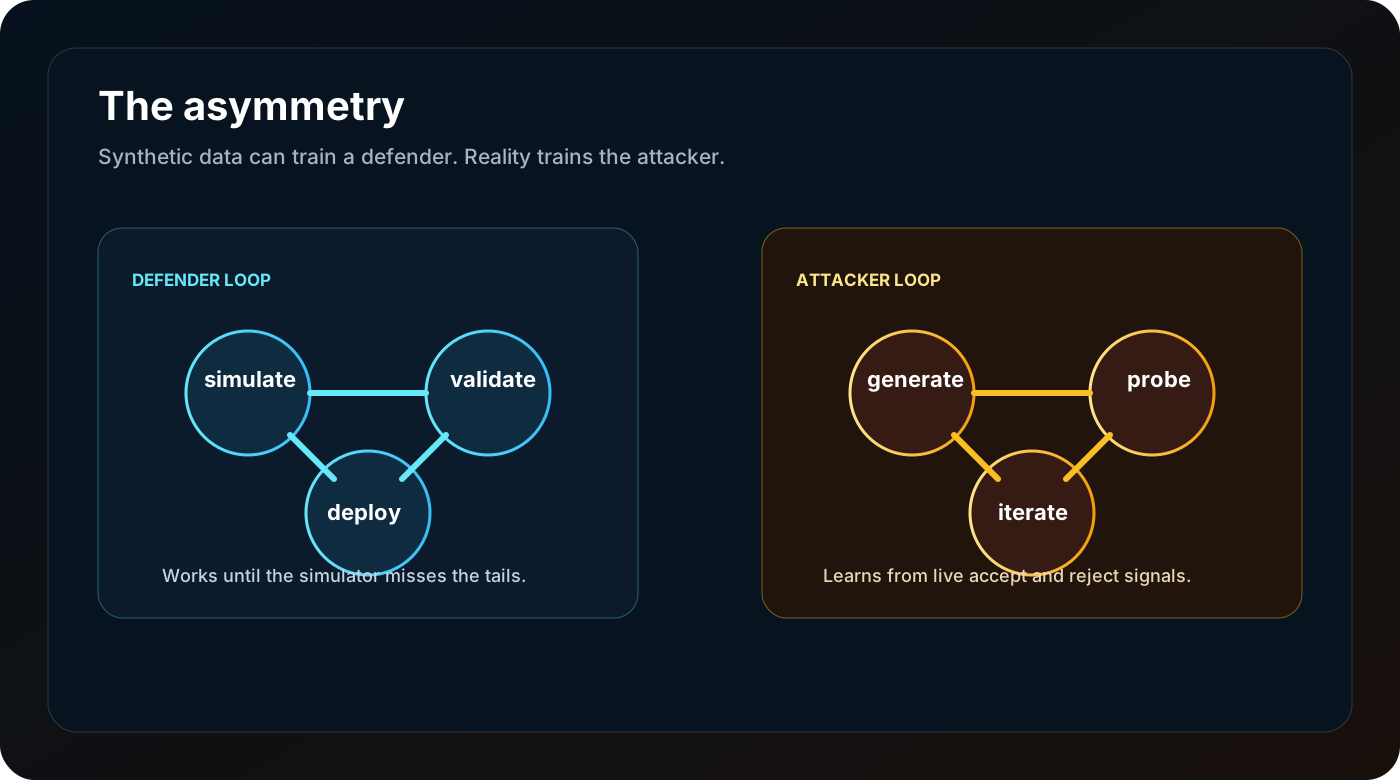
The asymmetry is brutal: generative tools help attackers more than defenders because attackers do not need to be right on average. They need one bypass, one accepted identity, one pattern that slips through a control long enough to cash out.
The 2026 LexisNexis Risk Solutions Cybercrime Report documents the shift. Its press release says synthetic identity fraud grew eight-fold globally in 2025 and now accounts for 11% of reported fraud. It also reports a 450% rise in agentic traffic from January to December 2025 and warns that increasingly human-like bots challenge behavioral detection.
Now put the two halves together. Defenders train on synthetic examples that under-represent real criminal creativity. Attackers use generative tools to manufacture identities, documents, and behavior, then iterate against live accept or reject signals. The attacker trains on your actual system. Your system trains on simulation.
That is why strong lab metrics can coexist with production losses nobody can explain. The model was not necessarily broken in the test set. The test set was too polite for the world it entered.
The legal trap is the claim, not the data
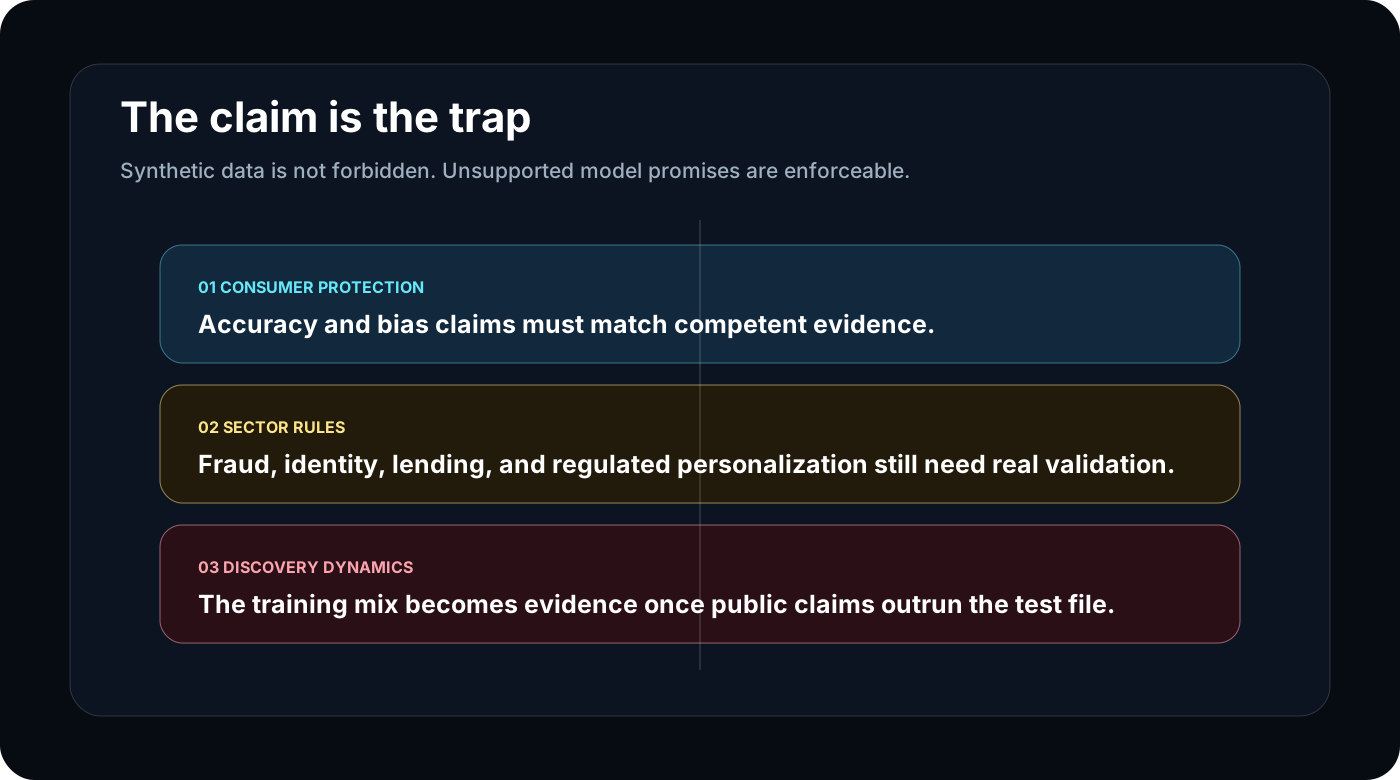
Be precise about liability. Synthetic data is not negligence by itself. Regulators have not banned it as a category. The enforcement risk is the gap between what a company says its AI can do and what its evidence supports.
The cleanest example is FTC v. IntelliVision Technologies. The FTC challenged facial-recognition marketing claims around accuracy, bias, and training data. The agency said the company did not have support for claims that the system was among the most accurate available, free of gender and racial bias, or trained on millions of faces.
The lesson is not limited to facial recognition. AI accuracy, training-data composition, bias, spoof resistance, and real-world performance claims are marketing claims. If the model fails and the evidence file is thin, the synthetic-data shortcut becomes part of the story regulators and plaintiffs tell.
The FTC's Operation AI Comply made the broader point: there is no AI exemption from deceptive advertising rules. The July 7, 2026 Federal Register policy statement sharpened the focus on how AI accuracy is represented. The direction is clear enough: say only what your validation can prove.
Where the exposure concentrates
The highest-risk systems share three traits: consequential outcomes, adversarial users, and public claims. Fraud detection, identity verification, lending-adjacent scoring, and regulated personalization all sit in that zone.
Fraud detection
Lab precision looks stable while live losses drift because attackers train against production behavior.
Identity verification
Synthetic faces and documents reduce privacy pressure but can leave claims exposed if real validation is thin.
Personalization
Generated behavior encodes a simulator's assumptions, then misses the weirdness that real customers create.
Fraud detection in fintech and ecommerce is the obvious category. A model trained mostly on simulated transactions may look excellent in validation, then miss attacks from people actively probing it. Identity verification is close behind: synthetic faces and documents can help, but only real adversarial holdouts can show whether the system survives modern spoofing.
Personalization and credit-adjacent models carry a quieter risk. Synthetic behavior data encodes the generator's assumptions about people. If those assumptions diverge from real populations, recommendations degrade, fairness issues surface, and the company has to explain why simulated behavior was treated as proof.
Using synthetic data without stepping in the trap
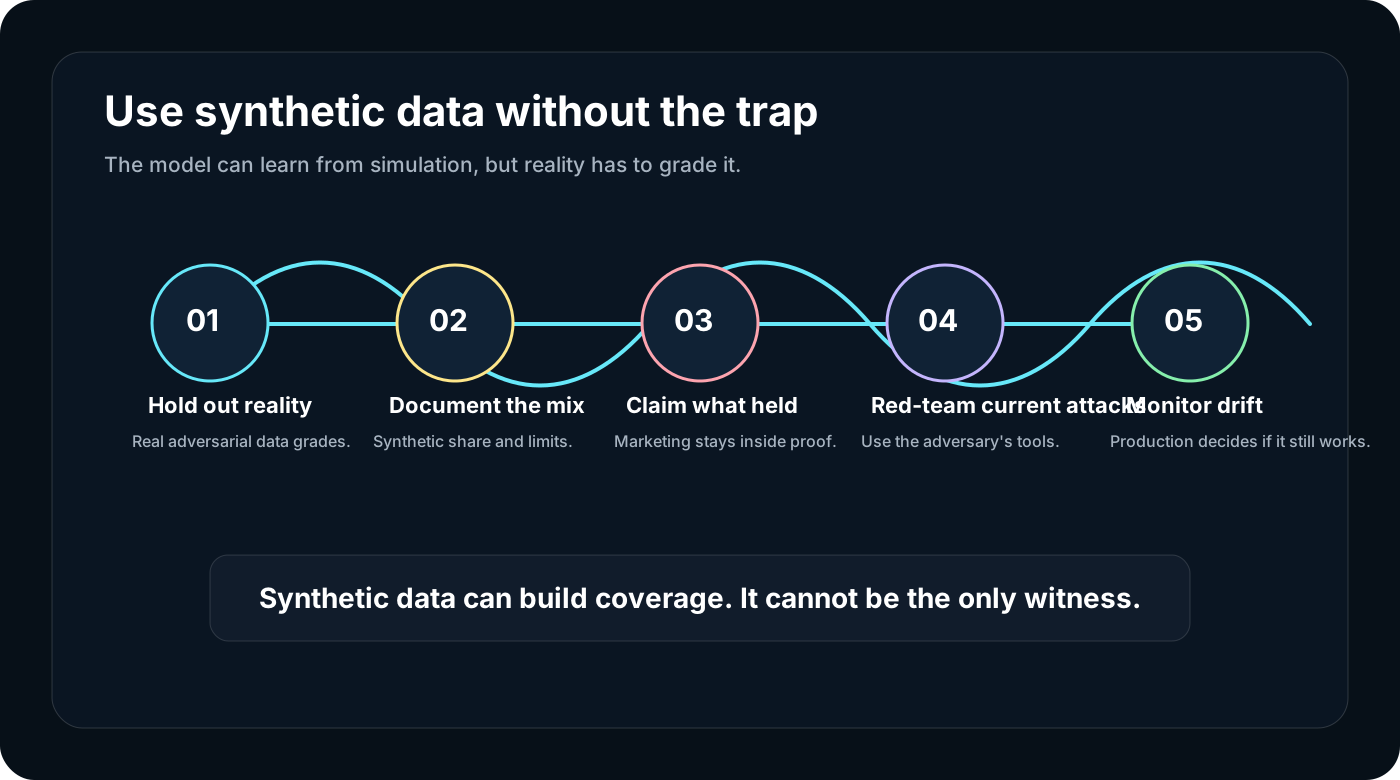
The defensible practice is neither abstinence nor faith. It is discipline. Synthetic data can build coverage, protect privacy, and test rare cases, but consequential models still need real validation and a claims file that can survive scrutiny.
Hold out reality. Keep real, messy, adversarial examples that the model never trains on. Synthetic data can expand the training set. Reality grades the model. If you cannot legally obtain real validation data for a consequential domain, treat that as a risk signal, not a paperwork nuisance.
Document the mix. Record how much of the training data was synthetic, how it was generated, what it was meant to cover, and what it cannot contain. That provenance file is your defense exhibit. Its absence is theirs.
Claim only what the holdout proved. Marketing pages, sales decks, compliance filings, and vendor questionnaires should describe performance against real-world validation, with the population named. If the claim sounds stronger than the test, weaken the claim.
Red-team with the attacker's tools and monitor production drift. If criminals use generative systems to evade your model, validation has to include generated attacks that keep changing. Track where live performance diverges from validation performance by segment and attack type.
The uncomfortable math
Companies already deep in synthetic-trained systems face three choices. Keep the models as they are and absorb the widening performance gap plus claims exposure. Revert to real-data training and inherit the privacy program that requires. Or rebuild deliberately with real adversarial validation, documented provenance, privacy-preserving techniques, and public claims rewritten to match evidence.
The third path costs real engineering and governance time. That is the point. It front-loads the cost instead of letting it compound as fraud loss, enforcement risk, and customer harm.
The synthetic-data era is not ending. The unaudited synthetic-data era is. The tool survives. The shortcut does not: training on imagination, validating on hope, and marketing the result as battle-tested while both fraudsters and regulators learn where to look.
The fix is not dramatic. Inventory the models. Identify which ones trained heavily on synthetic data. Match every public performance claim to validation evidence. Put real adversarial holdouts back into the system. Then keep monitoring the gap between the model you proved and the world attacking it.