
TL;DR
- Stanford AI Index 2026: Grok 4 training alone produced 72,816 tons of CO2. AI uses 29.6 GW of power globally.
- Benchmark saturation: performance gains from pure scale are narrowing fast.
- Neuro-symbolic hybrid systems route tasks to the most efficient architecture, cutting energy 100x.
- AI agents now succeed in 77.3% of real-world tasks vs 20% in 2025.
- Model size is no longer the right signal. Accuracy on your specific task is.
The AI scaling hypothesis was seductive in its simplicity: bigger models, more data, more compute, better performance. For several years, this held. GPT-3 to GPT-4. Gemini's successive releases. Each generation larger than the last, each measurably better.
The Stanford AI Index 2026 puts a number on where that approach has landed. Grok 4's training alone produced 72,816 tons of CO2 equivalent. AI data centers now consume 29.6 gigawatts of power. That is roughly equivalent to the entire state of New York at peak demand.
And the performance gains from pure scale are narrowing.
Models are hitting the ceiling on established benchmarks faster than new ones can be created.
The Neuro-Symbolic Shift
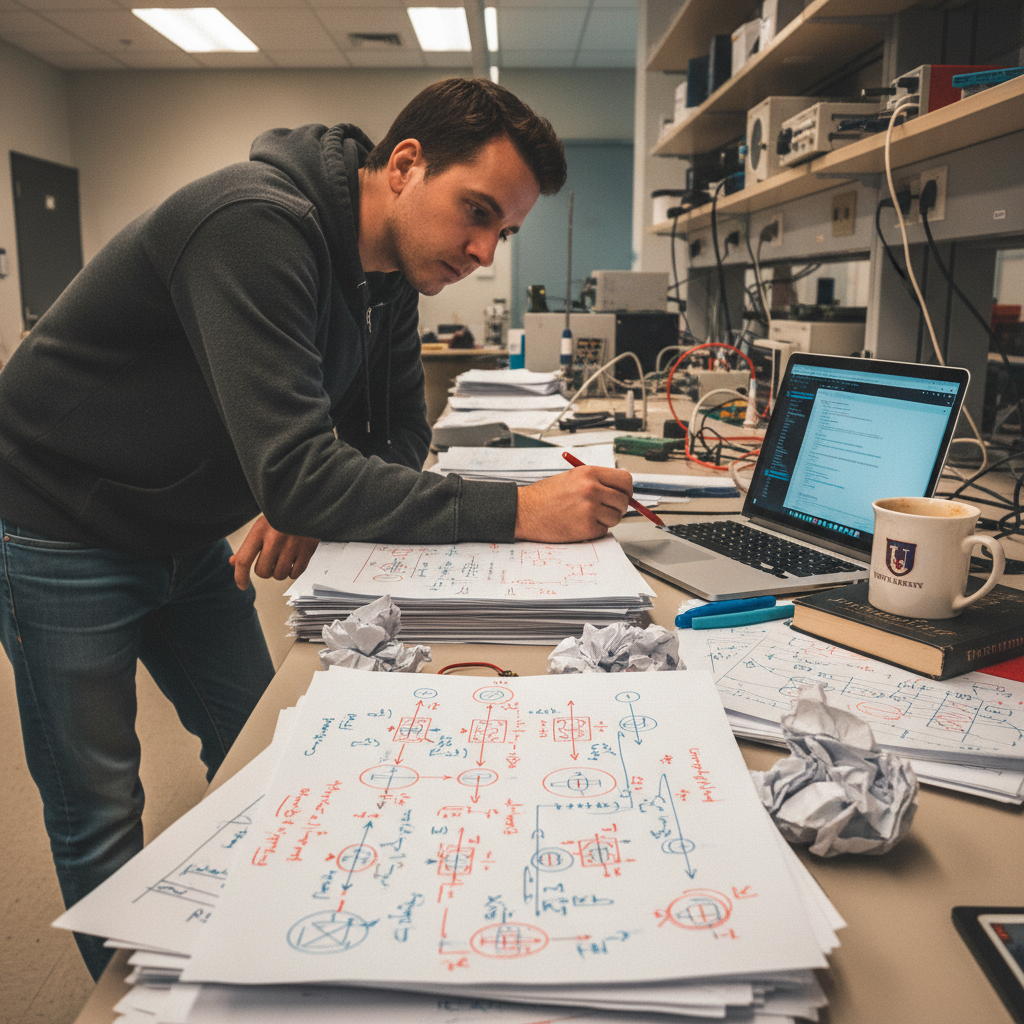

Neuro-symbolic AI combines pattern recognition with structured logic, two things that alone keep failing
Hybrid reasoning takes over
Neuro-symbolic AI combines two methods that research historically treated as competitors. Neural networks handle pattern recognition from messy, unstructured data. Symbolic AI works with explicit rules and formal logic. Hybrid systems route tasks to whichever approach fits.
The energy reduction comes from this routing architecture. Instead of running every token through a massive parameter space, structured tasks get handled by compact, precise symbolic modules. The computational cost drops dramatically.
You can throw 100x more compute at a neural network and it still won't reliably tell you what time it is in a different timezone. That is a structural problem, not a scale problem.
What This Means for AI Buyers

Evaluating the next generation
Model size is no longer the right signal
Parameter count is increasingly irrelevant. What matters is accuracy on your specific task type, energy cost per inference, and auditability of the reasoning chain.
Specialized beats general for most enterprise use cases
A fine-tuned 7B model for contract review uses a fraction of the energy of a 1T general model handling the same workload, with better accuracy on the specific domain.
Watch the hybrid architecture labs
The companies quietly investing in neuro-symbolic approaches rather than chasing scale benchmarks are the ones building the next-cycle differentiation.
The Shift
The scaling era is not over, but it is no longer sufficient on its own. The next differentiation layer is structured reasoning ability: math, planning, formal analysis, real-world task completion. The “bigger model equals better product” marketing category is running out of runway.
Back to all posts