
The 71% Problem
Your marketing AI is probably dead. Not broken, not underperforming. Dead. The data came back in Q2 2026, and it's not subtle: 71% of companies deploying vertical AI solutions still generate measurable value at six months. For horizontal AI deployments, that number is 32%.
You read that right. ChatGPT in your workflow is three times more likely to be abandoned by month six than an AI agent built for a single industry, a single workflow, a single problem.
And your competitors are moving.
The Vertical Wave Is Real
Harvey, a legal AI platform, hit $300 million in annual revenue in Q2 2026 after crossing $100 million ARR in roughly eighteen months. Legora did it faster. Sierra, a customer-support AI company, crossed $100 million ARR in seven quarters. Abridge, focused on clinical documentation, raised a $316 million extension after already hitting a $5.3 billion valuation in 2025.
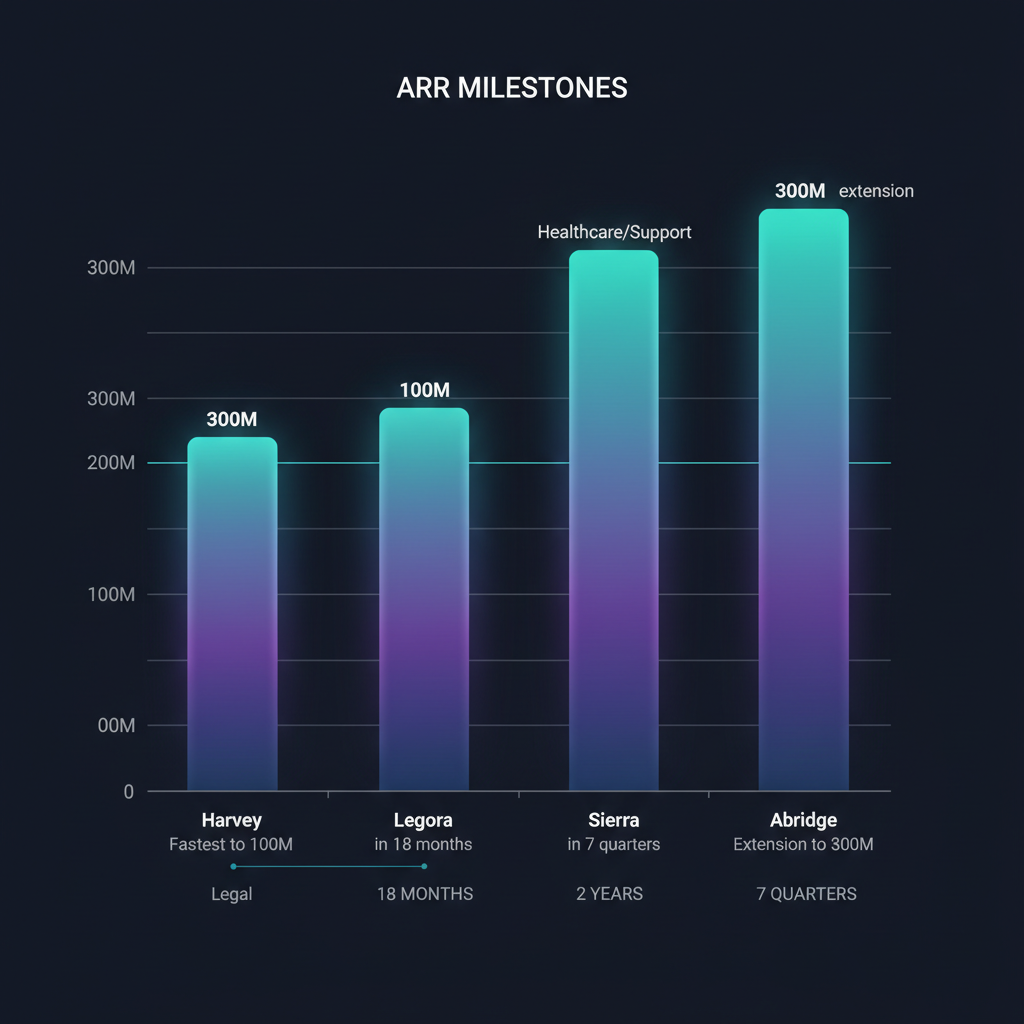
These companies are not faster at coding. They're not smarter with LLMs. They're different because they're vertical.
Vertical AI does one thing for one industry. It trains on case law archives for law firms. It sits in clinical workflows understanding SOAP notes and ICD-10 coding. It knows plumbing dispatch workflows inside out. A horizontal copilot doesn't know any of these things at depth.
McKinsey data from 2025 showed the obvious conclusion: companies deploying vertical AI solutions saw 2.3x higher average ROI than those using only general-purpose LLMs.
The best part? The vertical leaders are not venture labs or AI startups. They're the companies already in those industries. They saw a chance to stop waiting for a generic model to figure out their workflows and built an agent that actually understands them.
What Vertical Means (And Why It Matters For Marketing)
Vertical AI is not just ChatGPT plugged into your CRM. It's a system that:
- Learns from historical data in your specific workflow (ad performance patterns, audience signals, conversion sequences)
- Makes decisions using industry-specific logic (pricing elasticity, brand safety rules, media mix math)
- Improves per customer, not globally (your data makes the model better for your next campaign, not for everyone else)
- Runs decisions unsupervised at scale (because the accuracy is high enough that you trust it)
A horizontal copilot can help you brainstorm ad copy. A vertical AI agent can manage your entire media mix, optimize bids in real time, and flag brand safety risks before they're live.
The difference is permissioned data. Foundation model providers don't have access to your historical campaign data, your audience segments, or your business rules. A vertical AI system sits inside your workflow and learns from it.
Why This Breaks Marketing In 2026
Here's where it gets uncomfortable: most marketing teams are still building ChatGPT wrappers. ChatGPT for ad copy. ChatGPT for audience segmentation. ChatGPT for campaign briefing.
And it works great for thirty days.
Then the model drifts. It hallucinates audience insights. It doesn't know your brand voice because it was trained on millions of brands, not your brand. It doesn't understand your media mix because it has no access to your historical performance data.
Meanwhile, vertical AI marketing agents are shipping at competitors. They're running media operations with minimal human oversight. They're A/B testing at volumes that generic AI cannot handle because they understand the specific economics of your media buy.
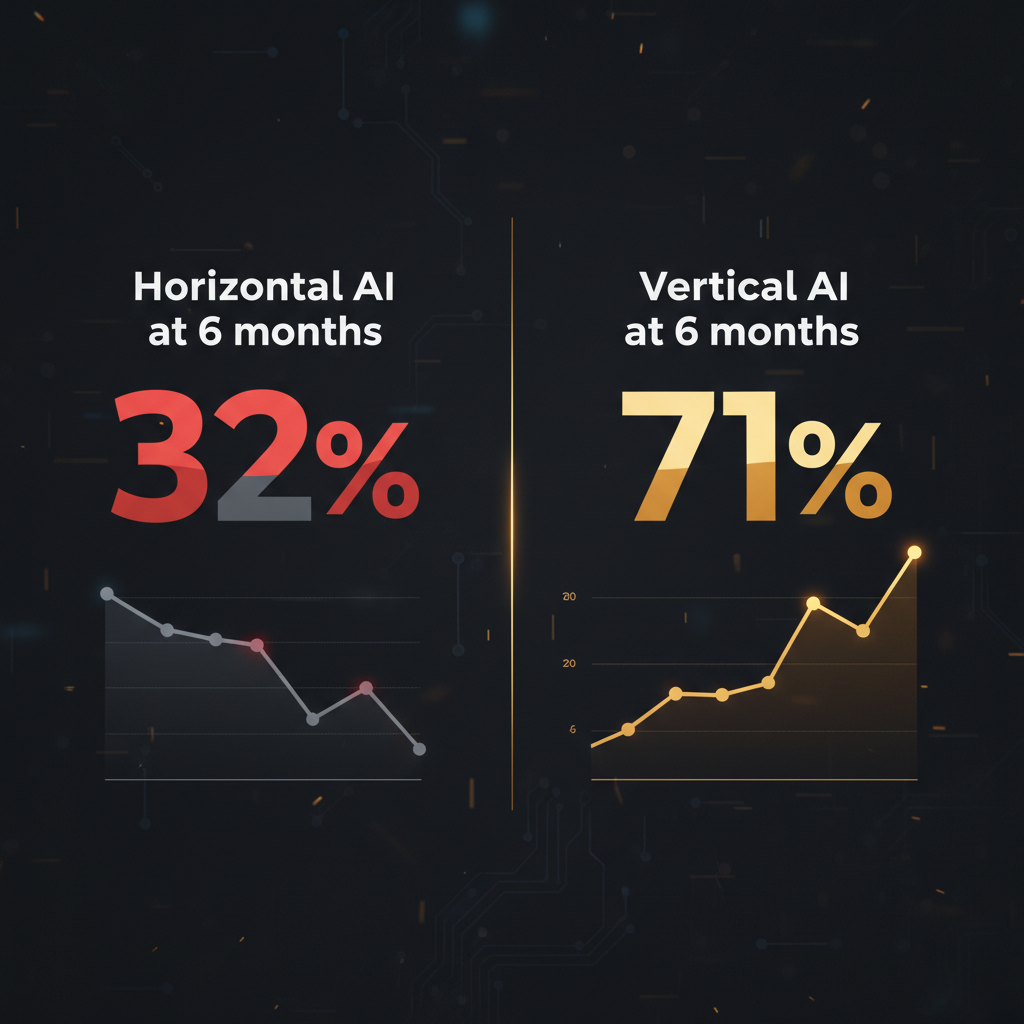
The ROI gap is mechanical. When you're on the right side of 2.3x, expansion becomes inevitable. The agent proves its value in month one. By month six, you're scaling it. By month twelve, your payback period is already closed.
If you're still piloting ChatGPT integrations in month six, you're already behind.
The Missing Infrastructure
Why hasn't marketing caught up to legal, healthcare, and customer support?
Legal vertical AI scaled because legal is language-heavy, high-value-per-transaction, and customer concentration rewards depth over breadth. Marketing is all of those things too.
The real reason is that the legal vertical AI vendors already existed. They had the customer relationships. They had the permissioned data. They built the agents.
In marketing, there's no equivalent player yet. Advertising tech is fragmented across platforms (Google, Meta, TikTok), each with proprietary API limits and performance data silos. Media agencies own the relationships but not the data. Marketing platforms own some of the data but not the relationships.
That creates a gap. A vertical AI marketing agent needs:
- Real-time access to performance data across channels
- Historical campaign data going back months or years
- Brand guidelines and audience rules embedded as constraints
- Direct permissions to optimize and bid
No marketing platform has all four. Some have three. Most have one or two. That's the infrastructure problem. And it's fixable.

What Comes Next
If vertical AI stays on the trajectory of legal, healthcare, and insurance, the 2026 to 2027 shift will be brutal for companies still piloting horizontal AI.
The vertical AI marketing vendors will land on outcome-plus-consumption pricing. You'll pay a base monthly fee plus a percentage of incremental revenue driven by the agent. (Bessemer reports that median payback for marketing operations AI is 6.7 months, so the alignment is clean.)
Early adopters will see 2.3x ROI. They'll scale fast. They'll expand into full media operations. By 2027, benchmark data will exist. Boards will ask why other companies' marketing teams have half the headcount at the same revenue. The internal pressure will be massive.
Late movers will face a choice: build vertical AI in-house (expensive, slow, risky) or partner with the vendors who got there first (expensive, but at least they exist).
The honest answer is that we're early. Vertical AI marketing is not a solved category yet. But the category is forming. The payback math is real. And the players who move now will own the 2027 conversation.
The 71% number is saying something simple: if you want AI to stick around in month six, build it for your specific industry, not everyone's.