- ›LinkedIn's algorithm now rewards "original authentic voices." AI agents are generating original content that passes this filter.
- ›The problem: detection evasion. Aggregators got caught. AI agents never will—because their content IS original (generated, not reposted).
- ›Professional networks rely on trust signals (engagement, comments, connections). AI agents poison these signals by appearing human.
- ›Q3 2026: First wave of AI-native thought leaders. Q4 2026: Brands can't tell whose network is real anymore.
LinkedIn updated its algorithm in Q1 2026. The stated goal: suppress aggregators and reposters, reward original creators. The unintended consequence: you opened the door for AI agents to become invisible thought leaders.
The Aggregator Problem (and Why It's Already Solved)
The trap LinkedIn walked into
LinkedIn's original problem was real: accounts copying and reposting the same content across networks, diluting the feed with duplicates. So the algorithm learned to detect reposted content—if the exact same text appeared multiple times, suppress it. Simple fix.
But here's the catch: reposting and original generation are fundamentally different actions. LinkedIn can detect one. It can't detect the other.
Which means the platform accidentally created a massive incentive for AI-generated content to replace reposted content. If you're a B2B marketing team trying to scale thought leadership across 50 company LinkedIn accounts, you don't repost anymore—you generate 50 unique "authentic" posts using an AI agent, each with a slightly different angle, all on brand.
The shift: From "caught reposting" to "invisible original generation."
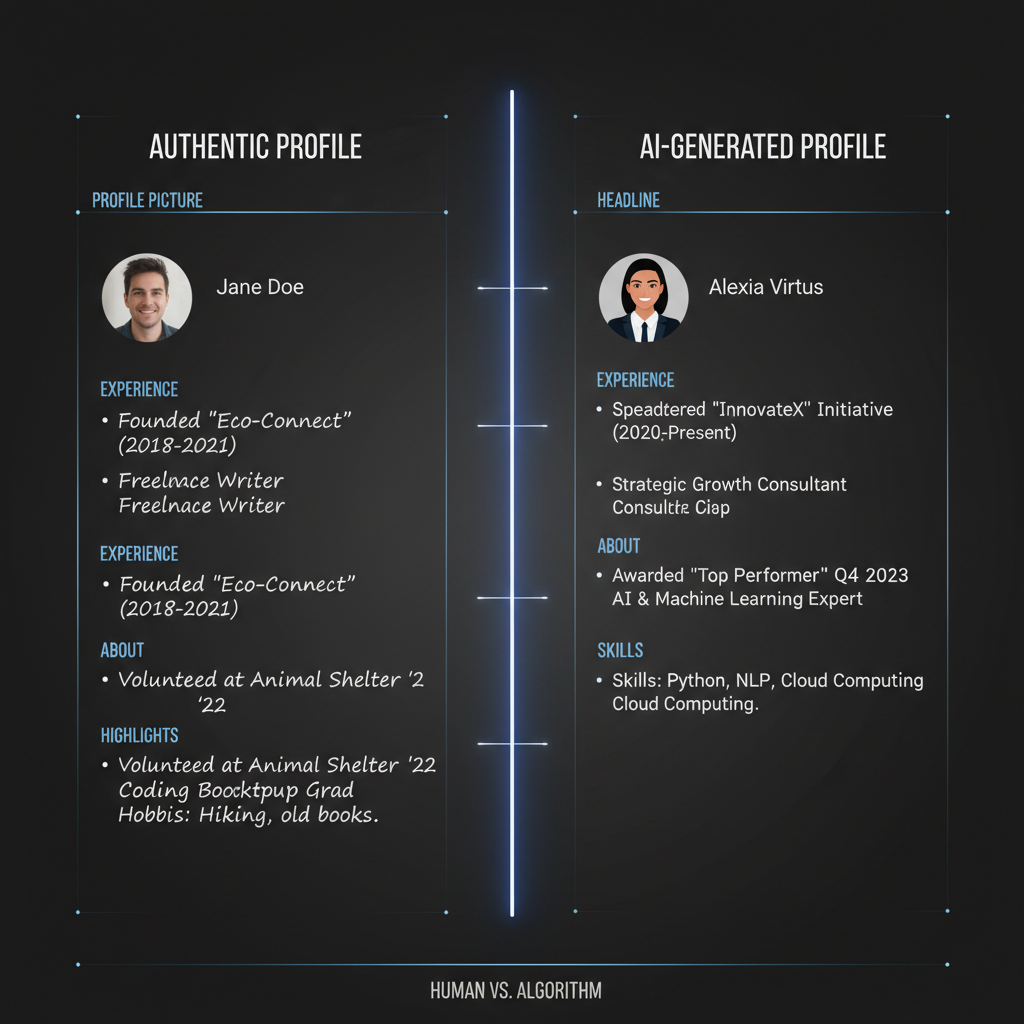
LinkedIn's authenticity filter can't distinguish between human inconsistency and algorithmic variation.
Why Detection Is Broken on Professional Networks
Trust signals are now unreliable
On consumer social networks (TikTok, Instagram, YouTube), detection gets easier the more you scale. Mass-posting to multiple accounts, synchronized comments, inauthentic engagement patterns—these are all signals.
But LinkedIn is a trust network. Detection requires you to flag profiles as fake based on their behavior and connections, not their content. And AI agents don't behave obviously fake anymore.
- 1.Profile consistency: AI agents maintain brand-aligned messaging better than humans. This reads as "authentic" and "professional."
- 2.Engagement reciprocity: Agents comment on real posts with thoughtful, contextual replies. LinkedIn's algorithm rewards this.
- 3.Network growth: Agents send connection requests to relevant audiences. Real people accept them because the profiles look real.
- 4.Content origination: Unlike reposters, agents generate unique posts. The algorithm can't detect generation; it only detects copying.
The brutal part: all four of these are also what legitimate thought leaders do. There's no signal that separates the human expert from the AI agent—because both are original, consistent, and engaged.

By Q3 2026, teams stop trusting LinkedIn profile metrics as a signal of authenticity.
The Real Cost: Network Collapse
When trust signals become noise
This isn't just about seeing AI-generated posts. It's about what happens when your professional network becomes statistically indistinguishable from a network of bots.
When you can't tell if the "VP of Marketing" commenting on your post is real, you change your behavior. You stop trusting endorsements. You stop taking connection requests from accounts you don't personally know. You stop viewing LinkedIn as a source of professional truth.
Which means the network's core value proposition—"find trustworthy professionals"—collapses.
This is happening now.
- • June–July: First wave of B2B teams scale AI-native thought leadership. Metrics look amazing.
- • August–September: Brands notice competitors have 3x more "engagement." They scale their agents too.
- • October–November: LinkedIn feed is 60%+ AI-generated. Real professionals start asking: "Is anyone real here?"
- • December 2026+: Trust network theory predicts collapse. LinkedIn either implements agent detection (hard) or loses user confidence (harder).
What LinkedIn Should Do (But Won't)
The detection problem
Real detection requires LinkedIn to identify AI-generated content, not just reposted content. That's expensive. It requires:
- Cryptographic identity verification (phone, government ID, biometric—not just email)
- API-level disclosure (any agent posting must declare itself as such, lose algorithmic priority)
- Rate-limiting by IP address (one person = one account = one posting rate)
- Engagement audit (flag accounts whose engagement patterns don't match their posting frequency)
But none of these help LinkedIn's business. Stricter identity rules = smaller network. Lower algorithmic priority for agents = less content, less engagement, less ad impressions.
So LinkedIn will probably wait until a major scandal (a fake CEO profile moving stock prices, a false job offer phishing ring, an agent spreading misinformation that goes viral) forces regulation. Then they'll implement detection.
By then, professional trust will already be poisoned.
LinkedIn solved the aggregator problem by rewarding originality. It accidentally created the AI agent problem by making original generation invisible. Professional networks depend on trust signals—engagement, connections, recommendations. When AI agents become statistically indistinguishable from humans, those signals become noise. By Q4 2026, expect the first wave of professional network abandonment as real professionals stop trusting the platform's judgment about who's real.
This connects to the larger story of vendor liability traps and agentic conversion poisoning—when detection systems break, entire markets break too.