
On September 22, Google sent your store an email you never asked for. "Your products are now eligible for native checkout," it said. Your Shopify store had been matched to your Merchant Center account, and customers could now buy your products inside AI Mode on Google Search and inside Gemini. No site visit. No cart on your domain. No thank-you page you designed.
The second line removed any doubt about who had opted in. "Eligible products are automatically included. There's nothing for you to set up." If you would rather keep the transaction on your own website, the email explained, you can switch the feature off in Shopify admin, under Sales channels, then Agentic. The default had already flipped. Your move is the opt-out. (Search Engine Roundtable)
This is the moment the agentic commerce story changed shape. Back in June I wrote that most stores couldn't sell to AI agents at all, because the infrastructure existed and almost nobody had switched it on. Four months later, the industry solved the adoption problem the way platforms always do: it removed the decision. The infrastructure is now on by default, and merchants are discovering that being ready for AI checkout and being enrolled in it are two different things.
What Google switched on
Native checkout means a shopper can pay for your product inside a Google surface, AI Mode or Gemini, instead of traveling to your website to complete the purchase. The plumbing underneath is the Universal Commerce Protocol, or UCP. Plain version: UCP is an open standard, co-built by Google with Shopify, Walmart, Target, and more than twenty other partners, that gives AI agents and online stores a shared language for completing a transaction. A store publishes a small manifest at /.well-known/ucp declaring what it supports, checkout, product discovery, cart, loyalty, order management, and any compliant agent can shop it. Build it once and every agent that speaks the standard can buy from you. (ByteIota)
Google announced UCP in January. The checkout technology went live in February. For most of the year it sat inside a closed program: interest forms, selected merchants, US-only listings, a native_commerce attribute on the feed. Then, days before the emails, Google widened the rollout, and on September 22 the notices went out. The technology is compatible with the Agent2Agent and Agent Payments protocols and with MCP, so it plugs into the agent infrastructure teams are already building. (PPC Land)
Two facts matter most for merchants. First, you remain the seller of record. The money, the fulfillment, and the customer relationship are still yours on paper. Second, the customer never sees your store. Everything that used to happen between "add to cart" and "order confirmed" now happens on Google's surface, under Google's design, measured by Google's instruments.
From velvet rope to default
The March documentation read like a velvet rope. PPC Land's analysis of the original help page described a closed program running in phases for selected merchants only, with payment providers that couldn't accept a Google Pay token told their timelines would stretch. Participation was something you applied for.
The September email reads like the opposite. Eligible products are automatically included. There is nothing to set up. The distance between those two documents is the whole story of this year in agentic commerce: the industry spent the spring debating standards and the fall deploying defaults.
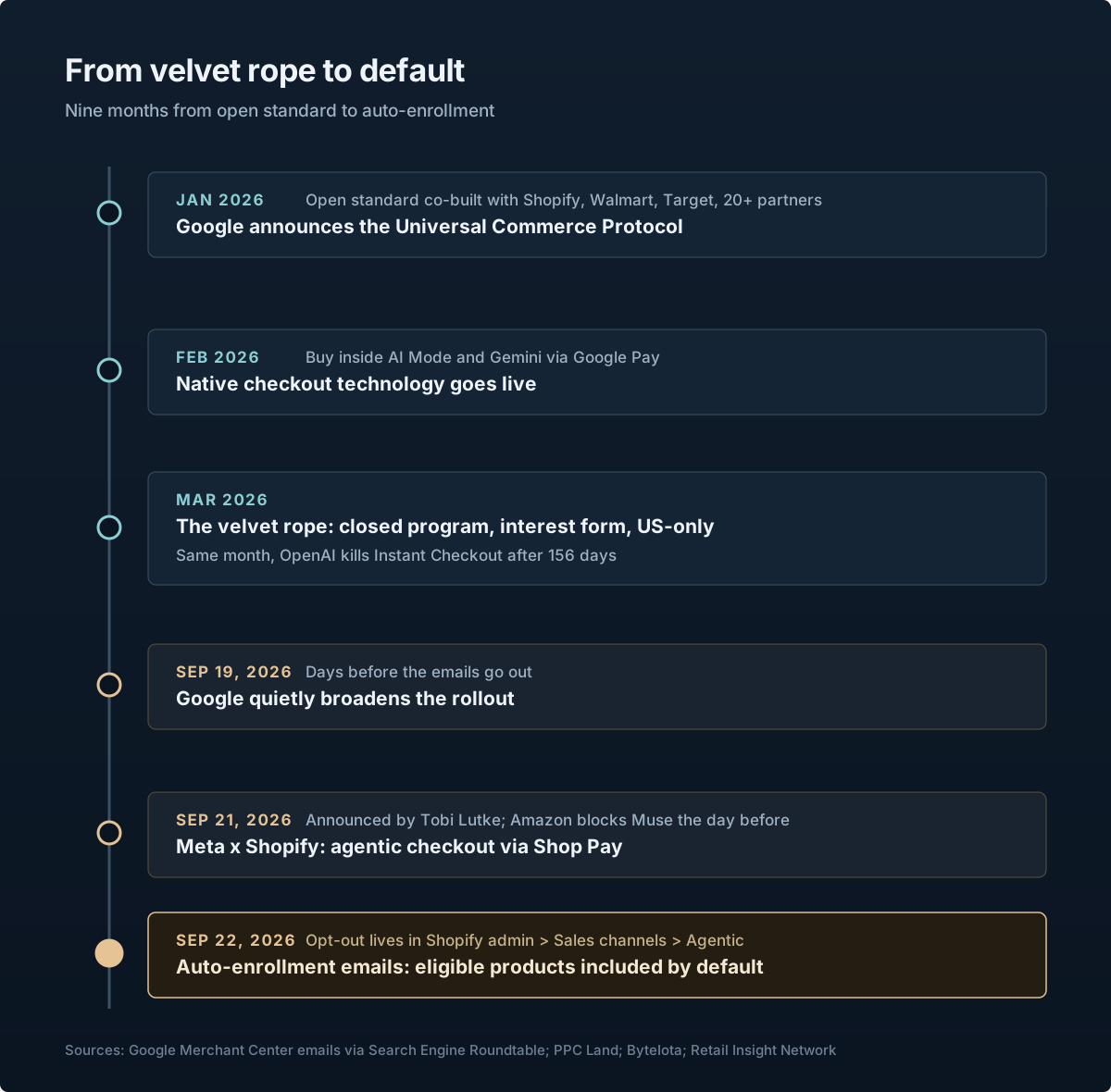
Consider the contrast sitting right next to it. OpenAI launched Instant Checkout inside ChatGPT on September 29, 2025, built on its own Agentic Commerce Protocol with Stripe processing the payments. On March 4, 2026, OpenAI shut it down, 156 days after launch, and folded the effort into its Apps model. One lab tried the walled-garden route and walked it back. Google tried the open-standard route and just made it the default. (Tech Insider)
Defaults beat demos. A feature merchants have to apply for gets the enthusiasts. A feature merchants have to switch off gets everyone.
The week the transaction left home
Google did not move alone. The same week produced two more moves that belong in the same frame.
On September 21, Shopify CEO Tobi Lütke announced that Meta's Muse assistant could shop and check out across all Shopify stores using Shop Pay. Meta unveiled Muse on September 8 as a personal AI agent that browses the web, compares products, and completes purchases on a shopper's behalf. (I covered what Meta wants from Muse in this morning's post.) The Shopify partnership puts agentic checkout inside a second assistant with massive distribution. (Retail Insight Network)
On September 20, Amazon blocked Muse from its platform, saying third-party applications making purchases for customers should respect a retailer's decision on whether to participate. Amazon has taken the same stance toward ChatGPT, Gemini, and Perplexity's Comet. (Seeking Alpha)
Read the three moves together and the pattern is clean. Google auto-enrolls you. Meta partners with your platform. Amazon walls its garden. Every large platform has now placed its bet on where the transaction should live, and in two of the three cases the answer is "not on your website." The question for merchants stopped being whether AI agents will sell their products. It is now on whose terms, and what each term costs.
What leaves your site with the sale
Here is the part the email doesn't mention. Your checkout page was never just a payment form. It was a small economy, and native checkout nationalizes most of it.
Start with the attachments. Post-purchase upsells, order bumps, warranties, gift wrap, bundles, the "customers also added" row: for many stores these contribute a meaningful share of order margin, sometimes the difference between a profitable order and a breakeven one. None of that exists inside Google's checkout. The Buy button completes the single product and stops. If your unit economics assume the average order carries attachments, every native-checkout order quietly reprices your margin downward.
Then the instruments. Custom pixels, client-side analytics, the A/B tests running on your checkout steps, the survey that asks why someone almost left: all of it goes dark for these orders. You will see the order in Shopify admin. You will not see the journey that produced it.
Then the relationship. The thank-you page was prime real estate: loyalty program enrollment, the SMS opt-in, the referral offer, the "your order is on its way" sequence that turns a buyer into a repeat buyer. A customer acquired through native checkout arrives as a name on an order, not as a subscriber to anything. You fulfilled the sale and rented the customer. Agents were already reshaping brand discovery before they could transact; now they close the sale too.
None of this is hypothetical edge-case material. A jewelry retailer selling ready-to-ship bracelets and a custom engagement-ring builder face completely different math here. The bracelet is a simple SKU that converts on price and speed. Native checkout probably helps it. The ring needs a conversation before it converts, and nothing about the AI checkout accommodates that. The product decides, not the platform. (Smart Age Solutions)
The measurement hole
The quietest problem is the instrumentation gap. PPC Land put it well: the click, the industry's unit of account for twenty-five years, is being replaced by the transaction, the citation, and the viewing session, and none of the three has settled instrumentation. Native checkout orders bypass your client-side analytics entirely. Your dashboards will undercount the channel that is growing fastest.
This creates a specific failure mode worth naming. A merchant looks at blended numbers in Q4, sees Google-attributed revenue flat, and concludes AI surfaces aren't converting. Meanwhile a growing share of orders is completing inside AI Mode, invisible to the tracking, and the merchant optimizes against a map that no longer matches the territory. The fix is unglamorous: tag every order by its sales channel at the order level, in Shopify, not in the browser. Server-side source tagging is the only record you will have. Build the margin math per order source now, before the holiday volume makes the hole expensive.
There is a second-order effect on testing. If a meaningful share of your transactions happens off-site, your on-site conversion experiments are measuring a shrinking slice of reality. A checkout test that wins on your domain might be irrelevant to the orders Google completes. Keep running the tests, but weight them by the share of revenue they can still touch.
Stay or opt out: four questions
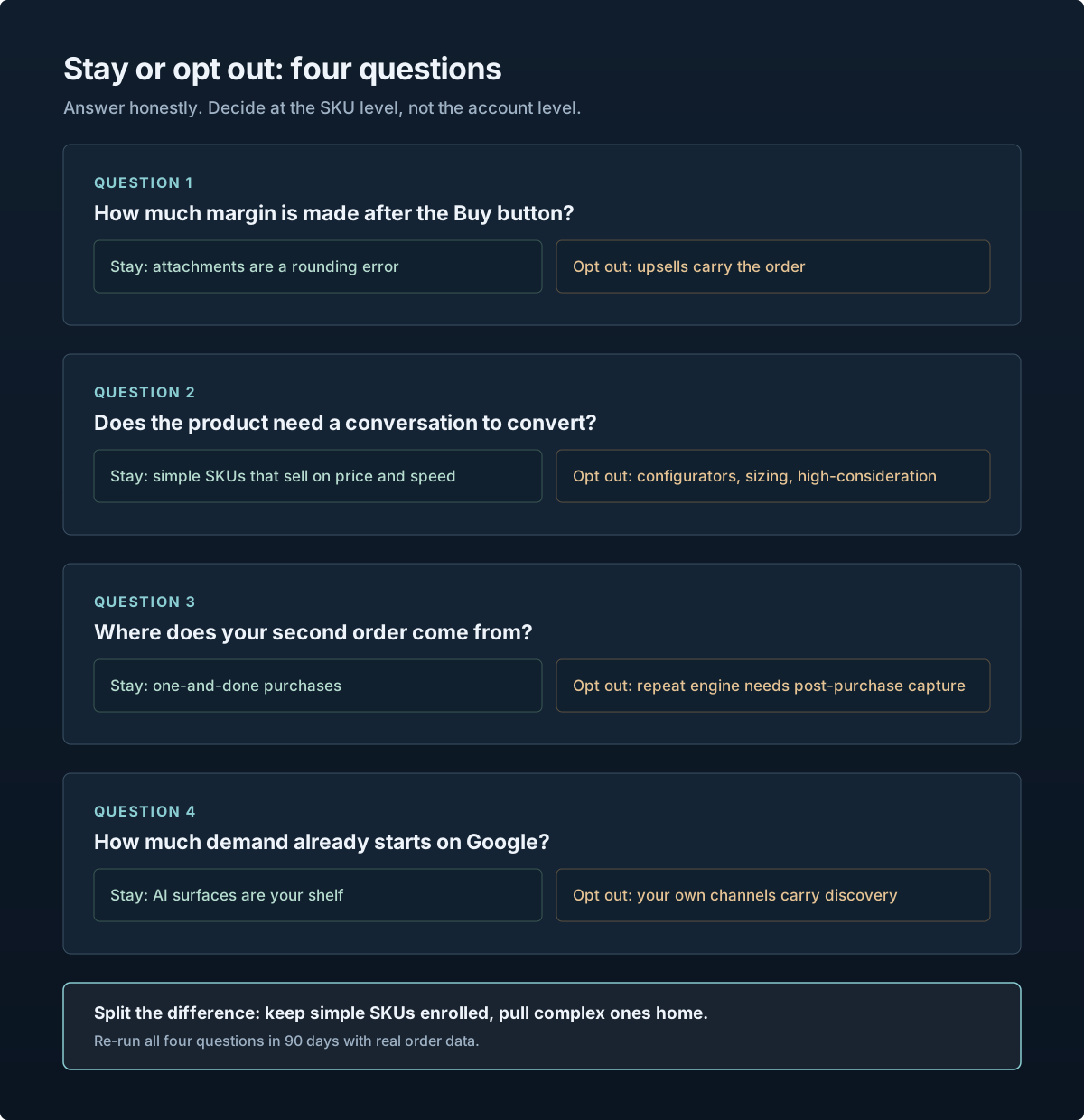
Most coverage of this story stops at the toggle: here is where to switch it off. That is the wrong shape for the decision. Whether native checkout helps you depends on your margin structure, your product, and your repeat engine. Four questions sort it out.
-
How much of your margin is made after the Buy button? Pull your last ninety days of orders and separate product margin from checkout-attachment margin: upsells, bundles, warranties, gift options. If attachments are a rounding error, native checkout costs you little. If they carry the order, every off-site sale is a pay cut you volunteered for by doing nothing.
-
Does your product need a conversation before it converts? Configurators, sizing and fit guidance, B2B quoting, high-consideration purchases with real return risk: these convert because your site does work the generic checkout cannot do. Native checkout is built for the simple SKU. If your catalog is mostly simple SKUs with a few complex ones, consider the split decision below instead of a blanket toggle.
-
Where does your second order come from? If repeat purchase is your growth engine and it depends on post-purchase capture, loyalty enrollment, SMS opt-ins, the thank-you-page referral, then a customer acquired without any of that is worth less than your blended CAC math assumes. Price the channel accordingly or rebuild the capture downstream, which brings us to the playbook.
-
How much of your demand already starts on Google? This one cuts the other way. If AI Mode and Gemini are where your customers discover you, opting out is opting out of the shelf. For simple products with thin attach economics, the default is probably your friend. The merchants who should worry least are the ones whose product sells itself and whose margin survives the trip.
The honest answer for many stores is a split: keep simple, high-velocity SKUs enrolled and pull the complex, high-attach products back to your own checkout. The toggle is per store, but your feed and your catalog strategy don't have to be all-or-nothing. Decide at the SKU level, not the account level.
The playbook either way
Whether you stay enrolled or opt out, there is work to do this month. The default moved. Your operations should move deliberately.
-
Audit what got enrolled. Check your Merchant Center eligibility and confirm which products Google matched. Surprises here are common: variants, bundles, and region-restricted SKUs can behave differently than you expect.
-
Tag every order by channel, server-side. Add order-source tagging in Shopify so native-checkout orders are identifiable in your own records forever. This is the foundation for the margin math in question one. Do it before Q4 volume arrives.
-
Rebuild post-purchase for the off-site buyer. The package insert just became your thank-you page. A card in the box with a QR code to loyalty enrollment, a first-reorder discount, or the SMS list recovers some of what the checkout took. You still fulfill the order. Make the box do the work the browser no longer does.
-
Make the feed boringly correct. AI surfaces read your Merchant Center feed the way a picky customer reads a label. Accurate titles, clean images, correct availability and pricing: this is the unglamorous work that decides whether the Buy button appears on your products at all, and whether it appears on the right ones. One merchant guide put it plainly: make the feed boringly correct. (Factual Minds)
-
Calendar a 90-day review. This program is weeks old. Eligibility rules, supported markets (the US, Canada, and Australia are the documented ones so far), and Google's own measurement will all shift. Re-run the four questions in January with real order data instead of assumptions.
And if you opt out, do it with open eyes. You are trading reach for control, which is a legitimate trade, but measure what it costs. Watch your AI-surface impressions against your direct traffic for the products you pulled. If discovery collapses, the control wasn't worth the price.