
Google is not simply retiring one campaign format. It is using the format's retirement to pull more search decisions into a common automation layer.
The corrected sequence matters
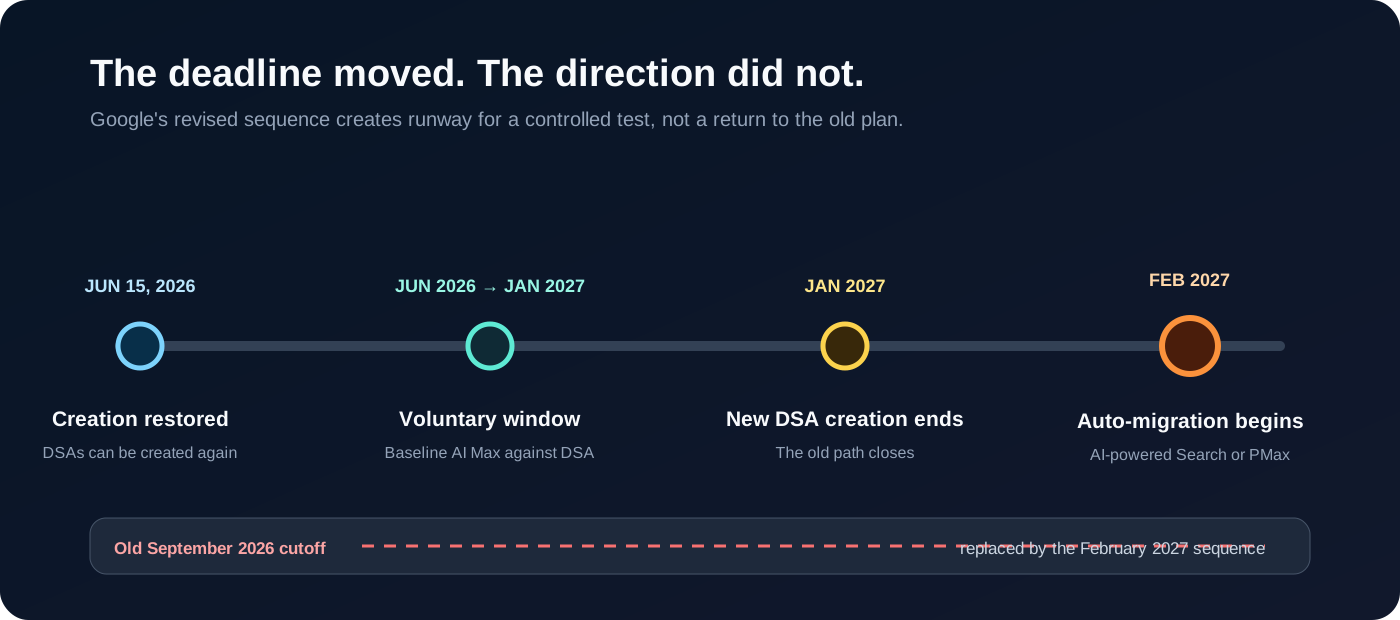
The old story said September 2026 was the mandatory cutoff. That is no longer the current timeline. In a June 12 report from Search Engine Roundtable quoting Google's update, the company extended the sequence so advertisers have more time to test and migrate.
Google's own product update and the Ads Developer Blog describe the revised path: DSA creation was restored on June 15, 2026; a voluntary migration window runs through January 2027; new DSA creation ends in January 2027; and automatic migration begins in February 2027.
That extension is meaningful, but it is not a reversal. The destination is still a more automated Search campaign model. The extra months are a chance to establish a baseline, identify which decisions are business-critical, and see whether AI Max can meet those requirements without turning every disagreement into a support ticket.
The control transfer is the story
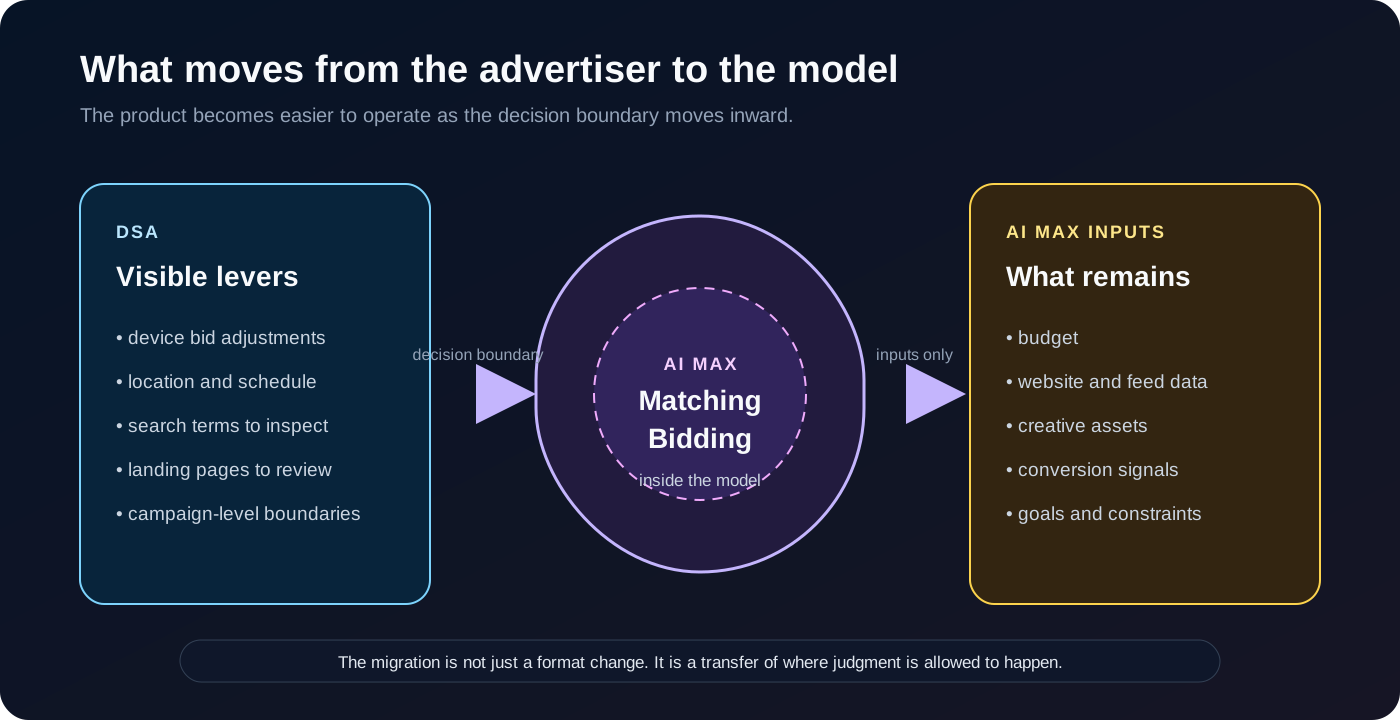
Dynamic Search Ads were already automated, but the advertiser could still reason about the boundaries. Device, location, schedule, search-term, and landing-page decisions were part of an inspectable operating model. They were not perfect controls, but they gave a specialist places to look when the result did not make sense.
AI Max asks for a different contract. You provide budget, website and feed data, creative assets, conversion signals, and goals. Google combines those inputs with broader signals and decides more of the matching, bidding, and optimization path. The gain is less campaign assembly. The trade is less independent visibility into why one query, page, or placement received the next dollar.
That does not make AI Max automatically bad. It does change what competent operation looks like. A paid-search lead can no longer define quality only as knowing where to adjust a bid. Quality becomes the ability to design inputs, set constraints, run a meaningful comparison, and explain where the model's judgment begins.
What to preserve before the move
The baseline is not an archive for its own sake. It is the reference that lets a team tell the difference between a model finding better demand and a model finding more demand that happens to be easier to buy.
Start by grouping the existing DSA work into decisions rather than campaign names. Which query classes are profitable? Which landing pages convert only when the visitor has a particular intent? Which locations, schedules, devices, or product lines need stricter boundaries? The answers should be connected to economics, not just to the controls that happened to exist in the old interface.
Then preserve the evidence that makes those decisions inspectable: representative search terms, landing-page destinations, spend and conversion windows, negative targets, budget changes, and the exceptions a specialist handled manually. A single blended return number will not tell the team whether AI Max expanded into new demand, redistributed the same demand, or replaced high-margin intent with cheaper volume.
The record should also include what the old system could not answer well. DSA was not a transparent machine; it had automation, limited reporting, and its own blind spots. The point is not to romanticize the old campaign. It is to make the comparison fair. If the old path was already unable to explain a result, the new path should not receive credit for solving that problem merely because the interface looks simpler.
This distinction matters when leadership reviews the test. A migration can improve the platform metrics and still weaken the operating model if no one can explain which business constraints held. The useful question is not whether AI Max produced a winning week. It is whether the team can reproduce the reasoning behind the result, challenge it when conditions change, and stop spending when the evidence no longer supports the decision.
For larger accounts, preserve the comparison at the level where decisions are actually made. A portfolio total can hide a change in brand versus non-brand mix, a shift from high-value product pages to broad category pages, or a rise in conversions that arrives with lower order quality. The migration review should make those tradeoffs visible instead of asking one efficiency number to stand in for the whole business.
That evidence also gives the team a way to negotiate with the platform. If a constraint matters, write it down before the migration and attach it to a measurable test. A concern that exists only as a verbal preference is easy to dismiss. A documented margin floor, query class, or landing-page requirement can become a clear acceptance rule.
Preserving that context protects the post-migration review from hindsight. When the system changes, the team should be able to say which outcome was expected, which outcome was surprising, and which new behavior requires a decision rather than another round of passive monitoring.
Why Google is consolidating
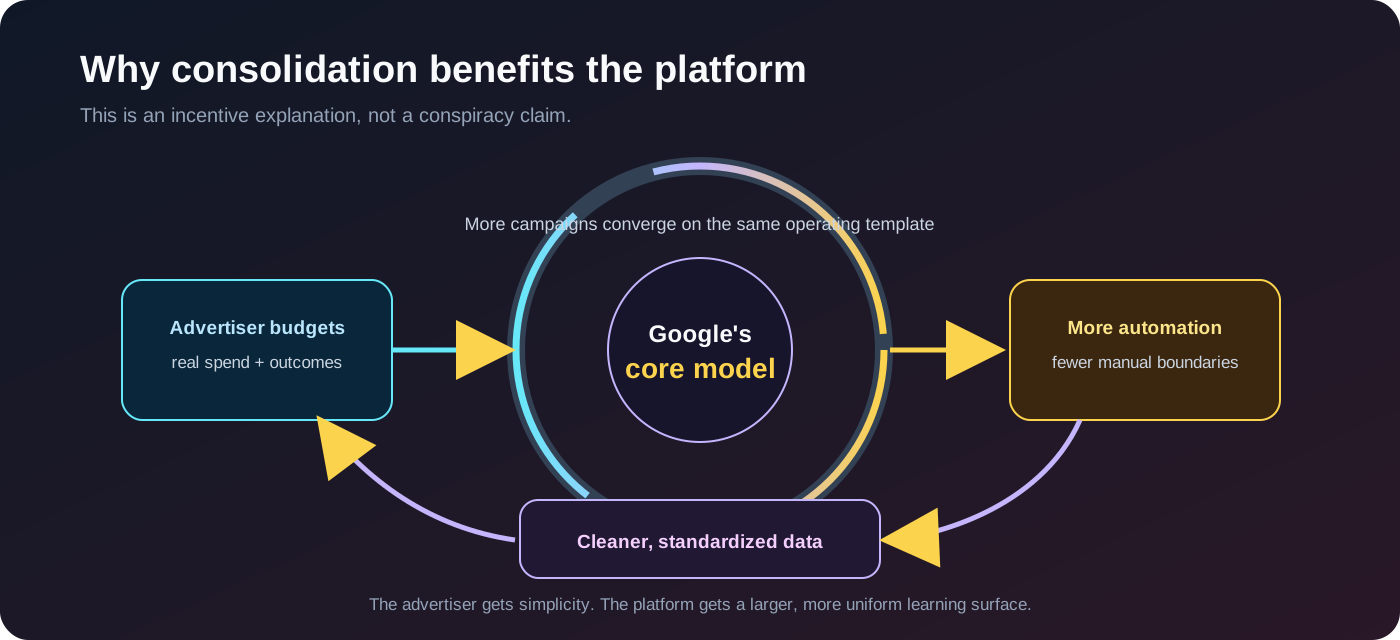
The simplest explanation is operational. Every campaign format with a different set of rules creates another interface, another edge case, and another stream of data that has to be interpreted. A common automation layer makes the product easier to run and gives Google's systems a more standardized learning surface.
That is an incentive, not a conspiracy. Google's description of AI Max emphasizes richer signals, automation, and broader matching. The platform benefits when more advertisers hand over comparable inputs and fewer campaign structures interrupt the feedback loop.
Advertisers also receive something real: fewer manual tasks, less campaign maintenance, and the possibility that the system finds useful demand a specialist would not have enumerated. The question is who absorbs the cost when the system is wrong, and whether the team can distinguish a useful expansion from an expensive one.
The risk is not that the model will fail every time. It is that it can perform well for the platform while moving a brand toward queries, placements, or landing pages that fit the platform's available inventory better than the brand's margin or positioning. If an advertiser cannot see the path, a strong top-line number can still hide a weaker business decision.
Who feels the change first
The first teams under pressure will not necessarily be the ones with the largest budgets. They will be the ones whose advantage came from seeing and managing details that a common model treats as interchangeable.
01
Specialists with a narrow margin
A niche advertiser may care about a small set of high-intent queries, a location boundary, or a margin threshold that is invisible in a volume-oriented optimization loop. More reach is not the same as better demand.
02
Lean teams with one operator
A small team can benefit from fewer campaign chores, but it also has less spare capacity to reconstruct what the model changed. When the platform becomes the only place the explanation lives, the team loses bargaining power.
03
Brands with messy inputs
AI Max can only make useful choices from the product feeds, conversion events, landing pages, and exclusions it receives. Automation makes a bad input problem faster and harder to localize.
04
Teams that measure only the total
A total spend or blended conversion number cannot show whether the system traded profitable intent for available volume. Baselines and query-level evidence matter before the old campaign view disappears.
The response is not to defend every manual lever forever. Some levers are busywork. The response is to identify which decisions carry business meaning, then test whether AI Max respects them. If the team cannot name those decisions, it is not ready for a more automated campaign system no matter what the interface promises.

How to use the runway
The useful preparation is a short operating plan that produces evidence before automatic migration begins. It should leave a future operator with something more durable than a platform recommendation.
01
Freeze the DSA baseline
Capture the campaign structure, query and landing-page behavior, bid boundaries, exclusions, spend, conversions, margin signals, and the business decisions the campaign supported. Export what the platform may no longer show in the same way.
02
Test AI Max against a real control
Do not compare a clean new campaign with an unmeasured old one. Define the period, budget, objective, and success threshold before the test. Keep a human-readable record of what changed between the two paths.
03
Audit inputs before blaming the model
Review feeds, conversion events, page targets, creative assets, exclusions, and consent-dependent signals. If the input contract is ambiguous, a model output cannot tell you whether the strategy or the data caused the result.
04
Move the team up the stack
Manual bid tuning will matter less. Feed quality, experiment design, query interpretation, financial context, and exception handling will matter more. The skill is not disappearing. Its location in the workflow is changing.
Before launch
Write the decision the test is meant to inform and the threshold that would stop or change the migration.
During the window
Review intent quality, not just conversion volume. Look for the query, page, and margin behavior that a blended total hides.
Before February
Record what the team will accept, what it will constrain, and which evidence must remain available after automatic migration.
The strongest preparation is not a better opinion about Google's motives. It is a better record of your own operating requirements. If a team knows which queries, pages, audiences, and economics matter, it can evaluate a model without pretending that every manual setting was sacred. If it does not know those things, the new automation will make the missing judgment harder to find.
The platform will continue to consolidate formats because the incentives are clear. The advertiser's job is not to stop every consolidation. It is to keep enough independent evidence to decide whether convenience improved the business or only improved the platform's ability to learn from the budget.
That is why the February 2027 date matters less as a cliff than as a deadline for evidence. The migration becomes manageable when the team has a baseline, a test, a set of constraints, and a person who can explain the exceptions. Without those, the campaign may still run. The organization will simply know less about why.
Google is not retiring DSA so much as consuming it.
Use the runway to decide which parts of your search strategy the model is allowed to own.