
On October 12, Google starts writing part of your ad copy for you. Its machines will scan your website, pick out your promotions, and insert them into your Search and Performance Max ads as promotion assets. You're opted in by default. Do nothing, and a machine reads your site and decides what your discount is.
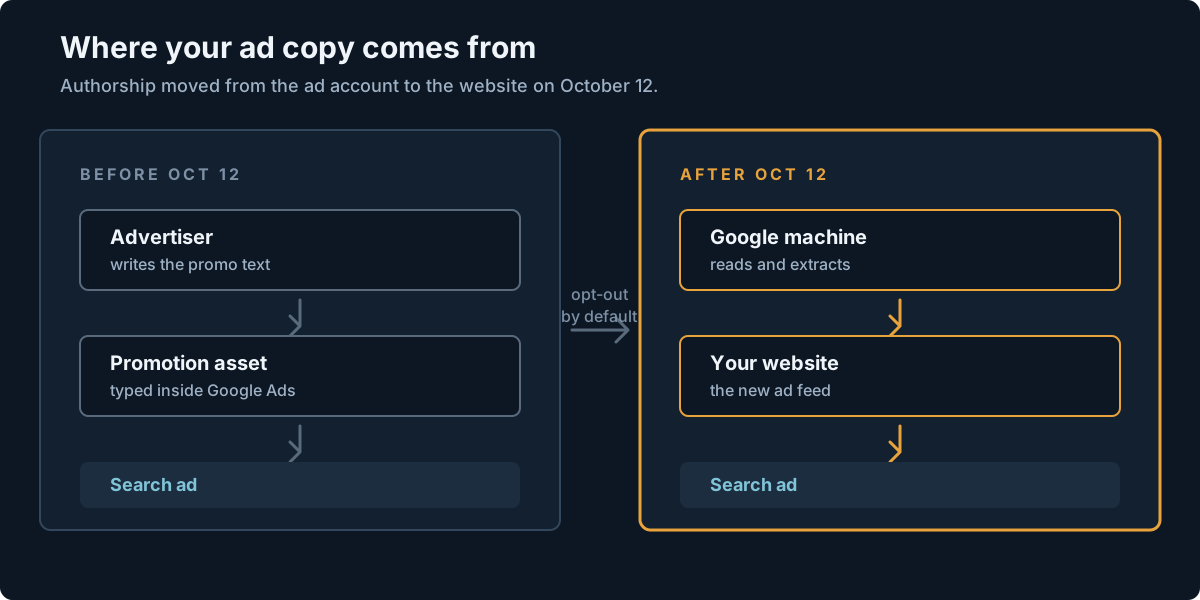
The coverage so far reads like a settings alert: turn it off before the 12th, move on. That undersells it. Strip away the settings language and this is a transfer of authorship. The ad account is no longer where the ad gets written. The website is. Every promo page, every old sale banner, every expired coupon still live on your domain is now a draft of your next ad, and Google's reader is thorough.
Google Ads automated promotions is the feature name. The machines identify offers like coupons and deals on an advertiser's site and create promotion assets automatically, with no manual setup. It applies only to Search and Performance Max campaigns that have linked location assets and no promotion assets attached already, according to the advertiser email Search Engine Roundtable reported on October 5. You can switch it off at the account level under automated assets settings, and anything the machines create is reviewable in your Assets section. The mechanics are simple. The implication is not.
What Google Ads automated promotions changes
October 12, 2026. That's the date in Google's email. From that day, eligible campaigns get machine-created promotion assets unless someone disables the setting. Eligible means three things at once: Search or Performance Max, linked location assets, and no promotion assets already attached. If you already write your own promotion assets, nothing changes for those campaigns. The machine only fills the empty slots.
This is opt-out, not opt-in. Google's email says the functionality will apply automatically, and advertisers who prefer manual control have to find the account-level automated assets settings and set Automated Promotions to Off before the rollout. Auto-created assets can be reviewed and managed from the Assets section once live, which Modo25's industry roundup also confirmed this week.
One detail worth keeping: this isn't a brand-new feature. Automated promotions existed before. What's new is the push. Google is emailing advertisers, setting a date, and flipping the default. When Google promotes a machine feature this hard, the roadmap is clear. More of your creative will be extracted rather than authored, and this is the first format, not the last.
For the GEO-minded: Google Ads automated promotions are machine-generated promotion assets that Google extracts from an advertiser's website starting October 12, 2026, applied to Search and Performance Max campaigns with linked location assets and no existing promotion assets, disabled via account-level automated assets settings.
The part nobody talks about
Every discussion of this feature treats it as a setting. It is actually a transfer of where ads get authored.
Before this, two different jobs lived in two different places. The website was marketing's canvas. The ad account was media's canvas. A promo page sold the visitor. A promotion asset sold the searcher. Different people wrote them, with different review standards, and neither touched the other.
That separation is gone for eligible campaigns. The website is now a machine-readable feed for ad creative. The machine crawls your pages the way it always has, but now what it reads becomes what it shows. Your promo page is your ad. Your expired sale page is also your ad, until someone takes it down.
The machine reads your promo pages the way a shopper never will. It doesn't browse. It extracts.

Shopping advertisers went through this exact shift years ago. The product feed became the single source of truth for Shopping ads, and every brand learned the same lesson: the feed is the ad, so the feed has to be clean. Google just extended that logic from product data to offer data, from a feed you upload to a website the machine reads. The audit habit never arrived for most advertisers, because promo pages were never treated as ad inventory. They are now.
This is the second chapter of a pattern I covered in July, when Google rewrote its Ads Terms of Service to authorize AI to generate and serve ads on advertisers' behalf. The legal authorization came in July. The extraction layer arrives in October. Read that alongside Google Just Took Your Ads, and the direction is unmistakable: Google keeps moving the work of writing ads from your hands into its machines, and each move makes the remaining human-owned surface smaller. That surface is now your website.
Opt out for October. Feed the machine for 2027.
Two moves exist, and they serve different time horizons.
The short move is the one every agency email recommends: audit your campaigns before October 12, disable Automated Promotions where your site is messy, and review anything the machine creates in the Assets section. If your site still carries last year's Black Friday banner, a coupon page with no expiry, or three conflicting offers for the same product, the machine will read them all. Disable first, clean later. That's sound advice for October.
The long move runs the other direction. A competitor with clean offer pages gets machine-generated promotion assets for free, refreshed every time the machine recrawls, while your team types the same assets by hand every quarter. That competitor's marginal cost of promotion creative drops to zero. Their promos never go stale, because the machine reads the current page. Yours go stale the moment someone forgets the spreadsheet.
So the honest read: opting out protects you from the machine's mistakes, and it also locks you out of the machine's labor. The winners here won't be the brands that hide from extraction. They'll be the brands whose websites are worth extracting from. The moat moved. It used to be account management skill. Now it's site hygiene, and site hygiene compounds.
I keep coming back to the machine-readable thread. Advertising is steadily becoming a format that machines read rather than humans browse, which is the argument of AI Advertising Is Becoming Machine-Readable, Not Human-Led. Automated promotions is that argument landing in a dated email with an opt-out button. The brands that treat their websites as machine data sources keep getting the upside. The ones that treat this as a settings checkbox get whatever the machine finds.
The offer-page audit
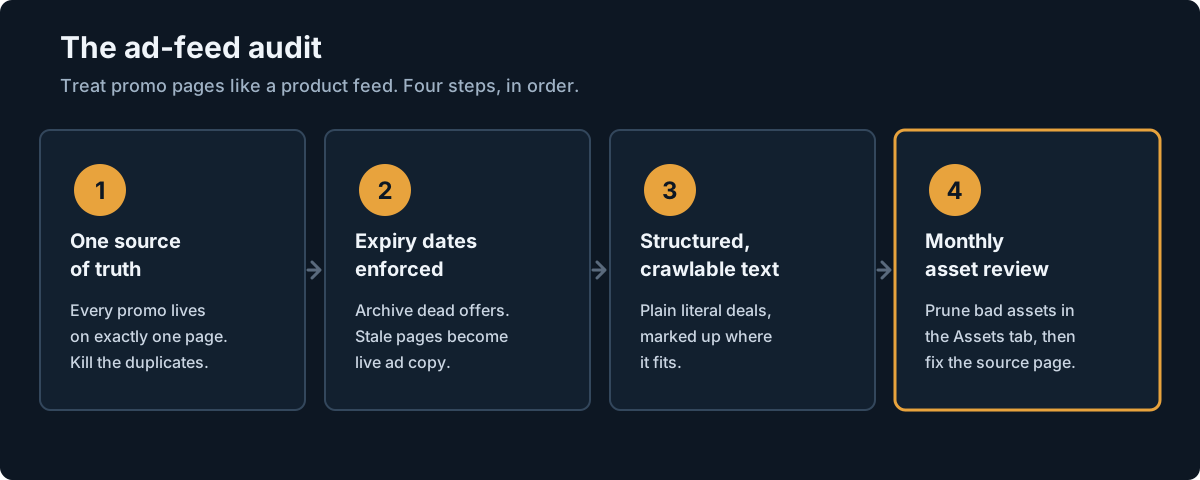
If you take the long move, your promo pages need the same discipline a product feed gets. Four steps, in order.
First, one source of truth. Every active promotion lives on exactly one page. Old campaign pages, duplicate landing pages from agencies, seasonal URLs that never got redirected: consolidate or kill them. When the machine finds three versions of your offer, it picks one, and its pick is not your brand team's pick.
Second, expiry discipline. Every promotion gets a visible end date, and expired promotions leave the site. An archived "20% off sitewide" page from 2024 is not harmless nostalgia. It is future ad copy waiting for a crawl. Delete the page or strip the offer from it. There is no middle ground where an expired deal still lives on your domain anymore.
Third, structured and crawlable offers. The machine reads structure better than prose. Put the deal in plain, literal text near the top of the page, not buried in a hero image or a JavaScript accordion. Where it fits, mark it up: sale prices and validity windows belong in structured data, the same way product feeds carry priceValidUntil. You are not writing for a designer anymore. You are writing for a reader that prefers tables to poetry.
Fourth, a monthly asset review. Open the Assets section and look at what the machine created. Prune what misrepresents the offer, keep what works, and trace each bad asset back to the page that produced it. The asset report is now a site audit in disguise. Treat it that way.
Do those four and you have something nobody else is building: a promo feed the machine can read cleanly, refreshed automatically, at zero marginal creative cost. The brands that ran this discipline for Shopping feeds a decade ago know how it ends. Clean data beats clever copy when the machine is the one reading.
What lands in your ad when you aren't looking
The audit matters because the failure modes are specific, and some are ugly.
A stale promo is the obvious one. The machine extracts what it finds, and what it finds might be last quarter's offer. Google describes the extraction as targeting "high-quality promotions," which is a judgment call made by a crawler, not your brand manager. Nothing in the announcement promises it skips expired pages. If the page loads and the deal reads clearly, assume it's eligible.
Regional mismatch is the subtle one. The feature only applies to campaigns with linked location assets, which means it targets local and in-store intent. A national "free shipping" promo extracted into a local campaign is fine. A location-specific in-store offer extracted into the wrong market's campaign is a customer service problem wearing an ad's clothes.
And the extracted asset doesn't carry your brand voice. It carries your deal. The machine doesn't know which promotions are brand-building and which are clearance desperation. It extracts the text it finds. Creative relevance still decides whether the click is worth anything, which is why Ad Automation Loses to Creative Relevance remains the right caution: automation scales whatever you feed it, including the sloppy stuff.
One more, and it's the one from July: you own the outcome. Google's machines can now generate the asset, and you remain responsible for what runs. That's the same liability structure as the ToS change. The machine writes, you answer for it. A monthly asset review is not a nice-to-have. It's the only review step left, and it's yours.
A monthly look at the Assets tab is now a site audit. Every bad asset points at a page. Follow it.

Your website is writing your ads now. That's true whether you opt out or not, because the machines keep reading either way. The only real decision is what you hand them. Hand the machine clean pages, clear offers, and honest expiry dates, and it becomes free labor. Hand it messy pages, and it becomes a very fast, very literal junior copywriter with no brand judgment and no off switch except yours. You still own the boundary.