What the trackers actually show
For two years, AI visibility quietly meant ChatGPT visibility. That shortcut is now too blunt. The most useful 2026 data does not say ChatGPT vanished. It says the category grew into a multi-engine market faster than most marketing teams adapted.
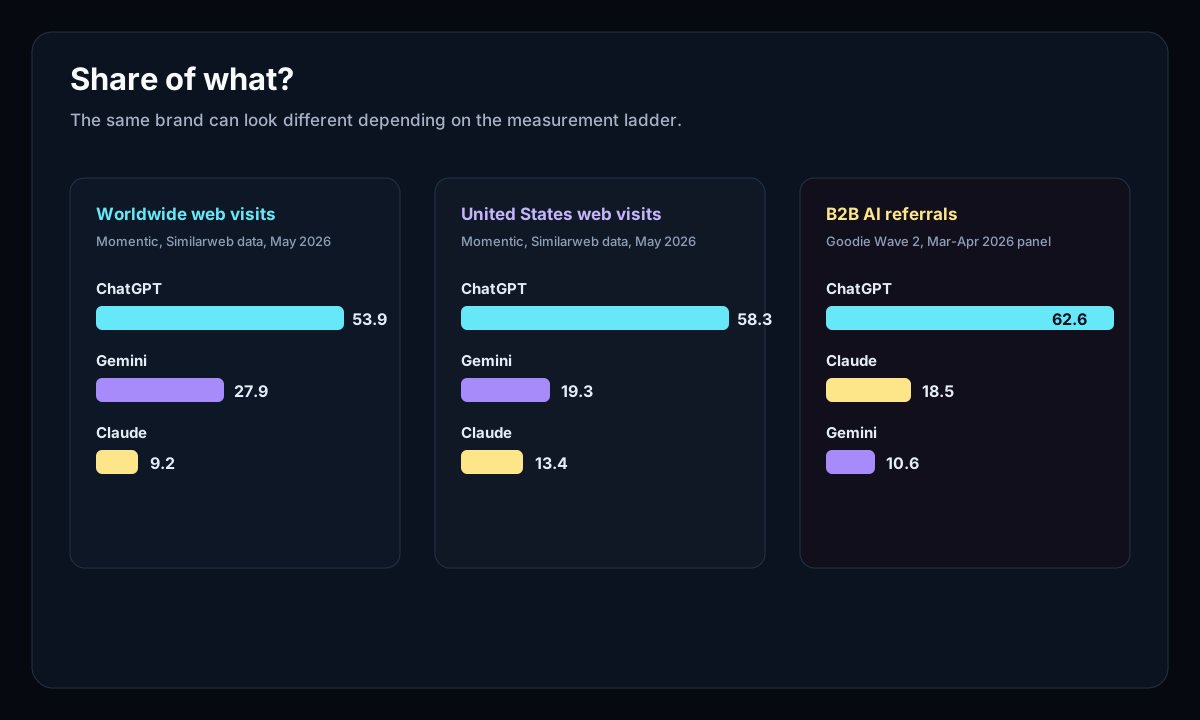
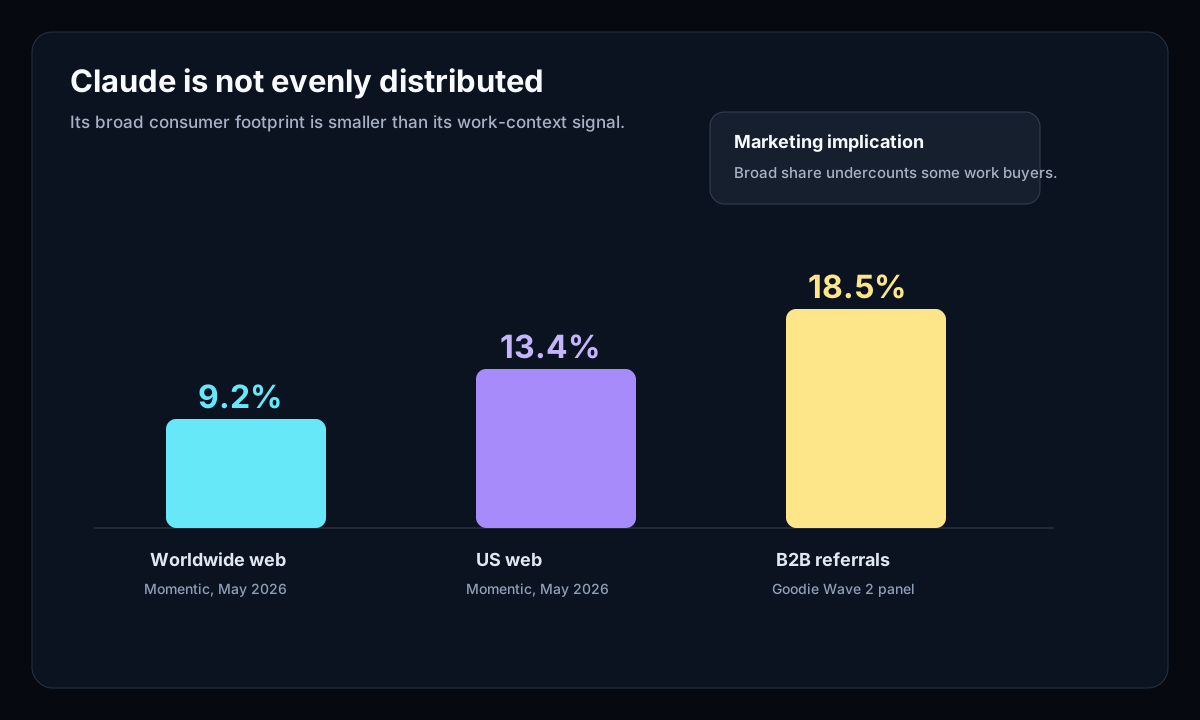
Momentic's May 2026 roundup, based on Similarweb web-visit data, puts ChatGPT at 53.9% worldwide share among seven major standalone AI chatbots. Gemini is second at 27.9%, and Claude is third at 9.2%. In the United States, the split is different: ChatGPT 58.3%, Gemini 19.3%, and Claude 13.4%.
Goodie's Wave 2 B2B referral study shows why marketers cannot stop at consumer web traffic. In its March-April 2026 brand-averaged panel, ChatGPT accounts for 62.6% of AI referrals, Claude 18.5%, Gemini 10.6%, and Perplexity 7.3%. The shares are not a total market estimate. They are a B2B referral signal, and that distinction is the point.
Collapse of share, not collapse of use
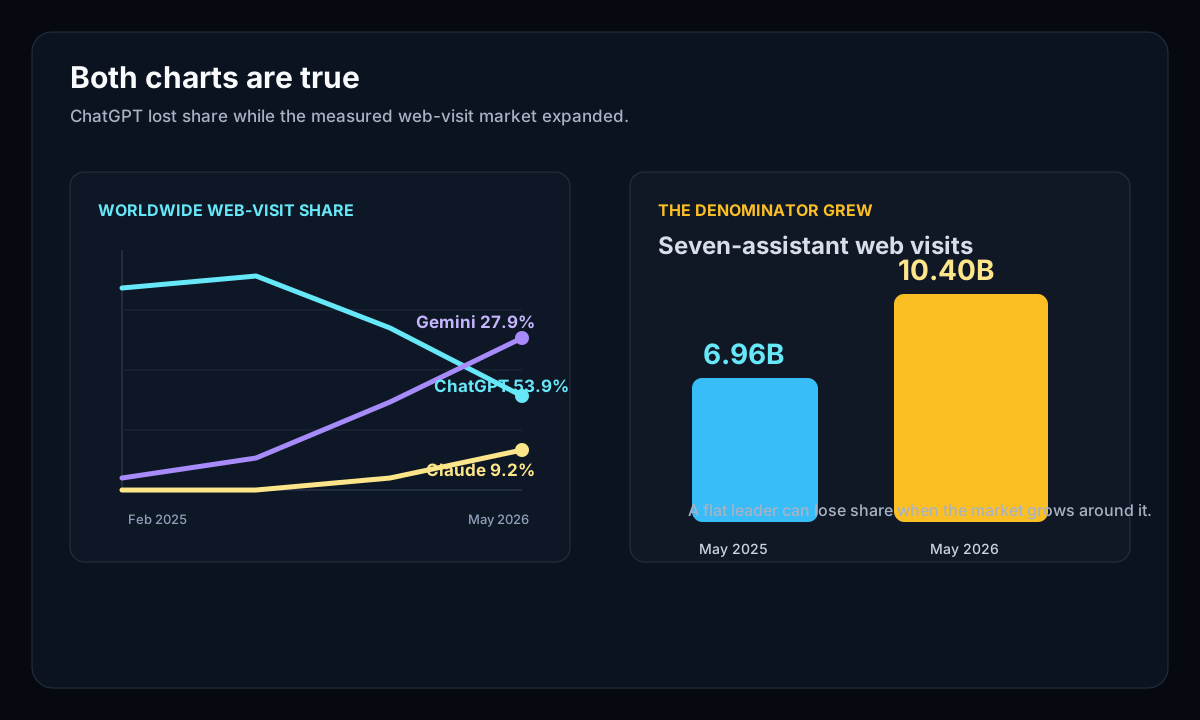
The old version of this article treated share loss like a death spiral. That was the wrong inference. The more accurate sentence is less dramatic and more useful: ChatGPT's share fell because the denominator got larger.
Momentic's trend table shows ChatGPT falling from 76.5% of the measured worldwide web-visit set in February 2025 to 53.9% in May 2026. Gemini rose from 5.6% to 27.9%, and Claude rose from 1.4% to 9.2%. But the same source says the seven assistants drew 10.40 billion combined web visits in May 2026, up about 49% year over year, while ChatGPT's own visit count was roughly flat.
That nuance matters because the two bad readings lead to opposite mistakes. If you read "collapse" as user collapse, you underweight the largest assistant by far. If you read "still number one" as strategic stability, you ignore the engines now handling meaningful portions of discovery, research, and buying questions.
Why the market decentralized
The first driver is distribution. Gemini is wrapped around products people already use: Search, Chrome, Android, Gmail, Docs, YouTube, and Workspace. A product does not have to win every head-to-head preference battle when it becomes the nearest button.
The second driver is task sorting. People are learning which assistant feels strongest for which job. ChatGPT remains the broad default. Gemini gains from Google surfaces. Claude over-indexes in professional contexts where users want longer reasoning, writing, coding, documentation, and analysis.
That is why this piece is distinct from the Claude paid-market shift article. Paid subscribers show one kind of preference. B2B referrals show another: work users are not just opening Claude, they are clicking out from Claude into vendor research.
The third driver is release-cycle volatility. AI assistants still earn and lose attention with each model release, default change, and ecosystem integration. Monthly share moves are noisy. The sustained pattern is not: the single-assistant assumption is weaker than it was a year ago.
What fragmentation does to marketing
One engine's answer is no longer the market's answer. Each assistant retrieves from different sources, summarizes with different defaults, and sends different kinds of users to the open web. A brand can look strong in ChatGPT, weak in Gemini, and absent in Claude.
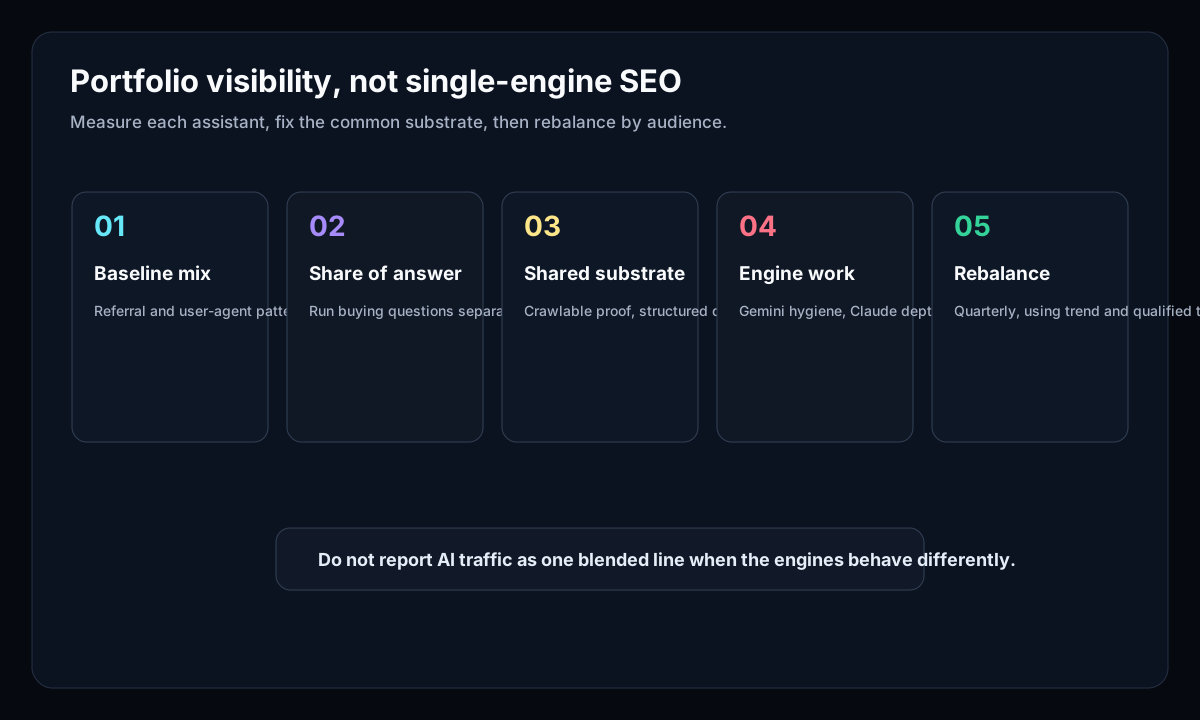
Start with your actual mix. Pull the last ninety days of referrals and user-agent patterns, then classify sessions by assistant where possible. Keep a separate watch on Google AI Mode and AI Overviews, because they can fold into ordinary google / organic attribution.
Then run share-of-answer checks per engine for your commercial questions. Track whether you are mentioned, whether you are cited, whether the description is accurate, and whether the linked source is one you control or can influence.
Optimize the shared substrate first: crawlable pages, extractable claims, structured data, comparison content, third-party proof, dated updates, and source pages that make your facts easy to cite. Then layer engine-specific work on top: Google ecosystem hygiene for Gemini, deeper technical documentation for Claude, and clean citations for Perplexity.
The snapshot rule
The right cadence is quarterly, not breathless. Public share trackers move as new models ship, app integrations change, and data providers revise their panels. Marketers need enough rhythm to notice structural drift without rebuilding strategy around every month's noise.
So keep the dated URL. Keep the numbers tied to May 2026. Name the source and the measurement ladder each time. Put a local baseline beside the public trackers. And stop reporting "AI traffic" as a single line item when the market now behaves like several channels under one label.
ChatGPT did not fail. It stopped being the only practical planning assumption. The teams that win the next phase will not be the ones who guessed the final winner. They will be the ones who measured the split while competitors were still optimizing for a monopoly that no longer described the work.