
The AI Vendor Liability Trap
AI liability insurance is finally becoming a product category. That does not mean your brand is protected. The real risk sits between the vendor contract, the policy exclusion, and the AI output your team puts in front of customers.
AI liability insurance has arrived
The market is moving from vague AI risk talk to actual policies, exclusions, certificates, and coverage arguments.
HSB, part of Munich Re, introduced AI liability insurance for small and medium businesses in March 2026. Its announcement says the coverage can respond to AI-related bodily injury, property damage, and personal or advertising injury, including claims tied to AI-generated advertising, marketing, blogs, and social posts. That is a meaningful signal. Insurers do not create product language for risks they expect to remain theoretical.
Vendor-focused products are appearing too. Ollive frames AI liability insurance as a way for AI companies to answer enterprise procurement questions about output liability, bias, IP claims, regulatory investigations, data disclosure, and incident response. Munich Re's aiSure program also points at AI performance warranties and coverage for AI providers and corporate deployers.
This is good news in the narrow sense. It gives buyers and vendors something more concrete than a promise that the AI is safe. It also creates a new trap. A certificate can make a risky deployment feel governed when the actual policy wording, vendor terms, logs, exclusions, and operational controls are still unresolved.
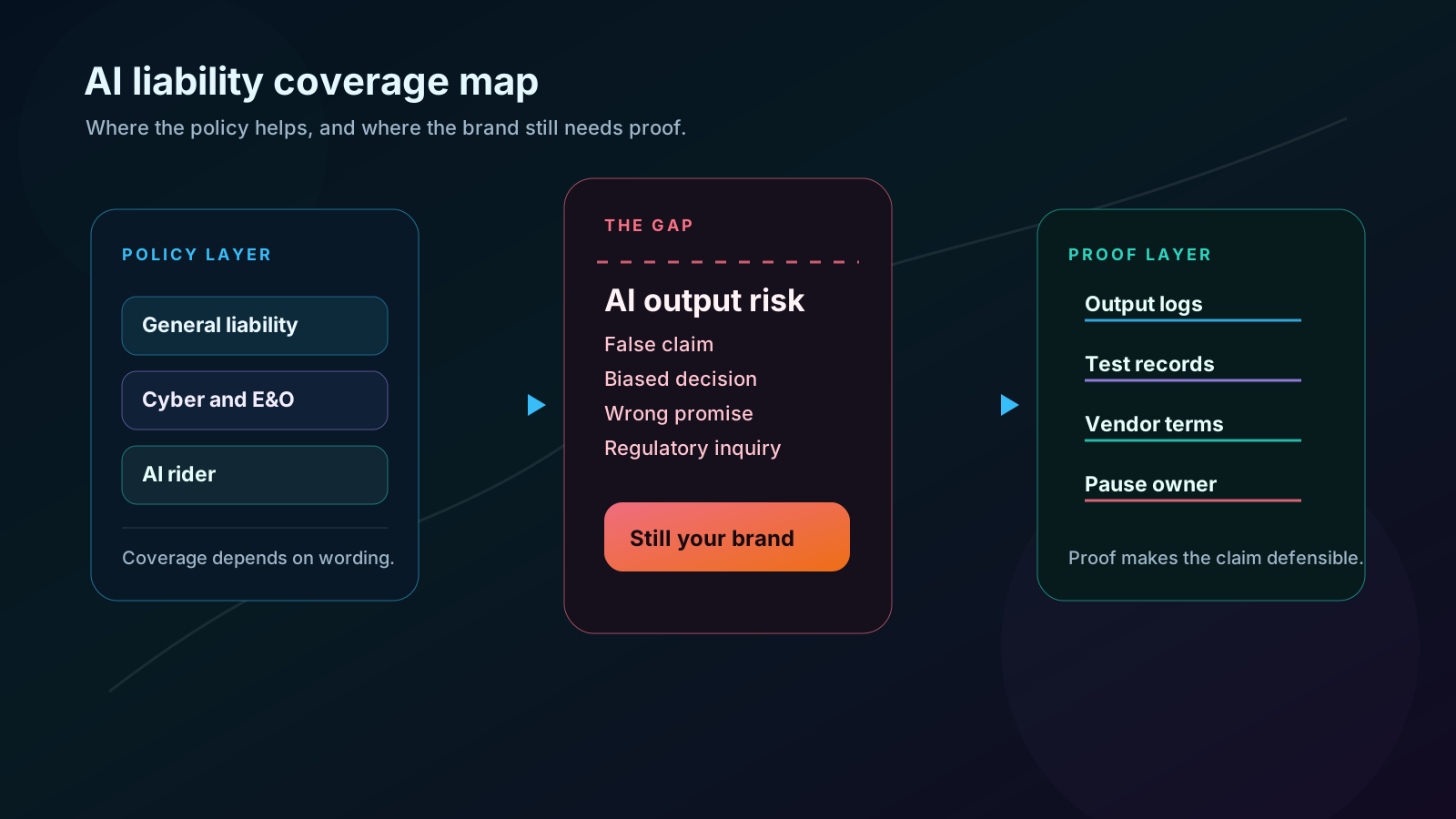
The coverage gap is not hypothetical
A brand's AI risk usually falls across several policies at once. A chatbot can create a false refund promise, disclose sensitive data, generate a defamatory statement, and trigger a regulator, all without looking like a classic cyber breach or software outage.
Gallagher's AI liability overview says most policies remain silent on AI, and that one in five insurance professionals surveyed already report insureds with AI-linked losses. It also notes that AI exposure touches cyber liability, product liability, employment practices, professional indemnity, and D&O. Translation: there may not be one obvious policy to call when a customer-facing AI system creates damage.
The operational problem is simple. Brands are deploying AI in marketing, sales, support, search, analytics, and workflow automation faster than risk language can stabilize. The result is a liability surface that sits between traditional categories.
General liability
Bodily injury, property damage, and personal or advertising injury when the wording allows it.
New generative AI exclusions can remove the exact output risk the team assumed was covered.
Cyber
Security incidents, privacy events, data exposure, and breach response.
A hallucinated promise, biased decision, or false marketing claim may not be a cyber event.
Tech E&O
Vendor software failures, professional services mistakes, and some third-party financial loss.
The brand deploying the tool may still own publication, review, and customer-impacting decisions.
AI-specific coverage
Output liability, model errors, hallucinations, bias, IP claims, and incident response.
Coverage still depends on underwriting, exclusions, notice, records, and whether the risk was known.

The vendor contract trap
Enterprise buyers are starting to ask AI vendors for liability coverage. They should. But a vendor's coverage does not automatically become the buyer's protection.
The first trap is treating insurance as a substitute for contract review. The second is treating a contract as a substitute for operations. The third is assuming either one will work without evidence.
The certificate is not the contract
A vendor can show proof of coverage and still leave your brand responsible for how the tool is configured, supervised, and used in your customer experience.
Indemnity can stop at the wrong line
Many AI terms protect the buyer from narrow vendor faults, not from every output your team publishes, edits, approves, or fails to monitor.
Known-risk exclusions punish speed
If the company knew the system hallucinated in testing and deployed it anyway, the future claim may become a governance failure, not a surprise loss.
Logs decide the story
When there is no record of prompts, model versions, outputs, review decisions, or corrections, the company loses the ability to prove diligence.
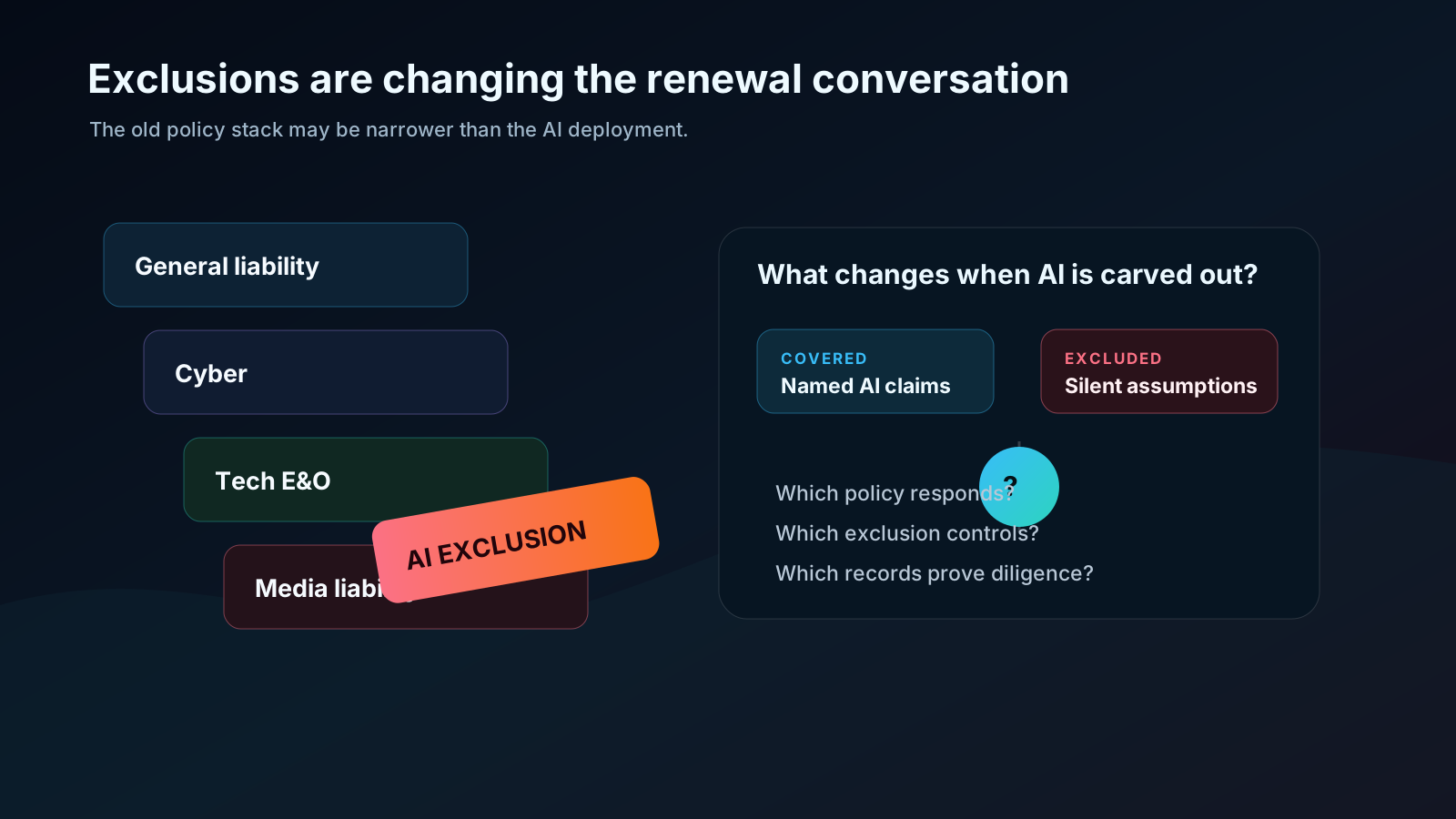
Exclusions are spreading while coverage is launching
The insurance market is not only adding AI coverage. It is also carving AI out of older coverage. Those two moves are connected.
Big "I" Virtual University reported that Verisk developed new general liability endorsements allowing carriers to exclude generative AI exposures beginning with January 2026 forms. The examples include exclusions for bodily injury, property damage, and personal or advertising injury arising from generative AI.
That is the market telling you to stop assuming. A standard policy may become less protective at the exact moment the business becomes more dependent on AI outputs. The renewal conversation now matters as much as the vendor demo.
What to audit before you need the policy
The best AI insurance file is built before anyone files a claim.
Start with the places where AI output can affect a person, promise a result, change access, shape a purchasing decision, or represent the brand. That is the real liability surface. Internal productivity tools matter, but customer-facing and regulated surfaces matter first.
This is where marketing, legal, compliance, procurement, IT, and the broker need the same map. A landing-page generator may look like a marketing workflow. A product recommender may look like ecommerce. A support agent may look like customer operations. But the loss story can cross all three.
Customer-facing outputs
Chatbots, support agents, recommendation engines, product selectors, quote tools, and search experiences that answer users directly.
Marketing claims
AI-generated landing pages, ads, emails, social posts, comparison copy, sales enablement, and proposal content.
Regulated decisions
Healthcare, finance, insurance, employment, housing, education, age-gated categories, and any workflow that affects access or pricing.
Vendor dependencies
Which vendor generated the output, which model was used, which logs exist, and which terms control indemnity or dispute response.
Evidence and review
The test set, approval record, monitoring cadence, guardrails, escalation path, and authority to pause the system.

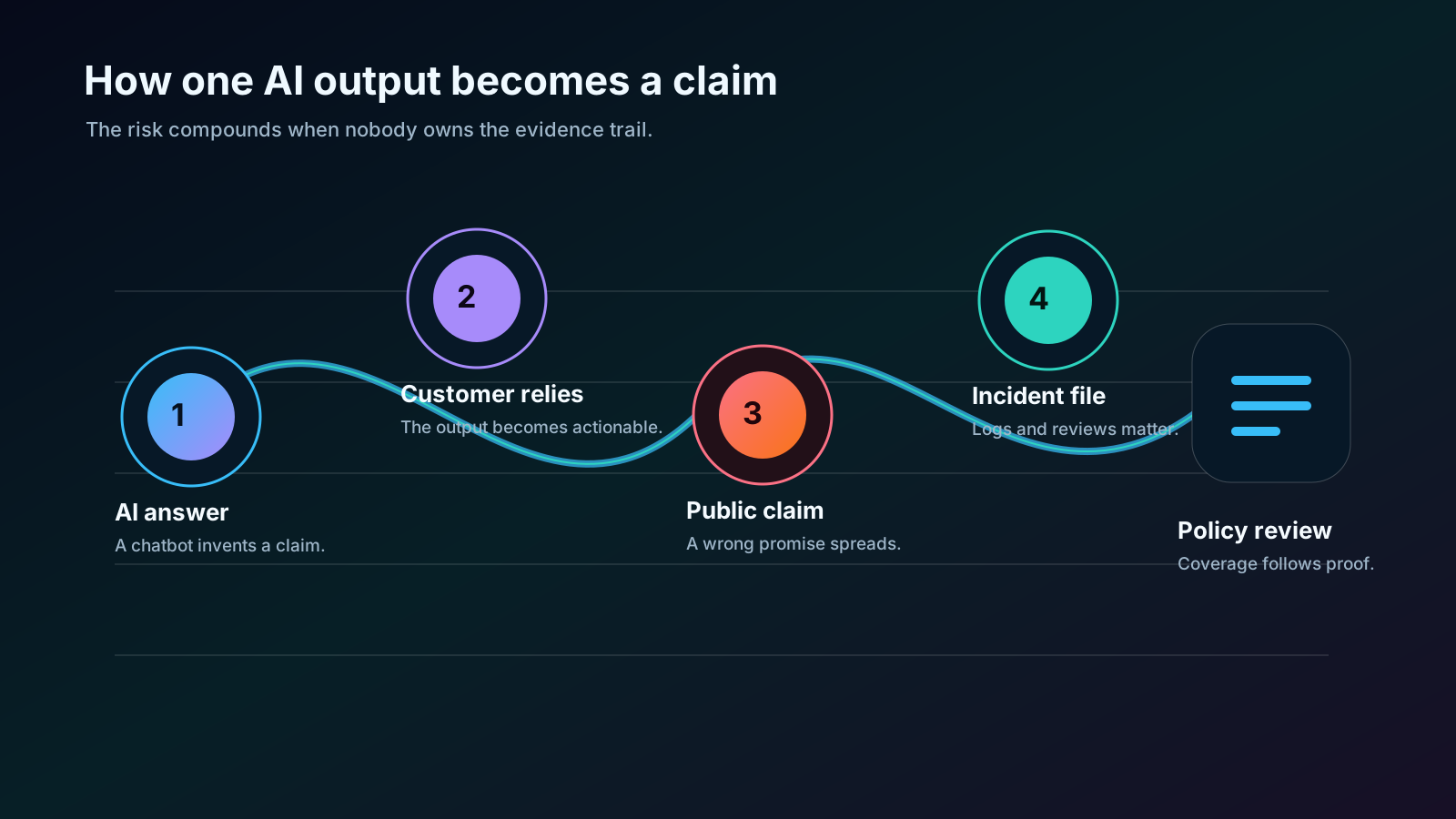
The response model is boring on purpose
Insurance rewards proof. Regulators reward controls. Customers reward fast corrections. The operating model should be simple enough that teams actually use it.
Map the exposure
Inventory where AI creates, ranks, approves, routes, or recommends anything a customer, regulator, employee, partner, or prospect can rely on.
Read the policies
Ask the broker to identify AI wording across general liability, cyber, tech E&O, media liability, D&O, and any standalone AI coverage.
Rewrite the vendor review
Make AI liability proof, indemnity language, model-change notice, logging rights, and incident cooperation part of procurement.
Build the evidence file
Keep test results, known limits, approvals, release dates, review records, and incidents in one place before a claim ever happens.
Create the pause path
Give a named owner authority to remove, route, or disable an AI surface when it produces a risky claim or unstable decision.
False product claim
Remove or correct the output and identify the source workflow
Preserve the prompt, output, reviewer, and affected audience
Biased recommendation
Pause the decision path and test for protected-class impact
Notify counsel and map policy language for discrimination or regulatory response
Vendor model change
Retest critical workflows before full release
Check notice rights, indemnity, and whether the change affects underwriting facts
Coverage exclusion
Reclassify the AI surface as an uncovered operating risk
Ask the broker for endorsement, standalone coverage, or written confirmation
What to publish, document, and ask now
The companies that handle this well will not be the ones with the loudest AI policy page. They will be the ones with a clean operating record. They will know which systems are live, which claims those systems can make, which vendors stand behind them, which policies respond, and who can turn the system off.
Publish clearer public evidence for the claims your AI surfaces make. If your support agent answers refund questions, your refund policy needs to be current, crawlable, and explicit. If your product selector recommends regulated use cases, the limits need to be visible. If your AI search or chatbot summarizes technical capabilities, the source pages need version dates and claim boundaries.
Document the private layer too. Keep model cards, evaluation sets, known limitations, launch approvals, prompt versions, output reviews, and incident notes where legal and insurance teams can find them. Logs are not glamorous, but they decide whether the story is "we were negligent" or "we had reasonable controls and responded quickly."
Ask vendors better questions. Do they carry AI-specific coverage? What does it cover? Does it include hallucination, bias, IP, regulatory response, data disclosure, and incident costs? Will they name your company where appropriate? Will they cooperate on claims? Will they notify you before model changes? Will they preserve logs? A vendor that cannot answer those questions may still be useful, but it should not be treated as low risk.
Finally, talk to the broker before renewal, not after an incident. Ask where AI is silent, where it is excluded, where it is sublimited, and where the company needs standalone coverage or a warranty-backed structure. AI liability insurance is useful. It is not magic. The policy can transfer some risk only after the organization has named the risk clearly enough to transfer.
HSB on AI liability insurance
Useful for the small-business coverage signal, including advertising injury, marketing content, bodily injury, and property damage.
Big I on Verisk exclusions
Useful for the January 2026 generative AI exclusion forms and why older general liability assumptions are getting weaker.
Gallagher on silent AI
Useful for the multi-policy risk view, market-size forecast, and comparison with the earlier silent cyber problem.
FAQs
What is the AI vendor liability trap?+
The AI vendor liability trap is the belief that a vendor certificate, indemnity clause, or AI-specific policy fully transfers risk away from the brand. In practice, the deploying company may still be responsible for configuration, review, publication, monitoring, and customer impact.
Does AI liability insurance mean brands are protected?+
No. AI liability insurance can help with defense costs, third-party claims, output liability, IP claims, or incident response, depending on the policy. It does not replace due diligence, vendor review, compliance controls, logs, or a process for removing risky AI outputs.
Which insurance policies should mention AI risk?+
Brands should review general liability, cyber, technology errors and omissions, media liability, professional liability, directors and officers, employment practices, and any standalone AI policy. The key question is not whether the company has insurance. It is which AI claims are included, excluded, sublimited, or conditioned on controls.
What evidence should a brand keep before an AI claim happens?+
Keep the prompt, model version, output, reviewer, approval date, test results, known limitations, vendor notices, and any correction or pause decision. The goal is to prove the company had reasonable controls before the bad output appeared, not to reconstruct the story after a customer, regulator, or insurer asks for it.
What should marketing teams do first?+
Start with customer-facing AI outputs. Identify where AI can create product claims, pricing promises, medical or financial guidance, support answers, comparisons, or recommendations. Then connect each surface to a vendor contract, insurance position, review owner, and logging process.
Can a vendor be liable for AI outputs?+
Yes, a vendor can be liable in some scenarios, especially when its product creates harmful outputs or fails promised controls. But the buyer can also be liable if it deploys the system, publishes the output, ignores known issues, or lacks reasonable oversight.

Treat AI insurance as proof pressure.
The more AI moves into customer-facing work, the more brands need policy clarity, vendor discipline, and a record of reasonable control. Insurance matters most when the operating evidence is already there.