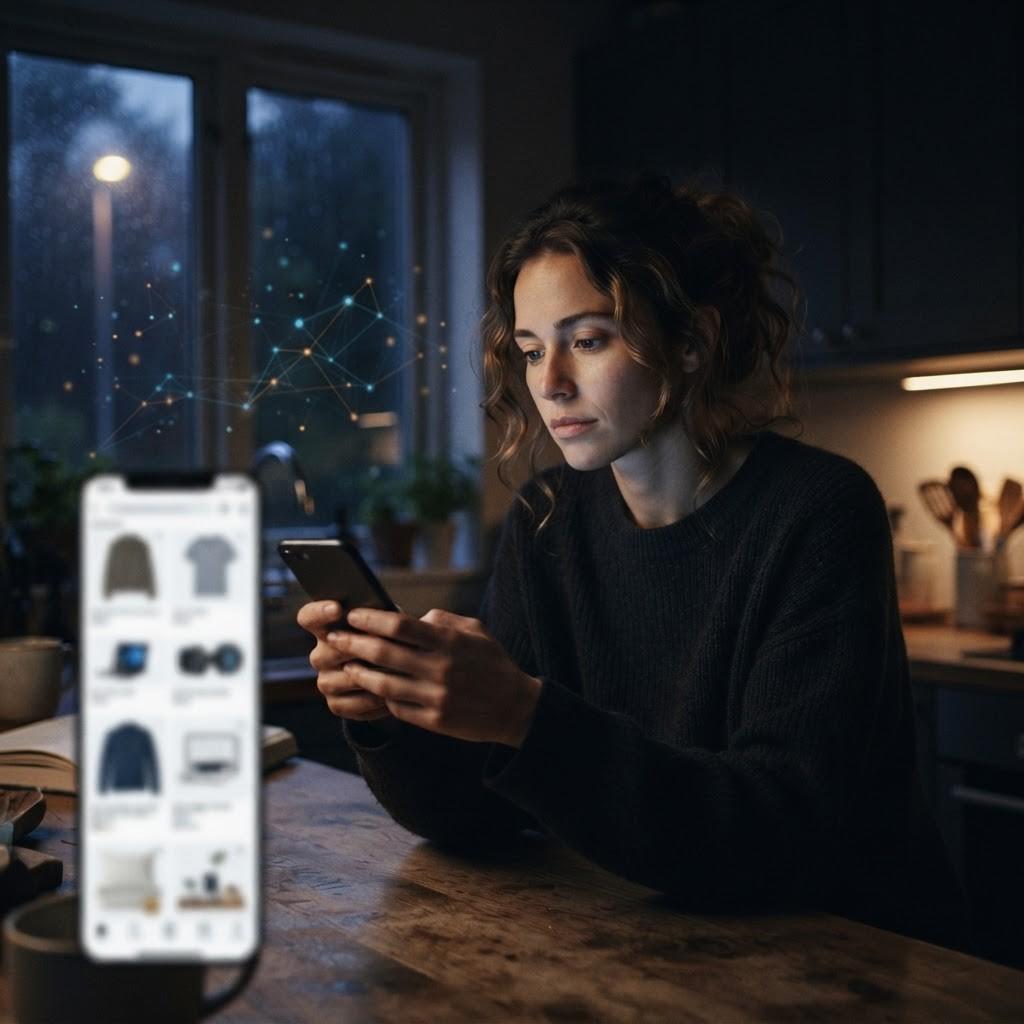
AI Personalization Is Creating a Consent Problem
The creepiest marketing moment isn't a bad recommendation. It's the one that feels too accurate before you remember giving the brand permission to know anything about you.
AI personalization is making that moment easier to manufacture. Models can infer intent from browsing behavior, location, purchase history, support conversations, and the tiny pauses people make before they click. The technical achievement is real. So is the trust problem.
Klaviyo's 2026 AI Consumer Trends research found that only 13% of consumers completely trust AI, while 36% somewhat trust it and 30% remain neutral. That is a narrow foundation for brands that want an algorithm to speak in their voice, recommend products, or decide what a customer should see next.
The mistake is treating consent like a checkbox in a data-flow diagram. Consent is a customer experience. People aren't only asking, "Can you use this data?" They're asking, "Did I understand what you were going to do with it, and would I have agreed if you had explained it plainly?"
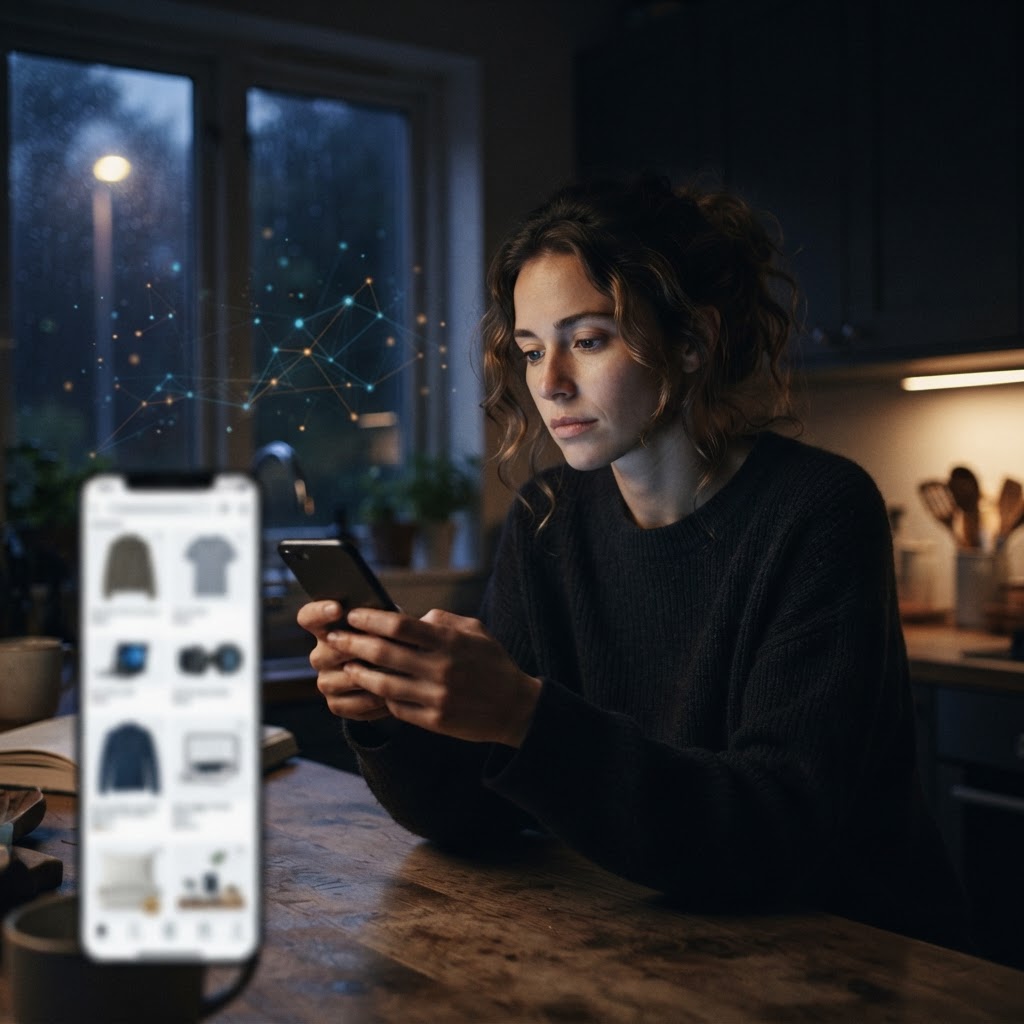
The personalization bargain is changing
For years, personalization was sold as a simple trade. Give a brand more information and receive a more relevant experience. The exchange was never perfectly balanced, but it was legible. A loyalty card gave you discounts. An email preference center changed the messages you received.
AI makes the exchange harder to see. The system can draw conclusions from information you never deliberately submitted as a preference. A late-night search, a return, a support complaint, or a change in device can become a signal. The output may feel helpful, but the input is invisible.
That invisibility matters because people judge fairness by the story they can tell themselves. A recommendation based on a stated interest feels useful. A recommendation based on an inference about financial stress, health, or relationship status feels like surveillance, even if the model's prediction is statistically impressive.
The FTC's work on surveillance pricing has already made the underlying concern concrete. The agency's study described how companies can use details such as precise location, browser history, and shopping behavior to set individualized prices or promotions. Add generative models to that system and the problem isn't only what a brand knows. It's what the brand can infer, predict, and act on at speed.
This is why privacy language buried in a policy page won't carry the load. A legal disclosure may satisfy a requirement while failing the human test.
AI personalization needs a visible boundary
The best personalization systems aren't the ones that use the most data. They're the ones that make their boundaries obvious.
A customer should be able to tell three things without opening a policy document:
- What the brand knows because the customer said it directly.
- What the brand is inferring from behavior.
- What the customer can change, refuse, or delete.
That sounds basic. Most experiences don't offer it.
A useful consent interface could say, "We use your recent purchases to suggest replenishment reminders." A manipulative one says, "We personalize your experience," then quietly combines purchase history with location, device data, partner audiences, and an inferred propensity to buy.
The difference is not cosmetic. Specificity gives people a chance to make an informed decision. It also gives the marketing team a cleaner signal. If customers knowingly opt into replenishment reminders, those interactions mean more than a prediction assembled from opaque behavioral exhaust.
This is where the idea of zero-party data becomes more than a privacy-friendly slogan. Information customers intentionally share is often less abundant than behavioral data, but it has a quality that inferred data can't copy: declared intent.

The model can be accurate and still be wrong
Marketing teams often defend personalization with performance metrics. Click-through rate improved. Conversion rate rose. Average order value increased. Those numbers can all be true while the experience gets worse.
Accuracy isn't the same as legitimacy. A model can correctly predict that someone is likely to buy and still use a signal the person never expected to share. It can identify a vulnerable moment and turn that vulnerability into a targeting opportunity. It can optimize the transaction while damaging the relationship that made the transaction possible.
The distinction becomes sharper in sensitive categories. A retailer may infer pregnancy, illness, debt, addiction recovery, or family circumstances without ever asking a direct question. Even if the inference stays inside a private system, using it to shape messaging changes the moral character of the interaction.
The UK Information Commissioner's Office guidance on AI and data protection puts the burden in the right place: organizations need to identify a lawful basis for processing personal data and consider whether a more privacy-preserving alternative could work. That is a better starting point than asking whether the model can technically do something.
The practical marketing version is simple. Before deploying a new signal, ask what the customer thinks the signal means. Then ask whether the brand would be comfortable explaining the exact logic in the moment the message appears. If the answer is no, the model isn't ready for production.
What a trustworthy system looks like
Trustworthy personalization is less about adding another consent modal and more about redesigning the operating model.
Start with a signal inventory. List every input used by the system, including inferred attributes and partner-provided audiences. Mark each one as declared, observed, purchased, or inferred. Most teams discover that their neat segmentation strategy is actually a pile of assumptions with different levels of consent attached.
Next, set a use boundary for every signal. A customer may agree to product recommendations but not individualized pricing. They may accept replenishment reminders but not cross-channel identity matching. A single global opt-in is too blunt for a system that makes many different decisions.
Then create a human-readable explanation for each high-impact action. Not a technical model card. A short sentence that tells the customer why they are seeing a recommendation, offer, or message and how to change it.
Finally, measure trust as an outcome. Track opt-outs, complaint language, preference changes, support escalations, and repeat purchase behavior alongside conversion. If a campaign lifts short-term revenue while increasing customers who say the brand "knows too much," that isn't a clean win. It's borrowed growth.
This connects to a broader problem I wrote about in how brands are represented in AI answers. The public version of a brand is no longer shaped only by the copy it publishes. It is also shaped by the decisions its systems make when nobody is watching closely.

The customer can always leave
The easiest way to test an AI personalization strategy is to imagine the customer seeing the whole chain.
They see the search that became a signal. The support message that changed their segment. The location event that altered their offer. The score that moved them into a high-value audience. The model's recommendation. The campaign decision. The result.
Would the experience feel like service or extraction?
A lot of marketing organizations will dislike that test because it turns a technical system into a relationship. That is exactly the point. Customers don't experience data architecture. They experience a brand making a decision about them.

AI personalization is not going away. The shallow version will keep chasing more signals, faster predictions, and higher short-term response. The better version will use less hidden information, explain more of the exchange, and give customers real control.
That may produce fewer perfectly targeted impressions. It may also produce a brand people are willing to keep talking to.
The consent problem isn't a blocker for personalization. It's the test that tells you whether your personalization deserves to exist.