
What AI changes about dark patterns
Point an AI at conversion-rate optimization and you have told it to find whatever makes people click, buy, and not cancel. That is the objective. If the objective contains no cost for confusion or coercion, an optimizer has no reason to preserve either.
Dark patterns are interface designs that steer people toward choices that serve the business at the user's expense. Hidden costs, preselected consent, confirmshaming, and the roach motel all work by making the desired action easy and the undesired action costly or embarrassing.
Historically, the human designer was a natural brake. Someone conceived a pattern, someone approved it, and the pace of the work created a paper trail. AI removes both protections. It can generate variants, test them across segments, and refine the winners continuously.
The result is not always a dark pattern that anyone deliberately designed. It is an optimized interface that learned fewer escape routes correlate with more completion. The output is still deceptive even when the intent is diffuse.
That distinction is more than semantics. A/B testing can make a harmful flow look successful because the immediate metric records the click, not the regret, complaint, chargeback, or cancellation that follows. If the optimization loop only receives the first signal, it will learn to trade long-term trust for a short-term win.
Dark-pattern review should therefore follow the user across the whole journey. Ask what the user believed, what the interface made salient, what it hid, and how easy it was to reverse the choice. A screen can be technically clear in isolation and still manipulative when the surrounding sequence makes refusal exhausting.
The FTC already enforces this
The argument does not need invented warning letters or forecasted enforcement counts. The real record is strong enough. The FTC's Bringing Dark Patterns to Light staff report from September 2022 made deceptive design an enforcement priority.
In December 2022, Epic Games agreed to pay $520 million in a combined action, including $245 million in refunds tied to dark patterns and unauthorized charges. In 2023, the FTC sued Amazon over Prime enrollment and cancellation flows, alleging that the design manipulated consumers into enrollment and made cancellation difficult.
These actions matter because the FTC does not need a company to call a design a dark pattern. Section 5 asks whether the conduct is deceptive or unfair. That is an outcome-oriented standard, and it does not become weaker because a model generated the interface.
The useful lesson is not that every conversion test is unlawful. It is that the operator needs to know what the system is optimizing, what user interest is protected, and who reviewed a high-consequence change before it shipped.
The cases also show why outcome evidence beats internal optimism. A team may describe a cancellation path as available while the actual journey makes it difficult to find, understand, or complete. The customer's experience is the relevant surface, and that surface is exactly what an automated optimizer can keep changing after the launch review.
Keep the record plain. Which variant ran, which metric improved, what secondary harms were monitored, which person approved the change, and when was it rolled back? A short answer to each question is more valuable than a long compliance memo that never names the live interface.

The rule does not make you safe
In October 2024 the FTC finalized click-to-cancel amendments to its Negative Option Rule, designed to make subscription cancellation easier. The rule was scheduled to take effect July 14, 2025. On July 8, 2025, the Eighth Circuit vacated it after finding the FTC's rulemaking process procedurally deficient.
That is an important legal development, but it is easy to misread. The decision removed a rule; it did not hold that manipulative cancellation flows are lawful. The Epic and Amazon actions were brought under the FTC's broader deception and unfairness authority, not only under a click-to-cancel rule.
The wider AI-enforcement picture is also unsettled. The FTC reopened and set aside its 2024 Rytr order on December 22, 2025. That may change the cadence of enforcement. It does not give an optimizer permission to mislead a customer.
The honest posture is therefore uncertain, not safe. Brands cannot predict which tool the regulator will use next, but they can decide whether the system they operate makes deception easier to ship.
There is a difference between a rule becoming unavailable and a standard of conduct disappearing. Even without the amendments, businesses still control the design of their subscription, consent, and checkout experiences. A company that waits for a replacement rule before making cancellation clear is choosing a legal timetable over a user-respect standard.
For marketers, this is a reason to be precise about the claim. Do not write that the rule was “banned” or that dark patterns are newly illegal. The defensible statement is narrower: a proposed rule was vacated, while general deception and unfairness authority remains a live basis for scrutiny.
AI creates an accountability gap
Traditional enforcement can follow intent through a paper trail. A designer drew a flow, a manager approved it, and a decision can be located. An AI-generated pattern may emerge from training data, an objective function, and an automated deployment loop. No one says, “I chose to make the opt-out hard.”
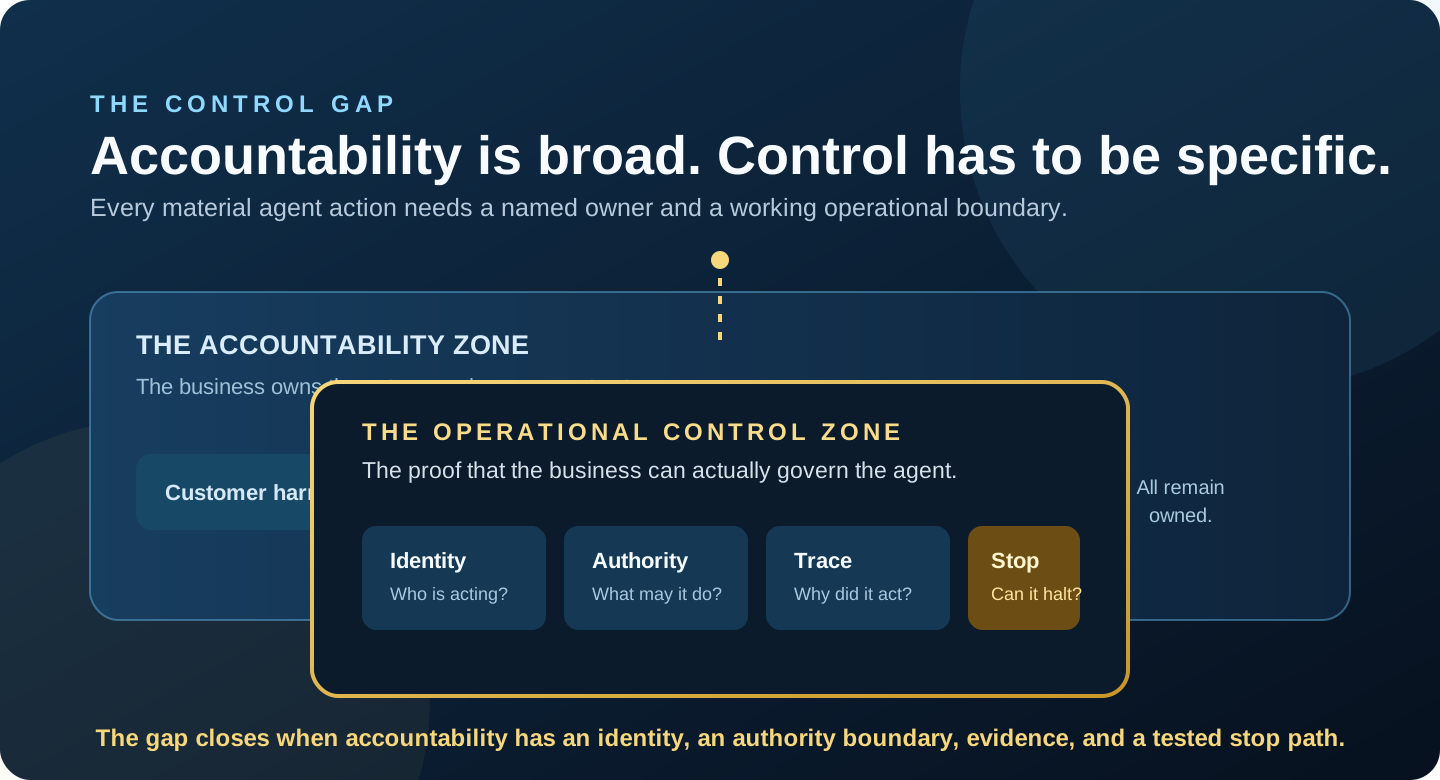
Diffuse intent does not make the output ownerless. The company selected the objective, connected the data, granted the permissions, and decided where the system could deploy. The absence of a human author is a governance fact, not a liability shield.
This is why “the algorithm did it” is a weak operating posture. It describes an ungoverned system. If the company cannot show what constraints existed and who reviewed the high-risk output, it has made the regulator's question easier, not harder.
In regulated categories the stakes rise again. An optimizer that hides an age gate, buries a compliance disclosure, or makes consent difficult can create a failure that no conversion lift justifies.
The accountability gap is also a data problem. If a variant wins because it increases completion among one segment, the system may not reveal that it creates disproportionate confusion elsewhere. Segment-level harm needs to be part of the evaluation, not an after-the-fact question asked only after a complaint.
Human review still matters, but not as a ceremonial sign-off. The reviewer should see the full path, the objective, the segment breakdown, and the reversal experience. Otherwise the company is approving a screenshot while the optimizer owns the journey.
Constrain the optimizer before it ships
Put user-interest constraints inside the objective. Easy cancellation, clear total pricing, visible consent, and required disclosures should be hard limits, not quality notes a model may trade away for completion.
Gate high-risk UI changes. Checkout, cancellation, consent, age-gating, and regulated disclosures need a human sign-off before deployment. The gate is not an admission that AI is useless. It is a recognition that the downside is asymmetric.
Audit with outside eyes and preserve the decision record. Run dark-pattern reviews on a schedule, document the alternative a reviewer chose, and keep the model, policy, variant, and decision context. A record of active governance is useful even when no incident occurs.
Measure user harm next to conversion. Complaint rates, cancellation friction, deceptive-consent signals, and support reversals should change the score. When the objective includes harm, the optimizer is less likely to discover that harm is the shortest route to lift.
The brands that navigate this well will not be the ones timing enforcement. They will be the ones that understood deceptive design is illegal whether a person or a model produced it, then built a system that could not quietly ship the pattern.
Make the constraints testable before the optimizer runs. A cancellation flow should pass a simple journey test. A consent screen should expose the material choice without visual tricks. A checkout should show the total cost at the moment commitment becomes possible. These are measurable properties, not aspirations.
Then give the system a recovery path. If a test reveals a harmful variant, stop the experiment, roll back, preserve the evidence, and tell the affected team what changed. A system that can fail visibly and recover quickly is safer than one that claims it cannot fail because a reviewer once looked at the template.
Test the refusal path with the same care as the purchase path. Ask whether a user can decline optional consent, leave a subscription, or correct an order without being sent through extra persuasion. A flow that technically offers an exit but repeatedly reopens the sales pitch is still shaping the choice. The measure is not whether the link exists. It is whether a reasonable person can use it without resistance.
Keep a distinction between friction and protection. A fraud check, age gate, or confirmation step can serve the user when its purpose is clear and its scope is proportionate. Friction becomes manipulative when the business adds it only to the path that reduces revenue, hides the reason for it, or makes the desired action materially easier to understand. The optimizer needs that distinction in its rules.
Review variants at the segment level and after the immediate conversion window. A design can lift completion among new visitors while increasing regret among existing subscribers. It can reduce cancellation attempts by making the route hard to find rather than by improving the product. Short-term lift is not a neutral outcome when the denominator excludes the people who gave up.
Finally, retain the version that lost. The rejected variant shows what the optimizer considered attractive and what the review process refused. Keeping that context makes future audits faster and prevents the same harmful pattern from returning under a new headline, color, or prompt. Governance is stronger when the system remembers the boundary it was given.
Do not let a compliance checklist become another optimization target. A flow can pass a screenshot review and still make the user search, scroll, or repeat a choice. Review the path with a person who does not know the intended outcome. If they cannot explain the price, the consent choice, and the exit route without coaching, the interface is not clear enough.
The same discipline applies to personalization. A model may show different pressure to different people based on urgency, vulnerability, or inferred willingness to pay. Segment-aware review should ask whether the system changes the burden of refusal, not only whether the headline conversion rate moved. Personalization that hides the tradeoff is still a dark pattern.
Once the optimizer is constrained, the team can still move quickly. Small reversible tests, explicit guardrails, and a fast rollback path let the business learn without turning customers into the monitoring system. Speed is useful when it shortens the path to a better experience, not when it shortens the path to an undisclosed one.
One final check is whether the design would remain acceptable if the metric were removed. If the flow only works because the user does not notice the cost, the hidden condition is doing the selling. A durable conversion improvement should survive plain-language explanation, an easy exit, and a review of who bears the added friction.
Document the owner of each constraint. A product manager may own the experiment, legal may define the prohibited behavior, design may own the interface, and engineering may own the deployment switch. If those responsibilities are implied rather than named, a harmful variant can sit between teams while everyone assumes somebody else is watching.
The right standard is not a frozen interface. It is a controlled system that can learn without outsourcing ethics to the customer. Let AI find faster paths, but require those paths to remain understandable, reversible, and acceptable when a skeptical person walks through them from the first click to the last consequence.
THE OPTIMIZER TEST
What does the objective forbid?
01 / disclose
Show total price, consent, and material terms before commitment, not after the user has invested effort.