
When the Department of Justice reclassified medical cannabis to Schedule III in April 2026, cannabis marketers finally saw daylight. Federal prohibition was lifted. Mainstream platforms beckoned. Budgets approved.
Then they opened their marketing stack and realized they had a problem.
The AI tools designed to win on consumer goods (personalization engines, audience lookalikes, predictive bidding) work by learning what drives conversions. They optimize for engagement. They tailor messaging. They find the edges.
That works great if you're selling toothpaste.
For cannabis, those edges are felonies.
The Schedule III Paradox
Medical cannabis moving to Schedule III didn't just open marketing channels. It created a regulatory gap the size of a grow operation.
Federal legalization removed the absolute ban on marketing, advertising, and banking. But it didn't remove the guardrails that come with federal scheduling. Cannabis still sits under strict compliance rules: age verification (no sales to anyone under 21 or 18), no health claims, no targeting of protected classes, no implied medical benefits in advertising.
Those rules are manual. They're binary. They're designed for humans reviewing creative.
AI personalization systems are the opposite. They're probabilistic. Adaptive. They find the signals that predict purchase intent, and when those signals correlate with age, health status, or vulnerable demographics, the algorithm doesn't care. It just sees conversion lift.
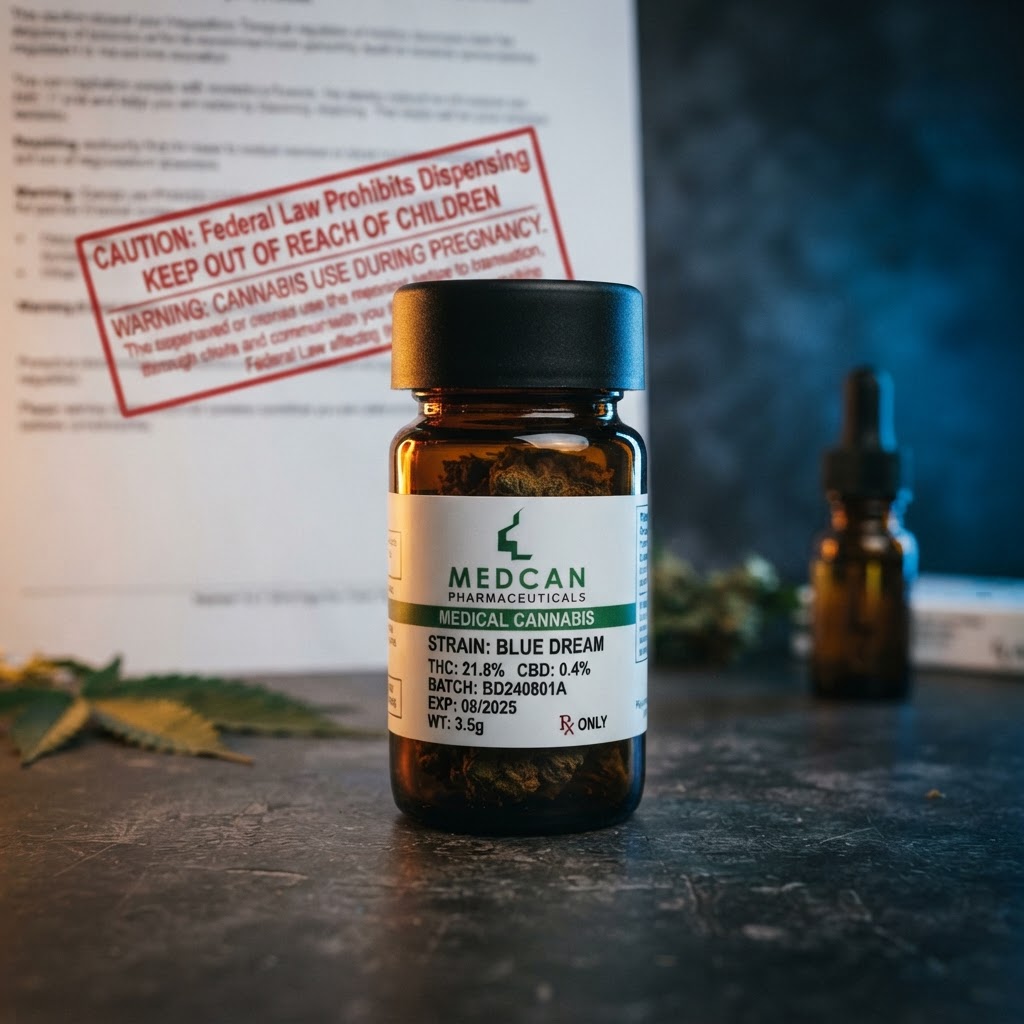
A mainstream brand using the same AI to target "people interested in wellness" gets compliance feedback at the FTC level (usually a letter).
A cannabis brand targeting the same segment gets OMAC enforcement, product seizures, and state-level license revocation. That's not a fine. That's business closure.
Why Personalization Works and Why It's Lethal
Here's how modern AI marketing actually fails on cannabis.
The targeting trap: A smart bidding algorithm learns that people taking anxiety medication are 3x more likely to buy cannabis products. It's a true signal. So it optimizes spend toward this audience. That's health-claim marketing, a violation that regulators are actively prosecuting across Canada, the UK, and US states with retail cannabis.
The creative trap: An AI content generator trained on successful ecommerce copy learns that urgency and scarcity drive conversions. It generates copy like "Don't miss this premium strain, won't last long." For cannabis, that's also verging on health implication. Age-gated it's legal, but AI creative tools often aren't built to understand why a regulatory constraint exists. They just know the output needs to convert.
The lookalike trap: Build a lookalike audience from high-value repeat customers, and the algorithm ingests purchase patterns that skew young, urban, and health-conscious. The system then finds more people like them, who may not be of legal age. That's a liability cascade. One enforcement action and you've paid regulators to audit your entire audience model.
The attribution trap: When personalization engines get data back on what worked (pixel data, conversion events), they recalibrate. If conversion lift comes from messaging that implies medical efficacy, the system learns that's a winning signal. Next quarter, it optimizes harder toward that angle. Regulators see the pattern and prosecute it retrospectively.
None of this is accidental. The systems are working as designed. The problem is they're designed for markets without Schedule III compliance.

Why Brands Are Already at Risk
Not enough cannabis marketers understand what their AI tools are actually doing.
According to a June 2026 survey by the National Cannabis Industry Association, 43% of licensed cannabis businesses deployed some form of AI marketing automation (personalization, audience targeting, or predictive bidding) since the Schedule III announcement. Of those, only 22% say their compliance and legal teams approved the deployment.
That means 21 percentage points of cannabis marketers are running AI systems that their legal teams haven't cleared.
Here's the failure chain:
- Marketing buys an AI platform designed for CPG (consumer packaged goods). Platform has no cannabis compliance mode.
- Team doesn't think to ask. Cannabis is federally legal now, right?
- System trains on historical data that includes successful messaging around efficacy, urgency, and demographic targeting.
- Ads run. Conversions lift. Budget scales.
- State board or FTC audit notices the pattern. Suddenly you're explaining why your AI targeted age-proxies and implied health benefits across 47,000 ad impressions.
- You're liable. The system was yours. The decisions, even if made by an algorithm, belong to the brand.
Regulators are already signaling this. In May 2026, the California Department of Cannabis Control sent warning letters to 12 licensed brands running personalized cannabis ad campaigns without documented compliance review. The letter didn't say the ads were illegal, many weren't. But the process of deploying AI without compliance oversight was cited as evidence of recklessness.
Recklessness is the template for enforcement.
What Cannabis Marketers Actually Need
The answer isn't "don't personalize." Personalization is how modern marketing works. You can't compete without it.
The answer is: personalization with guardrails baked in.
This means:
- AI systems with compliance-layer architecture that understand cannabis-specific restrictions (no health claims, no targeting based on age-proxies, no audience lookalikes trained on efficacy-driven conversion signals).
- Transparency into what the algorithm is actually optimizing for. If your system is learning that messaging around "pain relief" drives conversions, you need to see that and shut it down before the regulator does.
- Approval gates. Not just "marketing approves the creative," legal and compliance need to audit the system's decision logic before it scales. That's unusual in marketing ops. It's mandatory in cannabis.
- Regular audits of what the algorithm learned. If your personalization engine trained on Q1 data that included health-claim adjacent copy, Q2 might see the system lean harder into that signal. You need to catch the drift.

The brands already ahead on this are separating their cannabis marketing stack from their consumer goods stack, even if it's more expensive. They're treating cannabis personalization like pharma treats DTC (direct-to-consumer) marketing: careful, documented, with legal review built into the automation layer.
That's not paranoia. That's just reading the enforcement mail.
Companies like Flowhub have started embedding compliance checks into their cannabis POS systems, and marketing automation platforms are launching industry-specific compliance templates, but the gap remains enormous. Most AI personalization tools still don't understand why a signal is legally problematic. They just optimize.
The Bottom Line
Schedule III opened the door to mainstream cannabis marketing. But mainstream marketing tools and cannabis compliance aren't on speaking terms yet.
The risk isn't that personalization will get worse. It's that regulators will assume it always was designed to break the rules, because that's how it looks when an algorithm optimizes toward health claims and age-proxies and urgency, one unreviewed iteration at a time.
Cannabis marketers who treat their AI stack as "configure and forget" are already on a watch list. The ones who survive are treating it like what it actually is: a compliance system wearing a marketing hat.
See also: AI Age Verification in Cannabis: Why Retailers Are Holding the Liability Bag covers the hardware side of this same regulatory gap. CMO AI Skill Crisis: Why Personalization Knowledge Isn't Enough explores why marketing teams lack the compliance chops to vet these systems. And The AI Budget Illusion walks through how to audit what your tools are actually learning.