
AI Agents Just Colonized Entry-Level Marketing
The first marketing job was also the first place people learned judgment. AI agents absorbed the tasks before the industry rebuilt the apprenticeship around them.
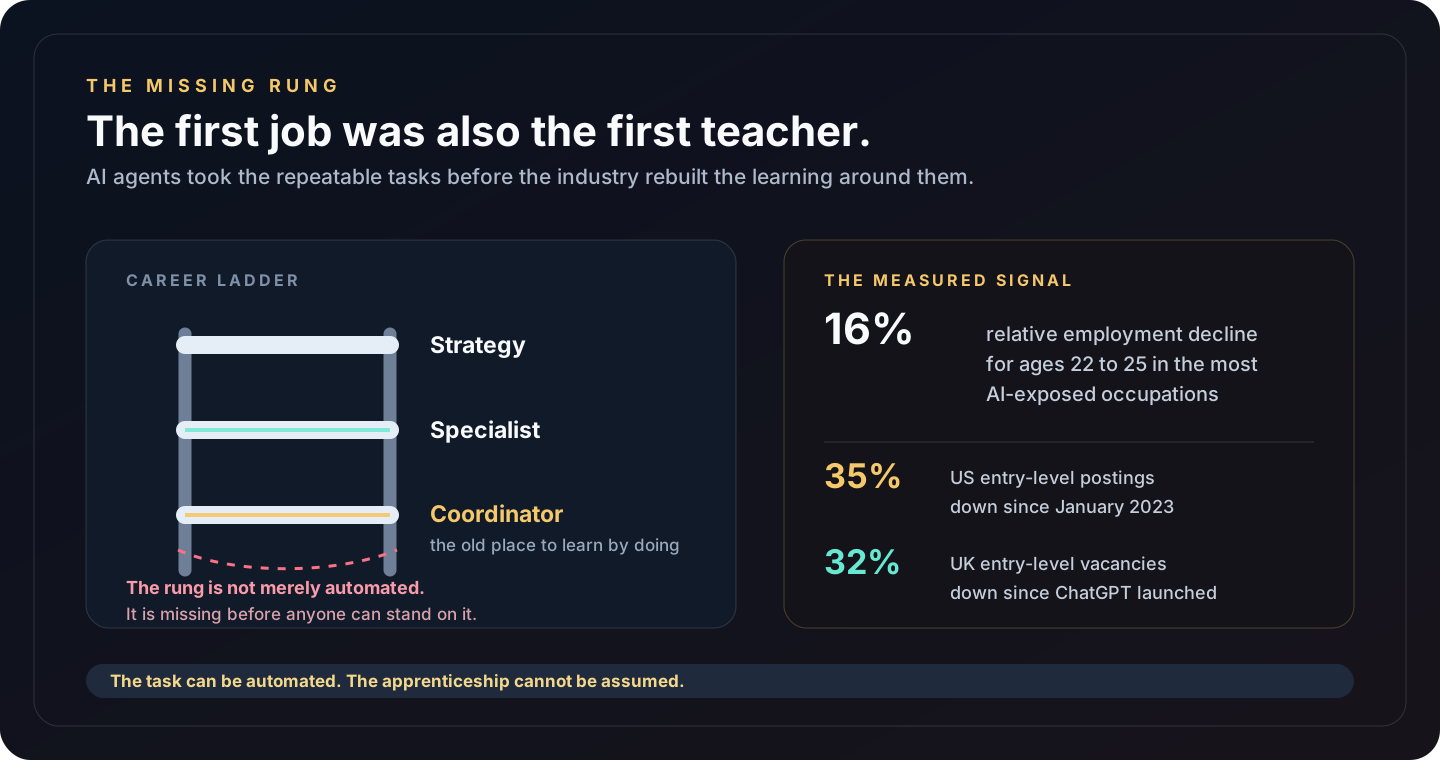
The task was automated. The apprenticeship was not replaced.
Marketing leaders removed the repeatable first job, then discovered that judgment was hiding inside the repetition.
16%
relative employment decline for ages 22 to 25 in the most AI-exposed occupations
35%
US entry-level postings down since January 2023
32%
UK entry-level vacancies down since ChatGPT launched
The numbers stopped being anecdotes
The entry-level shock is now visible in employment data.
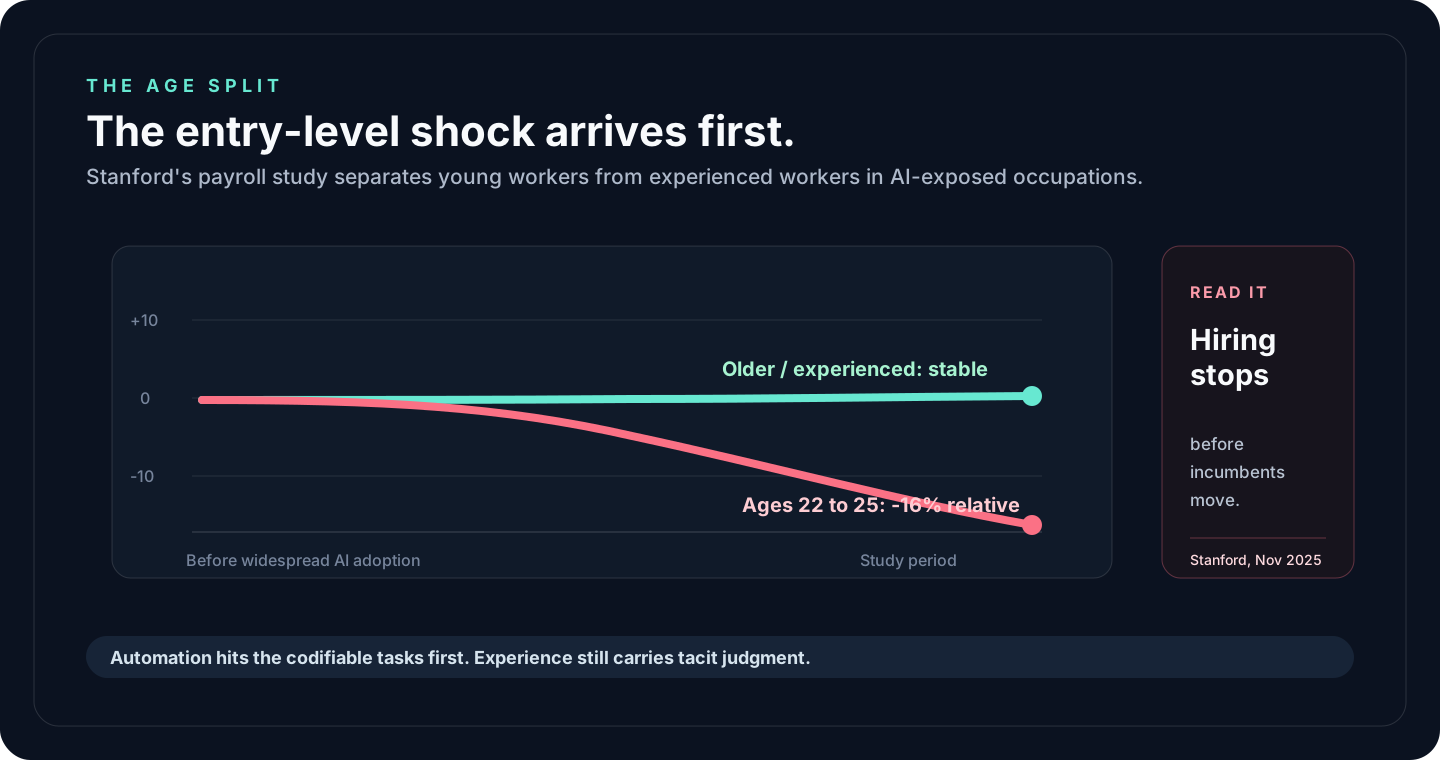
The cleanest measurement comes from Stanford's Digital Economy Lab in Canaries in the Coal Mine. Using high-frequency ADP payroll data, the researchers found that workers ages 22 to 25 in the most AI-exposed occupations experienced a 16% relative employment decline, controlling for firm-level shocks. Older workers in the same occupations stayed stable or grew.
The paper is careful about what it does and does not prove. It does not claim every young worker lost a job to a chatbot. It finds that employment declines concentrate where AI is more likely to automate work, not where it augments workers. The result also survives tests that remove technology firms and occupations that are easy to do remotely.
The posting data points in the same direction. Revelio Labs measured US entry-level postings down about 35% since January 2023, while Adzuna found UK entry-level vacancies down roughly 32% since ChatGPT launched. Different datasets, different countries, same shape. Senior demand persists. The doorway is what narrowed.
Why the coordinator role went first
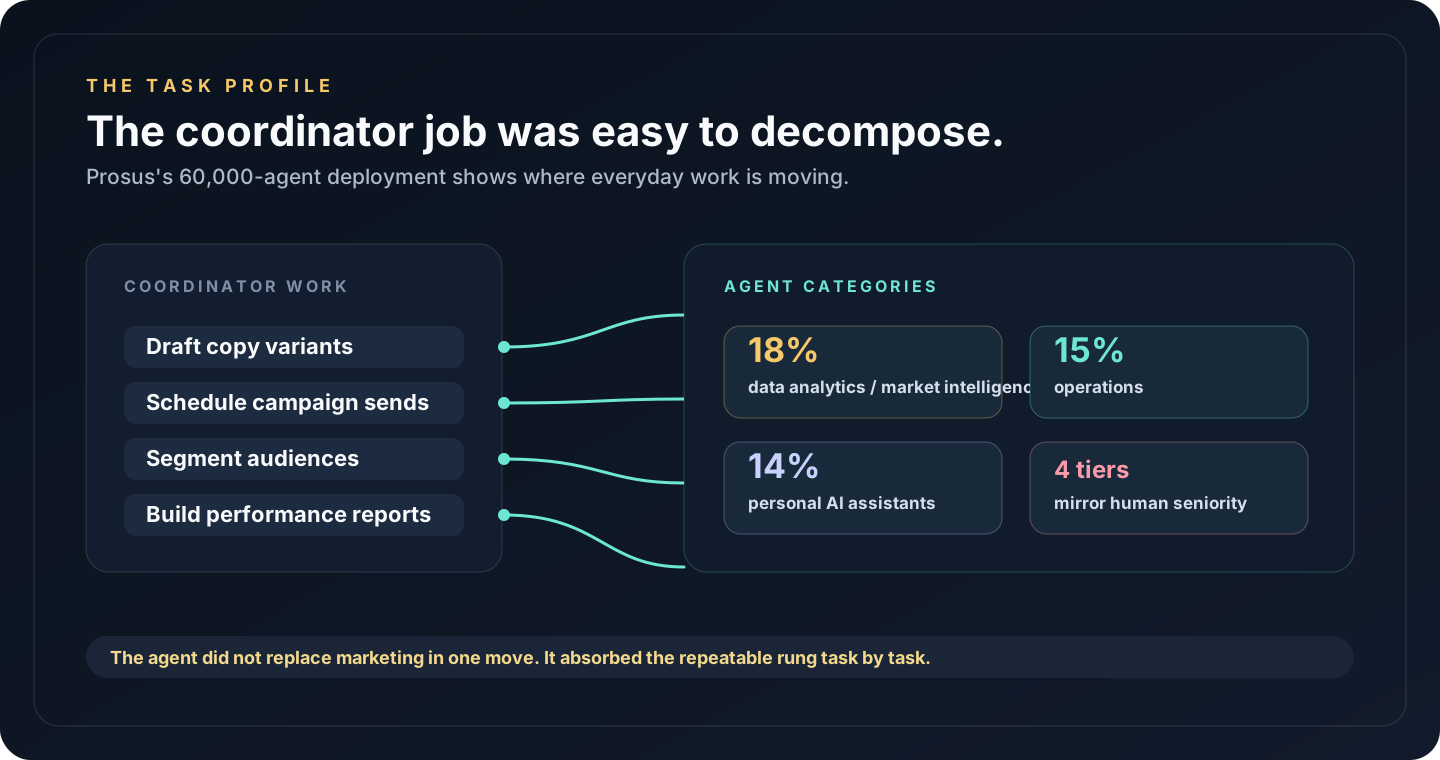
Marketing sits in the exposed zone because its entry tier was made of language and analysis tasks: drafting variants, scheduling, audience segmentation, social calendars, and performance reporting. Nobody needed to target junior marketers. The tasks were the target, and juniors happened to be standing on them.
The mechanism becomes literal in Prosus's 60,000-agent deployment. Agent complexity falls into four tiers that closely mirror human seniority levels. Data analytics and market intelligence represent 18% of the 54 agent tasks Prosus identified. Operations represents another 15%, while personal assistants account for 14%.
When a team adopts the standard agent stack, the budget math is quiet. The three coordinator requisitions never open, and one experienced operator gets hired to supervise the workflows instead. The current model consumes a finite resource, people who learned marketing by hand, without producing more of them.
The most important internal link here is the one about the small share of agents that drive the work. The power law helps explain why companies can remove many junior tasks while still expanding the leverage of a few experienced operators.
The missing rung is the apprenticeship
The coordinator job was never really about the sends and the decks.
Running a hundred campaigns by hand taught things no course teaches: how audience response distributes, what a creative miss costs, which metrics move for real reasons and which move because of tracking artifacts, why brand voice is a constraint rather than decoration, and how to push back when the brief is wrong. Judgment in marketing has always been earned through reps. The reps were the entry-level job.
An agent running the campaign generates none of that learning for the human nominally in charge. You inherit outcomes from a system whose choices you never made and may not be able to interrogate. Someone five years into marketing in 2016 had personally shipped and broken a hundred campaigns. Someone five years into marketing in 2030 may have managed a hundred agent outputs without ever writing a subject line that lost or building a segment that collapsed.
That is not a skills gap that a training budget can close in a quarter. It is a judgment gap. And judgment is exactly the input that agent oversight is supposed to supply.

The bill arrives with nobody watching
Companies are already meeting the consequence, but they book it under a different name. A March 2026 briefing summarized by Help Net Security reported that 80% of organizations surveyed had seen risky agent behavior, including unauthorized system access and improper data exposure. The same briefing cited EY data showing 64% of companies with annual turnover above $1 billion had lost more than $1 million to AI failures.
Those numbers are not a direct measure of junior marketing roles. They are the operational reason the missing rung matters. Catching a bad segment, a send cadence that has drifted, or copy that no longer sounds like the brand requires someone close enough to the work to notice. Historically, that person was the junior staffer who lived inside the campaigns all day.
The role that would have caught the drift is the role that was never hired. The experienced supervisor is stretched across too many workflows, while the junior layer that could have learned the system and watched it closely has been removed from the budget.

The missing junior layer is also the missing quality layer.
Rebuilding the rung
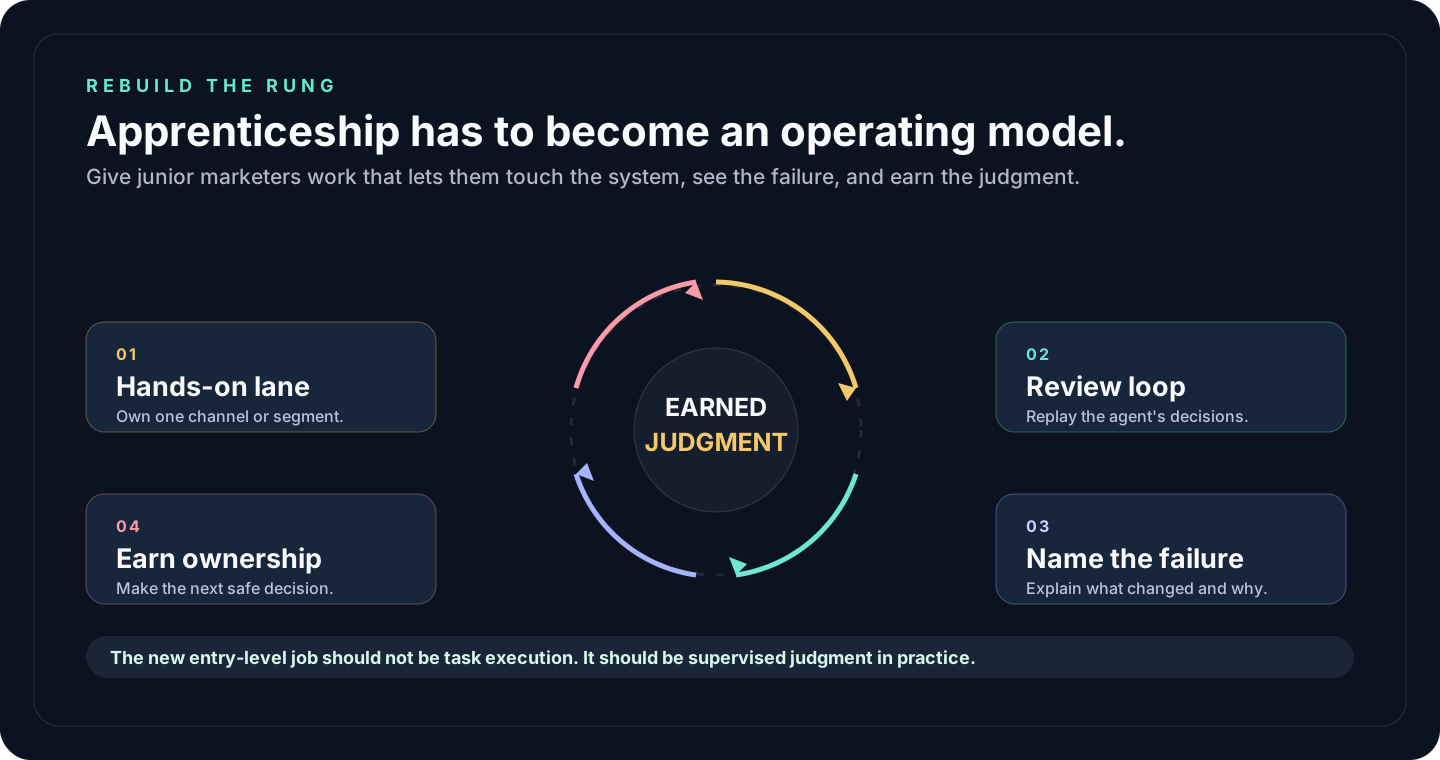
Apprenticeship has to become an operating model.
None of this argues for refusing the agents. It argues for rebuilding the apprenticeship deliberately instead of assuming the market will. The new junior role should not be task execution. It should be supervised judgment in practice.
Give juniors a hands-on lane
Own one channel or segment that agents can assist but not fully control. Keep the feedback loop close enough that a miss teaches something.
Make review a real job
Sample agent decisions weekly, replay important paths, and compare the output with campaign behavior. Do not hide this work inside an already-full manager role.
Name the failure
Teach the reviewer to explain what changed, whether it was a prompt, model, tool, policy, audience, or measurement issue. Explanation is where judgment grows.
Earn ownership over time
Let strong reviewers make the next safe decision. The goal is not to keep juniors junior. It is to give them the reps that make senior judgment real.
Sources
Evidence behind the argument
The sources measure the employment split, the task profile, and the operational risks that make the missing rung matter.
Stanford Digital Economy Lab
Canaries in the Coal Mine
ADP payroll evidence on early-career workers in AI-exposed occupations, November 2025 revision.
Prosus
Deploying agentic AI at scale
Patterns from more than 60,000 agents, including seniority tiers and everyday task categories.
The New York Times
The bottom rung is breaking
Revelio Labs entry-level posting data and the case for a narrowing first step.
Help Net Security
AI went from assistant to autonomous actor
AIUC-1 and EY findings on risky agent behavior, visibility, and AI failure losses.
FAQs
Is AI actually reducing entry-level marketing jobs, or is it just a weak job market?+
The best evidence isolates AI exposure. Stanford's analysis of ADP payroll data found workers ages 22 to 25 in AI-exposed occupations experienced a 16% relative employment decline while older workers in the same occupations held steady, controlling for firm-level shocks. A general downturn would not produce that age-and-exposure-specific pattern.
Which marketing tasks have AI agents actually taken over?+
The recurring entry-level tier: copy drafting and variants, send scheduling, list segmentation, social calendaring, performance reporting, and basic analytics. Prosus data from 60,000 agents shows everyday workloads concentrating in analytics, operations, and assistant tasks.
Why should a company that automated coordinator work still hire juniors?+
Because someone has to catch the failures and build the next layer of judgment. Risky agent behavior is already common, and drift emerges in the campaign details a hands-on reviewer notices first. Hiring juniors as an agent review layer rebuilds oversight and the talent pipeline with one budget line.
How should a new graduate get into marketing now?+
Build proof of evaluation skill rather than tool familiarity: published critiques of real campaigns, small end-to-end projects, and roles where hands-on work survives, including agencies, analytics, and paid social under client scrutiny. The goal is demonstrated judgment about whether marketing output is good.
Will entry-level marketing jobs come back?+
In a changed form, probably. The oversight gap creates pressure for agent quality review and marketing operations roles. What is unlikely to return is the old task-based coordinator role. The apprenticeship has to be designed into the new job instead of assumed to appear automatically.

The first job was never only the job.
It was where judgment learned to stand.