
AI Agents Are Hiding Revenue. Your Attribution Model Is Wrong.
Why your attribution model is failing the moment real agent work starts moving money.
Attribution was built to follow people through trackable environments. Agents move revenue through APIs, closed products, and other systems, then leave the ledger with no author.
The answer is not a cleverer click model. It is an operating record: who acted, what changed, which account was affected, and what outcome followed.
The missing record is now a measured problem.
Last-click, first-click, linear, time-decay, and data-driven attribution all depend on a browser-based actor creating a session that one system can replay. Agents act through APIs, webhooks, and database writes instead. They pass structured payloads rather than campaign parameters, and they operate across systems that do not share one source of truth.
In an EY and AIUC-1 survey, only 38% of organizations monitored AI traffic end to end. Just 17% continuously monitored agent-to-agent interactions. That is not only a security weakness. It is a revenue-measurement weakness.
Six ways agent revenue slips past attribution
These are operating mechanics, not fictional case studies. Every path can create a real outcome before it creates an attributable one.
01
Agent-to-agent commerce
Procurement, billing, advertising, and SaaS workflows can negotiate or reconcile without a browser session. A pixel sees none of it.
02
Micro-transaction aggregation
Support agents can preserve revenue one small recovery at a time. The monthly total is real; the causal chain is distributed.
03
Closed-system conversions
An in-product assistant can surface an expansion or prevent churn inside an authenticated product where web attribution does not operate.
04
Cross-agent handoffs
Chatbot, email agent, SMS agent, and human rep can all touch a deal. The CRM often credits only the final person in the chain.
05
Off-surface AI influence
A buyer researches with an assistant, then arrives as “direct.” The decision happened somewhere your analytics cannot see.
06
Uncredited recovery work
A support or success agent can prevent churn, recover a payment, or surface a renewal condition without a campaign touchpoint ever entering the record.
The commercial shift is already material: Gartner expects machine customers to influence or participate in $30 trillion in purchases by 2030, while Semrush research reported by CNBC found that 22% of users had bought inside an AI tool and 50% had bought after AI-assisted research.
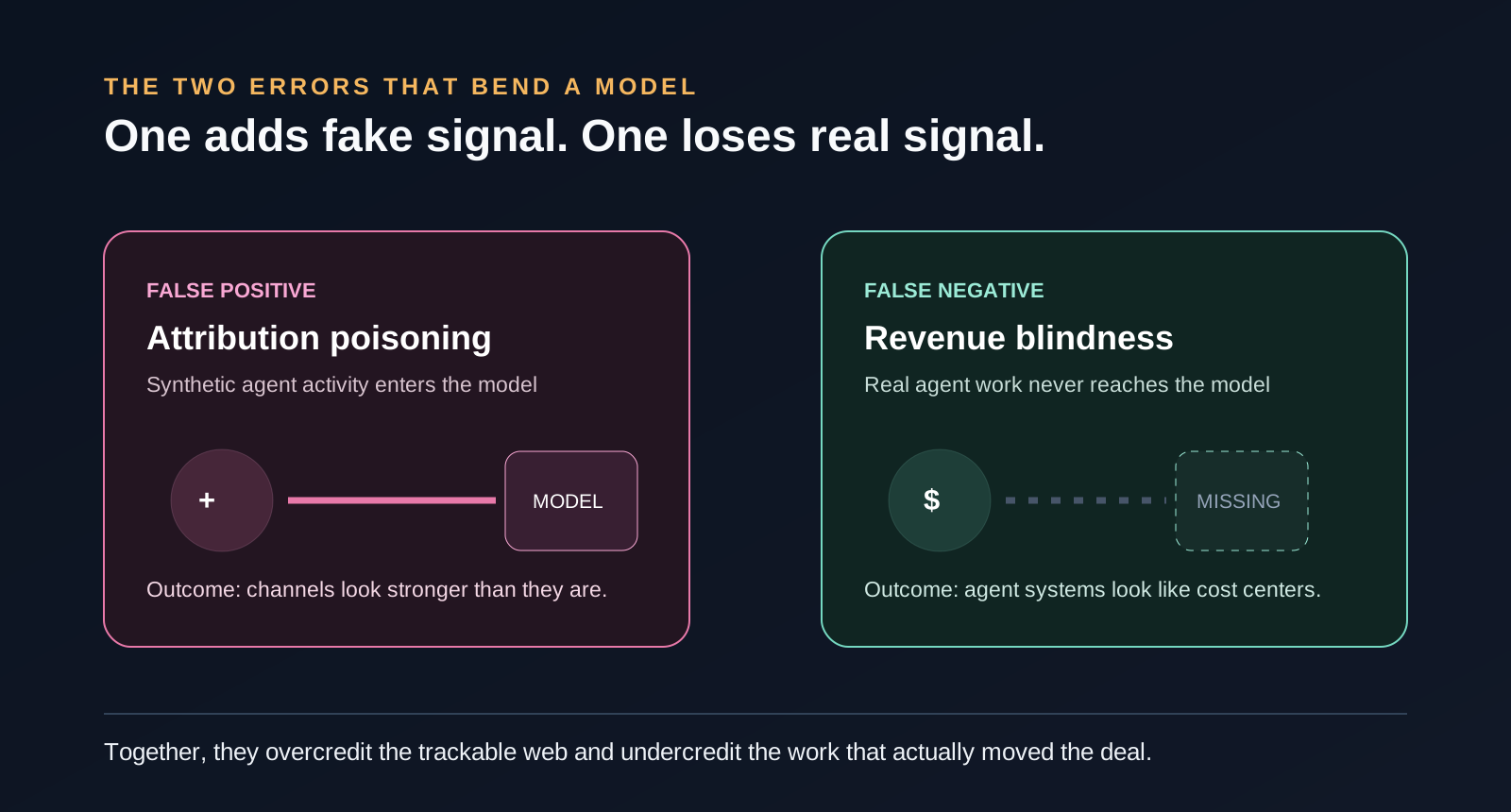

The model gets tilted from both sides.
Attribution poisoning is the false-positive version of the problem: synthetic activity enters a model and inflates signals that were never customers. Revenue blindness is the inverse: genuine agent work creates no signal at all.
Together, they overcredit the human-looking web and undercredit the agent layer shaping the journey. Adobe found that AI-referred retail traffic converted 54% better than non-AI traffic. The visible referral is only one part of the path worth measuring.
17%
continuously monitor agent-to-agent interactions
38%
monitor AI traffic end to end
54%
better conversion for AI-referred retail traffic
Make the agent legible before you make it autonomous.
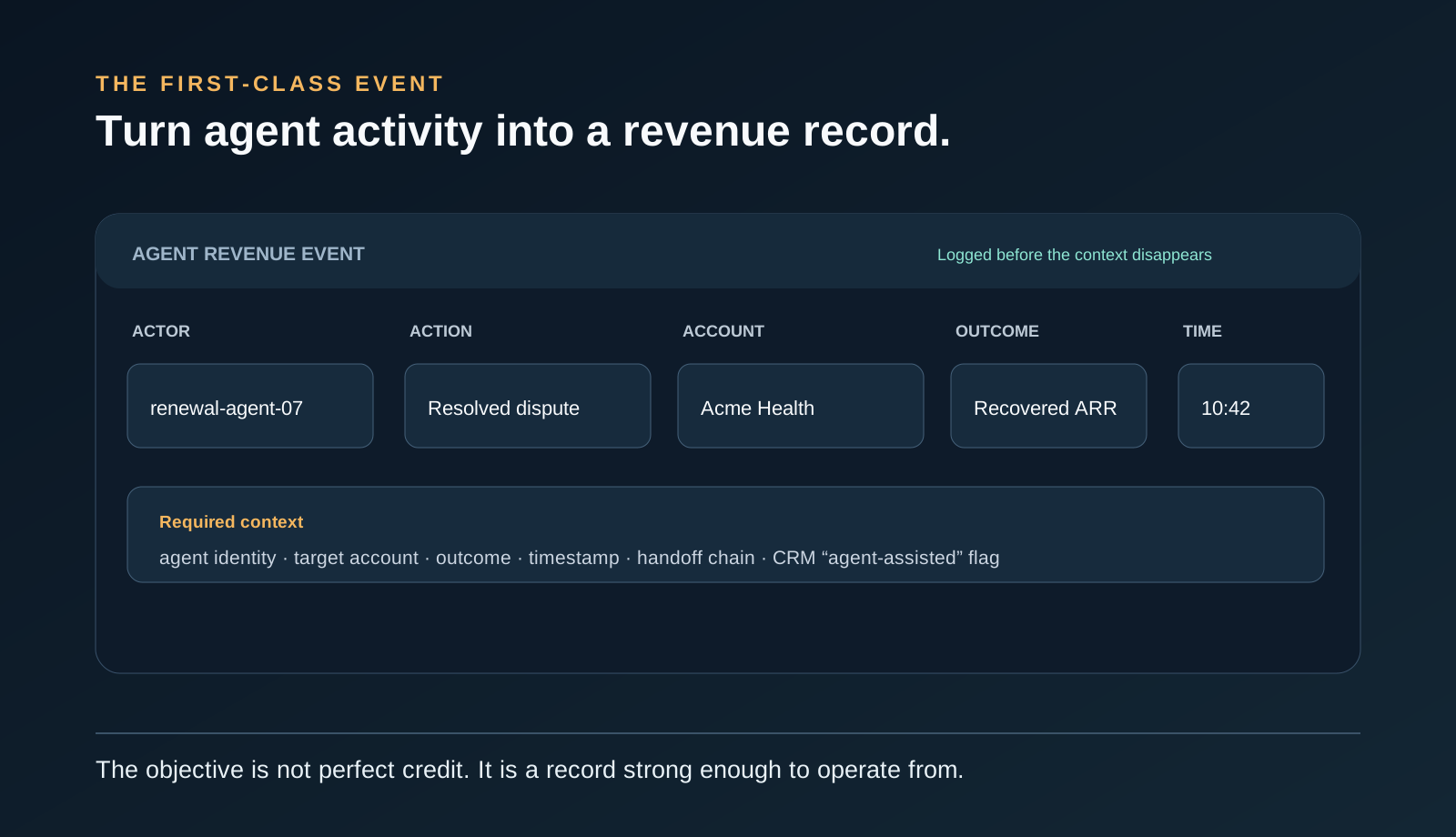
The goal is not perfect, per-touch causal certainty. It is a record strong enough to make an operating decision: keep, fix, or stop an agent.
If an agent cannot emit a durable event, it is not ready to touch revenue.
1. Log consequential actions
Emit agent identity, action type, account, outcome, timestamp, and handoff context.
2. Measure direct output
Report recovered revenue, qualified handoffs, expansion triggers, and conversion outcomes by agent.
3. Flag agent-assisted revenue
Give finance an honest CRM marker without pretending to have per-touch precision.
4. Write credit rules down
When allocation is unavoidable, publish the convention before the budget fight begins.
FAQs
What is agentic micro-conversion blindness?+
It is the failure of attribution systems to record revenue-relevant actions taken by AI agents. API-mediated deals, in-product upsells, support recoveries, and agent-to-agent transactions can move revenue without producing the sessions, clicks, or UTM data that conventional attribution expects.
How is it different from attribution poisoning?+
Poisoning is a false-positive problem: synthetic activity adds misleading signal. Blindness is a false-negative problem: genuine agent-driven revenue creates no signal. Together, they skew measurement toward the trackable human web.
What is the first practical step?+
Inventory every agent that touches a revenue path and make consequential actions emit structured events: agent identity, action, account, outcome, timestamp, and handoff context. Pair that with an agent-assisted flag in the CRM.
Will attribution tools eventually handle agents natively?+
The infrastructure is beginning to form, but teams need direct operational measurement now rather than waiting for a perfect multi-touch model. Build a durable event record first.

Attribution will not become honest by adding another chart.
It becomes useful when every consequential actor leaves a record.